
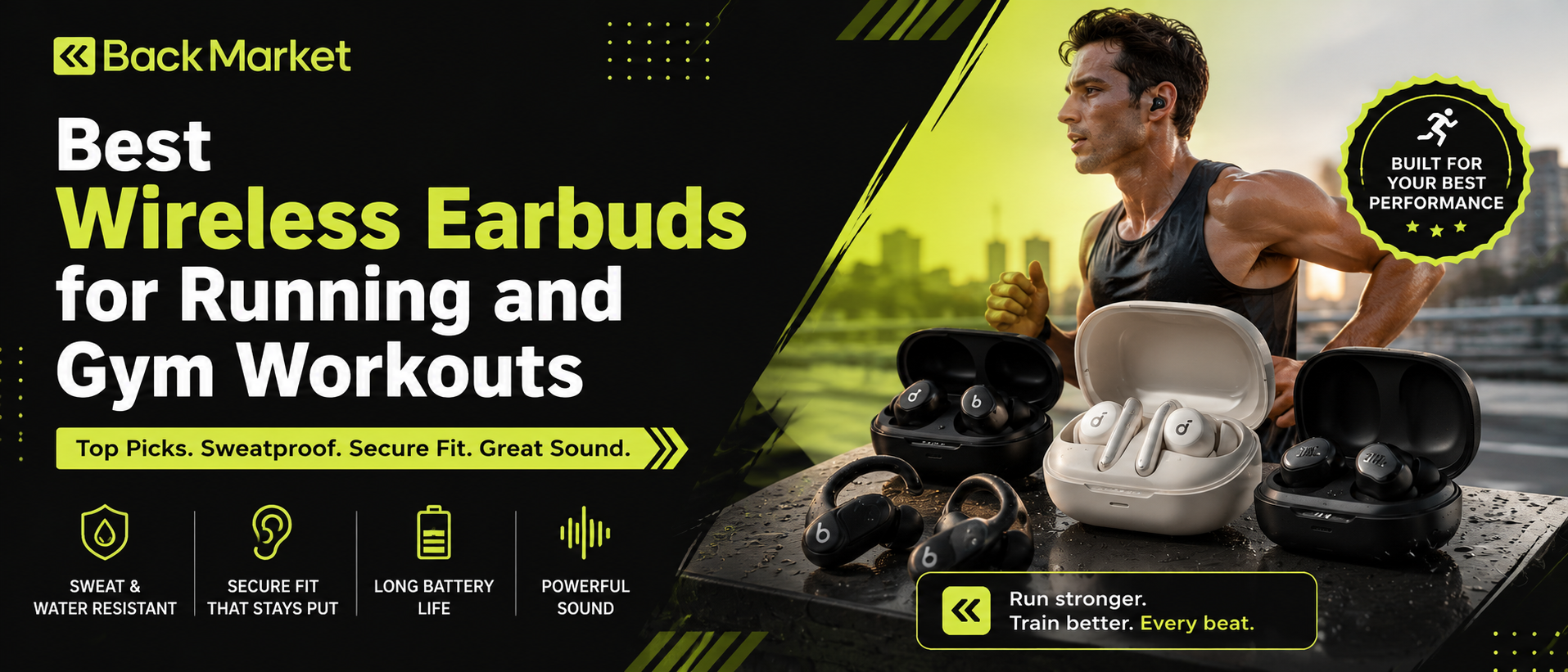
Introduction
Find Your Perfect Earbuds Today! 🎧Let me guess. You've got a pair of earbuds that sounded great on the couch and then fell out halfway through your first jog. Annoying, right? Finding the best wireless earbuds for running isn't about chasing the fanciest spec sheet. It's about fit, sweat protection, battery, and whether the things stay put when you're sprinting for a bus or grinding through your last set of squats.
This guide covers all of it in plain language. Fit, ratings, noise cancelling, battery, even the AirPods question everyone asks. Let's get into it.
What Makes the Best Wireless Earbuds for Running?
Honestly, it comes down to four things: a secure fit, sweat protection, decent battery life, and stable Bluetooth. Sound quality matters too, but a pair that sounds amazing and slides out of your ears is basically a very expensive paperweight.So start with the fit. Running is bouncy. Every footstep sends a tiny shockwave through your head, and loose earbuds will creep outward until one pops out and bounces down the pavement. (Ask me how I know. Actually, I don't.) Look for multiple ear tip sizes, wingtips, or hooks that anchor the earbud to your ear.
Next, comfort. You might wear these for ninety minutes or more. Anything that presses on one spot inside your ear will start nagging you around the forty-minute mark. Soft silicone feels cool and a little slippery at first, then warms up and settles in. Hard plastic edges never really stop bugging you.
Then there's controls. Tiny touch panels are a nightmare with sweaty fingers. Physical buttons or a clear tap zone are far easier mid-run. Small detail, big difference.
Sweat-Resistant Earbuds: Decoding the Ratings
Here's where people get confused. Manufacturers love throwing around letters and numbers like IPX4 or IP57, and most shoppers just nod and hope for the best.The "IP" stands for ingress protection. The first digit covers dust and the second covers water. If you see "IPX4," the X just means dust wasn't rated. The water number is the part that matters for sweat-resistant earbuds.
- IPX4: Protected against splashes from any direction. Fine for most gym sessions and light rain.
- IPX5: Handles low-pressure water jets. A better pick for hard training and wet weather.
- IPX7: Can survive being submerged in shallow water for a short time, usually up to one meter for about 30 minutes.
Waterproof Earbuds for Exercise: Do You Really Need Them?
Short answer: usually not fully, but a higher rating helps.Most runners and gym-goers don't need to dunk their earbuds in a pool. What you need is protection from sweat, rain, and the occasional splash of water from your bottle. In that case, IPX4 to IPX5 works for most people. But if you swim, kayak, or run in heavy downpours a lot, then waterproof earbuds for exercise with an IPX7 rating or higher make more sense.
One catch, and it's a big one. Bluetooth signals don't travel well through water. So even if an earbud survives a swim, wireless streaming underwater is spotty at best. Some swim-focused models store music on the earbuds themselves, which solves the problem. Worth knowing before you spend money.
Also, and I say this gently, waterproof doesn't mean "abuse-proof." Charging case ports are often not sealed the same way. If your earbuds are wet, dry them before you plug anything in. Please.
Earbuds With Ear Hooks: The Secret Weapon for Runners
I used to be skeptical about hooks. They looked bulky. A bit like a gadget from 2012. But then I tried a pair on a hilly route, and wow. No adjusting. No nervous hand-to-ear checks every few minutes. They just stayed.Earbuds with ear hooks wrap over the top of your ear, so gravity and motion have a much harder time pulling them out. That's a huge deal for runners, trail athletes, and anyone doing burpees or jump rope. The hook shares the load, so the earbud doesn't rely only on the ear canal for grip.
Beats Powerbeats Pro is probably the best known example of the style, and the newer versions have kept that hooked design while adding features like noise cancelling. Several other brands make hook or wingtip designs too, so you've got options at different prices.
Who should pick hooks?
- Runners who deal with bounce and sweat
- People with ear canals that don't hold standard tips well
- Anyone who's lost an earbud before (it hurts, I know)
Best Noise-Cancelling Earbuds for the Gym?
This is one of those questions with a real "it depends" answer.Noise cancelling in a gym sounds amazing. Block out clanking plates, blaring pop remixes, and that one guy grunting like he's auditioning for an action movie. For indoor workouts, active noise cancelling can help you focus and keep the volume lower, which is better for your hearing too.
But outside? Different story. If you run on roads or trails, blocking out traffic, bikes, and other people can be genuinely unsafe. That's why many runners prefer a transparency or ambient mode, which lets outside sound in on purpose. The best noise-cancelling earbuds for the gym usually offer both: a strong ANC mode for indoor sessions and a natural-sounding transparency mode for the street.
Keep these in mind when shopping:
- Fit affects noise cancelling. A poor seal means poor cancellation. Period.
- ANC drains the battery. Expect noticeably fewer hours with it switched on.
- Wind noise can be a mess. Some earbuds handle it badly, so read real-world reviews.
Battery Life and Bluetooth: The Boring Stuff That Matters
Nobody gets excited about battery life. Until it dies at kilometre eight.For workouts, aim for earbuds that deliver roughly six to eight hours on a single charge, with a case that gives you several more full charges. That covers most training weeks without constant plugging in. Marathon runners and long-haul gym rats may want more, so check each model's numbers with noise cancelling both on and off, since the gap can be big.
Quick charging is a lifesaver too. Many earbuds give you an hour of playback from a short ten-minute top-up. Helpful when you realise you forgot to charge them before leaving for the gym. Happens to everyone.
Now, Bluetooth. Modern versions, like Bluetooth 5.x, offer better range, lower power use, and more stable connections than older ones. That matters in a crowded gym where dozens of wireless devices are fighting for airspace. Look for earbuds with multipoint support if you jump between a phone and a laptop, and low-latency modes if you watch workout videos and hate lip-sync lag.
Also, if you carry your phone in an armband, the signal usually stays strong. If it's in a back pocket, a weak connection or bodily interference can cause a stutter. A small thing, but it explains a lot of random dropouts.
Are AirPods Good for Running and the Gym?
Short answer: yes, for many people. Longer answer: it depends on your ears.Apple's AirPods have a few real strengths. They pair instantly with iPhones, switch smoothly between Apple devices, and the newer AirPods Pro models offer noise cancelling, transparency mode, and a sweat and water resistant build. Some recent versions add fitness features like heart rate tracking when used with compatible Apple apps. If you're deep in the Apple ecosystem, that convenience is hard to beat.
But the fit is the sticking point. Standard AirPods have a stem design and rely on the shape of your ear. For some runners they feel rock solid, for others they feel like they're plotting an escape. The Pro models with silicone tips and multiple sizes stay put better, and some people add a small ear hook accessory for extra security. Android users can use them too, though they lose a few Apple-only features.
My honest take? Try them if you can. Walk, shake your head, do a few jumping jacks in the store. If they stay, great. If not, look at hooked or wingtip options without guilt.
Quick Tips Before You Buy
A few last practical things, in no particular order.- Test different ear tip sizes. Seriously. Most people use the wrong size at first.
- Check the return policy. A workout trial is the only real test.
- Clean the mesh and tips regularly. Sweat and earwax build up fast.
- Don't ignore comfort for lower price. You'll regret it by week two.
- Read recent reviews, because firmware updates can change how earbuds perform.
Final Thoughts
So, what are the best wireless earbuds for running and gym workouts? The ones that stay in your ears, survive your sweat, and last through your longest session. Everything else is a bonus.If you run outdoors a lot, lean toward earbuds with ear hooks or wingtips, solid sweat resistance, and a transparency mode. If you live in the gym, prioritise noise cancelling and a comfortable seal. If you're an iPhone user, AirPods Pro are a strong contender, as long as the fit works for you. And whatever you pick, check the ratings, check the battery numbers, and try them on if you can.
The best wireless earbuds for running are personal. Your ears, your routine, your budget. Take your time, test a couple of pairs, and trust what feels secure when you move. Then press play and go.
Find Your Perfect Earbuds Today! 🎧
Explore Newsbuck for more exclusive deals and important updates. We are your go-to source for all the news and trending stories across fashion, politics, health, entertainment and much more!
Read Our More Blogs:
Travel Deals: Find The Best Flight, Hotel & Holiday Package Offers
What Is A Refurbished Laptop? A Guide For Students And Remote Workers
The Gamer's Guide To Picking The Perfect TV
FAQs
1. What is the best wireless earbud style for running?
Earbuds with ear hooks or wingtips are usually the safest bet, because they stay secure during bouncy movement. Pair that with an IPX4 or higher rating and a transparency mode for outdoor awareness.
2. Are sweat-resistant earbuds the same as waterproof earbuds?
Not exactly. Sweat-resistant earbuds usually carry ratings like IPX4 or IPX5 and can handle sweat and splashes. Waterproof earbuds for exercise, such as IPX7 models, can survive submersion for a short time. For most gym and running routines, sweat resistance is enough.
3. Is noise cancelling safe to use while running outdoors?
It can be risky, since it blocks traffic and other warning sounds. Many runners use transparency mode outdoors and save active noise cancelling for the gym or treadmill sessions.