
Overview
✨ Feel Better, Move EasierBefore jumping into treatments, it helps to understand what's going on under the skin. Hand pain can come from a dozen different places. Arthritis, obviously, is a huge one, especially osteoarthritis in the knuckles and base of the thumb. Then there's repetitive strain, the kind you get from years of typing, scrolling, knitting, whatever repetitive motion your hands do without you even thinking about it. Carpal tunnel syndrome, tendonitis, old injuries that never quite healed right, even poor circulation on a cold day. Sometimes it's an overuse thing that flares up for a week and disappears. Sometimes it lingers.
If you're looking for comfortable everyday solutions to support your hands, Cincom offers a range of products designed with comfort and practical home use in mind.
And that's exactly why "how to relieve hand pain" doesn't have one single answer. The right approach depends heavily on what's actually causing the pain, whether there's swelling, whether it's a fresh injury or a chronic condition, and honestly, what your hands are telling you when you pay attention to them. (Which, weirdly, most of us don't do until it's already bad.)
How to Relieve Hand Pain: Where Heat and Compression Fit In
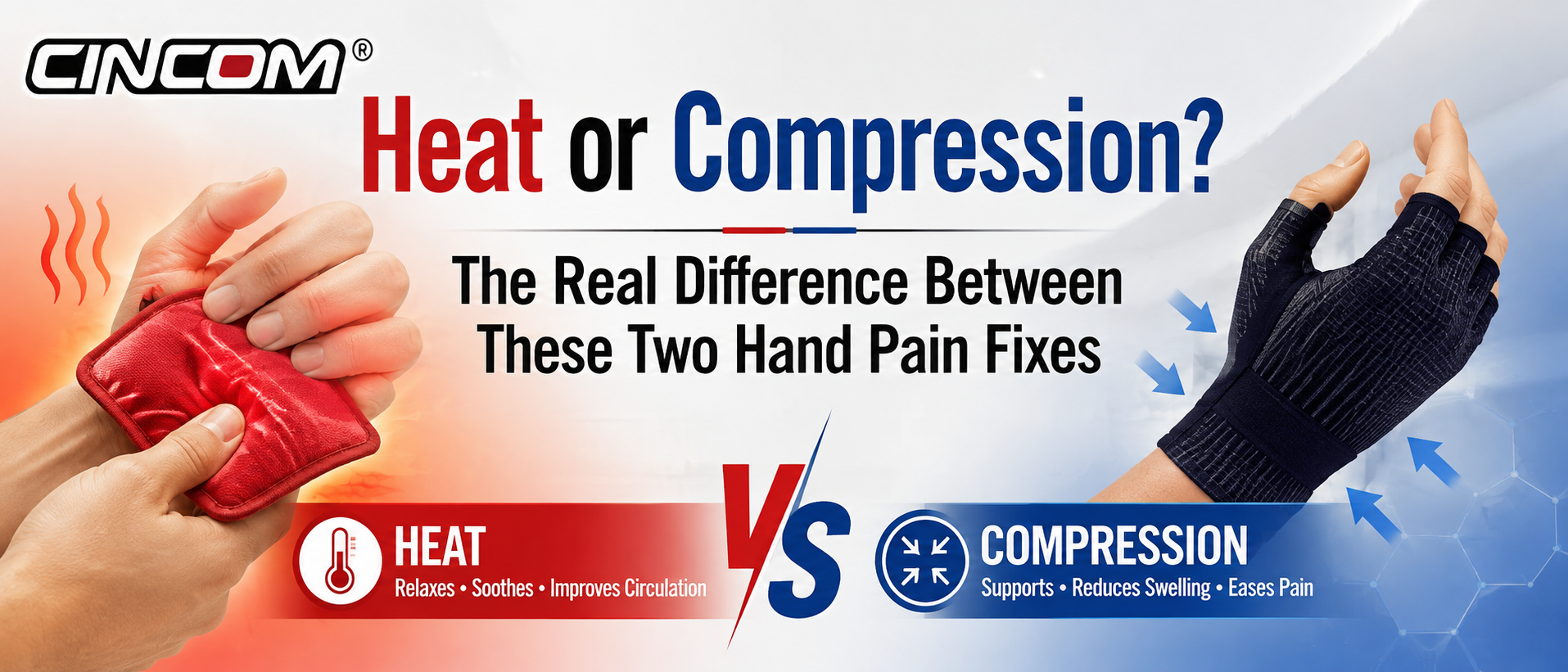
When people ask how to relieve hand pain, heat and compression usually come up first, and for good reason. They're accessible, cheap, drug-free, and you can use them at home without needing a prescription. But they work through completely different mechanisms.Heat increases blood flow. It loosens tight tissue, relaxes stiff joints, and can genuinely feel like a small miracle on a cold morning when your fingers barely want to curl into a fist.
Compression, on the other hand, applies gentle, even pressure. It supports the joints, can reduce swelling, and gives your hand a sense of stability, especially useful if you're using your hands for tasks throughout the day and need that extra bit of support to get through it.
Neither one is "better" in some universal sense. It genuinely depends on the situation. Let's break each one down.
Is Heat Good for Hand Pain?
Short answer: yes, often, but not always. Long answer, well, keep reading.Heat therapy works by dilating blood vessels, which increases circulation to the area. More blood flow means more oxygen and nutrients reaching the tissue, and it also helps flush out some of the metabolic waste that builds up in sore muscles and joints. This is why heat feels so good on stiff, achy joints, particularly with conditions like osteoarthritis where the pain tends to be more of a deep, chronic stiffness rather than acute inflammation.
Is heat good for hand pain caused by arthritis stiffness? Generally, yes. A lot of people with arthritis swear by running their hands under warm water first thing in the morning, or using a heated wrap before they start their day. It loosens things up. Makes the first few movements less painful.
But heat isn't the right call for every kind of hand pain. If there's active swelling, a fresh injury, or inflammation that's clearly visible (think puffy knuckles, redness, warmth already radiating off the skin), adding more heat can actually increase blood flow to an area that's already inflamed, which sometimes makes swelling worse. This is the classic mistake people make. They feel pain, they reach for the heating pad, and if the pain is actually from acute inflammation, heat isn't the fix they think it is.
A few practical ways to use heat for hand pain:
- Warm water soaks, ten to fifteen minutes, water comfortably warm but not scalding
- Heated gel packs or microwavable rice bags molded around the hand
- Paraffin wax dips, which a lot of arthritis clinics actually use because the wax holds heat evenly around each finger
- Warm compresses before stretching exercises, since loosened joints move more comfortably
Compression for Hand Pain: What It Actually Does
Now let's talk about compression for hand pain, because this one gets misunderstood a lot. People assume compression gloves are just for arthritis, but they're used for a much wider range of issues than that.Compression works by applying gentle, consistent pressure to the hand and fingers. This pressure does a few things. It can reduce swelling by encouraging fluid to move out of the tissue rather than pooling there. It provides a mild, constant support to the joints, which some people describe as their hand feeling "held together" in a good way. And for some conditions, it also seems to reduce the sensation of pain itself, possibly by affecting nerve signaling, though honestly the research on that part is still evolving.
Compression for hand pain tends to be most useful in these situations:
- Swelling from arthritis flare-ups, particularly in the morning
- Mild carpal tunnel symptoms, where wrist compression sleeves can offer support
- Overuse injuries where the hand feels unstable or fatigued through the day
- General stiffness that improves with light, snug support rather than warmth
One thing to watch for. Compression should feel snug, not tight. If your fingers start tingling, turning pale, or feeling numb, that's too tight, and it's actually cutting off circulation rather than helping it. Take it off, let the hand recover, and size down next time.
Heat vs Compression: When to Use Which
This is really the heart of the matter, and honestly the answer is often "it depends on the day."Use heat when the pain feels like stiffness. Achy, deep, worse in the cold, better after moving around for a bit. Morning arthritis stiffness is the classic example. Heat loosens things up so you can actually use your hands.
Use compression when there's swelling, when the hand feels unstable, or when you need support to get through a task without the joints feeling like they're grinding. Compression is also great for a general sense of "holding things together" during activities like gardening, cooking, or long stretches of typing.
And sometimes, honestly, you use both, just not at the same time. A lot of people find success warming their hands up first thing in the morning with a soak or heated wrap, then switching to compression gloves once they're moving around and need that extra support throughout the day. It's less about picking a winner and more about matching the tool to what your hand is actually asking for at that moment.
Cold, by the way, is a separate category entirely (worth a quick mention since people often lump it in with these two). Cold is for acute injuries, fresh sprains, sudden swelling right after something happens. That's a different conversation than the heat versus compression question, but good to keep straight in your head so you're not icing a stiff arthritic joint when what it really needed was warmth.
Best Treatment for Hand Pain: Building a Routine, Not Just Picking One Thing
If you're looking for the single best treatment for hand pain, I'll be honest, there isn't one answer that fits everyone. It really comes down to combining a few strategies consistently rather than relying on one product to fix everything.A reasonable daily approach might look something like this. Start the morning with gentle heat, a warm soak or heated wrap, to loosen stiff joints. Follow that with some light hand stretches, making fists slowly, spreading fingers wide, gentle wrist rotations. Then, if you know you've got a day of repetitive tasks ahead, slip on compression gloves for extra support. In the evening, if there's noticeable swelling from the day's activity, consider elevating the hand and using compression again rather than heat.
Beyond heat and compression, a few other habits genuinely help. Taking regular breaks from repetitive movements (yes, even just pausing your typing every twenty minutes or so makes a difference). Strengthening exercises with a soft stress ball, which builds resilience in the hand muscles over time. Staying hydrated, since joint tissue needs fluid to stay cushioned. And paying attention to ergonomics, whether that's how you hold a knife, grip a phone, or position your wrist while typing.
None of these are flashy fixes. They're boring, honestly. But boring and consistent tends to beat dramatic and occasional when it comes to joint health.
Final Thoughts
At the end of the day, figuring out how to relieve hand pain isn't about choosing a winner between heat and compression. It's about listening to what your hands are actually telling you on a given day and responding accordingly. Stiff and achy, reach for warmth. Swollen and unstable, reach for support. Some days you might need both, just spaced out through the day rather than piled on at once.For comfortable support and everyday hand-care solutions, explore Cincom range of products designed to help you feel more comfortable throughout the day.
And if the pain sticks around for more than a couple of weeks, gets worse instead of better, or comes with symptoms like persistent swelling, numbness, or joint deformity, that's really a conversation for a doctor rather than something to keep managing on your own with heating pads and gloves. Home remedies are genuinely useful for everyday aches, but they're not a replacement for a proper diagnosis when something feels seriously wrong.
✨ Feel Better, Move Easier
Explore Newsbuck for more exclusive deals and important updates. We are your go-to source for all the news and trending stories across fashion, politics, health, entertainment and much more!
FAQs
1. Can I use heat and compression at the same time on my hand?
It's generally better to space them out rather than combine them at once. Heat increases blood flow, and applying tight compression on top of that can trap heat unevenly against the skin. Most people do better using heat first to loosen the joints, then switching to compression later for support.
2. How long should I use a heating pad on my hand for pain relief?
Ten to fifteen minutes at a time is usually enough to get the benefits without overdoing it. Longer sessions don't necessarily mean better results, and leaving heat on too long, especially while distracted or asleep, raises the risk of skin irritation or burns.
3. Are compression gloves safe to wear all day?
For most people, yes, as long as the fit is snug rather than tight and there's no tingling, numbness, or color change in the fingers. Many people wear them overnight or during specific activities rather than continuously, giving the hands a break now and then to move freely without pressure.