
Overview
Shop Certified Refurbished Phones 📱This post answers one question: how many years can you realistically expect from a refurbished phone? We look at typical lifespan numbers, what really shapes them (battery, software support, the quality of the refurbishment), and how reliable these phones are compared with brand new ones. You will also find practical tips to stretch your phone further, a short Final Thoughts section, and 3 FAQs at the end. And if you're ready to start browsing, Back Market is a handy place to look, with tested, quality-checked phones that come with a warranty for extra peace of mind.
Why This Question Keeps Popping Up
So, how long do refurbished phones last? Short version: usually somewhere between two and five more years, sometimes longer. Longer version... well, that's the rest of this article.I get why people hesitate. A used phone sounds like a gamble. Someone else's fingerprints, someone else's drops, someone else's charging habits. But a refurbished phone isn't just a used phone with a wipe. It's been tested, repaired where needed, cleaned, and (with decent sellers) given a fresh warranty. Big difference. Not always, though. We'll get to that.
My cousin in Noida bought a refurbished iPhone 11 in early 2022. Everyone told him he was nuts. It's still his daily phone. Battery's tired, sure, and he complains about it every Sunday, but the thing works.
How Long Do Refurbished Phones Last in Real Life?
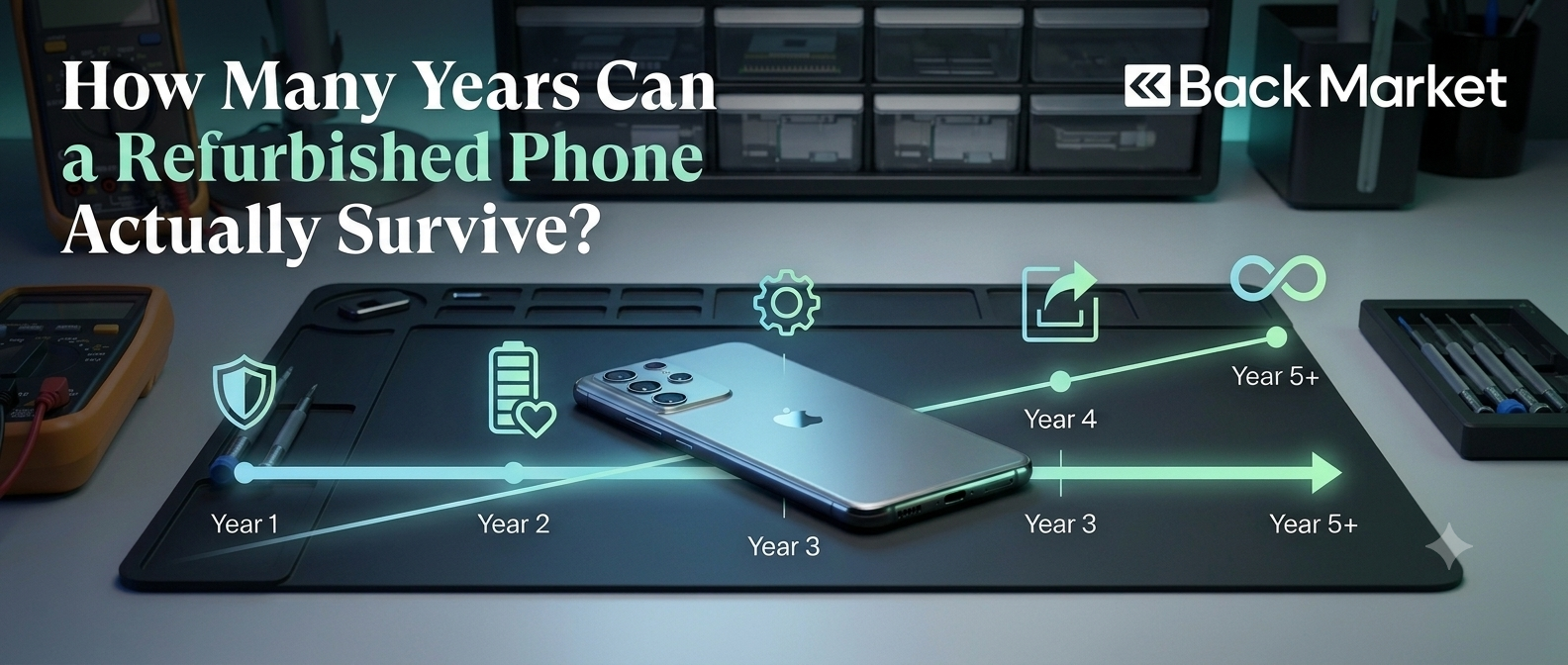
Let's put some honest ranges on the table. These are rough, not promises.- A well-refurbished flagship that is two or three years old: often another three to five years of useful life.
- A mid-range refurbished phone: maybe two to four years.
- A budget model that was already struggling: two years, and that's being kind.
And here's a thing nobody says out loud: new phones fail too. Dead pixels, bad batteries, motherboard issues. A refurbished device has already passed the early-failure window, so in a weird way, some of the risk has been filtered out. Not all of it. Some.
Refurbished Phone Lifespan: What Actually Decides the Years
The refurbished phone lifespan comes down to four things. Four. Not forty.- Battery health: The big one. We'll spend a whole section on it below.
- Software support: A phone can be physically perfect and still become a headache if the maker stops sending security updates. Apps stop working. Banking apps get picky. It's slow death by notification.
- Physical wear: Cracked frames, loose charging ports, a speaker that crackles at high volume. Good refurbishers catch these. Bad ones paint over them.
- The refurbisher: Honestly, this might be number one. Same phone, two sellers, two completely different outcomes.
Battery Degradation: The Silent Clock Inside Every Phone
Let's talk about battery degradation, because it's the part that actually wears out first.Phone batteries are lithium-ion. They lose capacity a little with every charge cycle, and also just by sitting around, especially when hot. Manufacturers commonly design batteries to hold around 80 percent of original capacity after several hundred full cycles (Apple, for example, has quoted 500 for older iPhones and 1,000 for newer ones). After that the decline continues, and it isn't dramatic, it's gradual. You notice it when your phone dies at 30 percent on a cold morning.
Here's what that means for a refurbished phone:
- Many reputable sellers replace the battery if health falls under a threshold, often 80 percent. Some programs, like Amazon Renewed, set 80 percent as a minimum for the battery in certain categories.
- Cheaper sellers might just ship it as is. You could get a phone at 78 percent health, or 71, and nobody mentions it.
- A fresh battery can reset the clock completely. That's why a phone with a new battery can feel brand new for another two or three years.
And if the battery is the only thing failing? Replacing one usually costs far less than buying a new phone. Not free, but it's a reasonable fix. Which, oddly enough, is one reason refurbished phone reliability can look better over time than people expect.
Refurbished Phone Reliability: Who Did the Work Matters Most
When people ask about refurbished phone reliability, they're really asking: "Will this thing die on me in three months?"Reliability mostly tracks the type of seller. Roughly, from most to least trustworthy:
- Manufacturer refurbished (Apple Certified Refurbished, Samsung's certified programs). Genuine parts, new battery when needed, usually a full-year warranty. Priciest option, and also the safest.
- Carrier or major retailer programs. Solid testing, decent warranties, fair prices.
- Dedicated refurbishment marketplaces (Back Market, Cashify and similar). Quality depends on the individual seller and grade, so read the warranty terms. A twelve-month warranty is a good sign. Three months is... okay. Ish.
- Random listings and local shops. Can be great. Can be a disaster. Check everything, including IMEI status.
By the way, water damage is the sneaky killer. Even refurbished phones that look flawless can have corrosion creeping in. Ask whether the seller checks the liquid contact indicators. If they go quiet, walk away.
Phone Longevity Depends on Software Support
Phone longevity isn't only about hardware. A phone that no longer gets security patches is risky to use, full stop.Some examples of how much support you can expect:
- iPhones have historically received around five to seven years of iOS updates. The iPhone 6s, released in 2015, got updates all the way to iOS 15 in 2021.
- Google's Pixel 8 and newer promise seven years of updates.
- Samsung's Galaxy S24 series also promises seven years.
- Older or budget Androids may only get two or three years. Sometimes less.
I'll be blunt: a cheaper phone with no updates left isn't a bargain. It's a ticking clock with a discount sticker.
Device Lifespan Years: A Rough Cheat Sheet
Here's a simple way to think about device lifespan years after you buy refurbished. Remember, these are ballpark figures, not guarantees.- Refurbished iPhone, 2 to 3 years old, new battery: about 4 to 6 more years.
- Refurbished flagship Android with long update promise: about 3 to 5 more years.
- Refurbished mid-range Android: about 2 to 4 more years.
- Refurbished budget Android, limited support: about 1 to 3 more years.
And, look, your habits matter more than the label "refurbished." I've seen brand-new phones turn sluggish in eighteen months because of how they were treated.
How to Make Your Refurbished Phone Last Longer
A few small habits. Nothing fancy.Charge smart. Keep it between roughly 20 and 80 percent when you can. It isn't a rule carved in stone, but lithium-ion batteries do seem happier that way. Many phones now offer optimized or limited charging modes, so switch them on.
- Avoid heat: Phone on the dashboard in an Indian summer? Bad idea. Heat is the number one enemy of battery health.
- Use decent chargers: A certified charger and cable. The 150-rupee unbranded ones from the roadside stall can cause odd voltage behavior over time. I know, I know, they're tempting.
- Update, but wisely: Install security updates. For major version jumps on older phones, maybe wait a week and see what other people say about performance.
- Protect it: Case, tempered glass. Boring advice. Works anyway.
- Keep storage tidy: A phone that's 98 percent full runs slower and wears flash storage harder. Clear it out every few months.
Final Thoughts
So, how long do refurbished phones last? If you buy from a trustworthy seller, pick a model that still has software support, and check the battery, you can reasonably expect around three to five years, and sometimes more. That isn't a gamble. It's a decision with a few boxes to tick.The cheapest listing is rarely the best one. A slightly higher price with a proper warranty, a healthy battery and a known grade usually saves money in the end. Think about the cost per year, not just the sticker. Plus, there's the planet angle: every phone kept in use is one less piece of e-waste, and one less new device to manufacture.
And if you'd rather skip the guesswork, that's where Back Market comes in. Their refurbished phones are tested, quality-checked and backed by a warranty, so you can buy with a lot less worry and a lot more confidence.
Buy carefully. Look after it. Then forget about upgrading for a while.
Shop Certified Refurbished Phones 📱
Explore Newsbuck for more exclusive deals and important updates. We are your go-to source for all the news and trending stories across fashion, politics, health, entertainment and much more!
FAQs
1. Is a refurbished phone as reliable as a new one?
Often it's close, especially from manufacturer or well-reviewed certified sellers. Refurbished phones have been tested and repaired, and many come with a warranty of six to twelve months. Reliability does depend on the seller and the battery condition, so check both before you pay.
2. How many years should I expect from a refurbished iPhone or Android?
A refurbished iPhone from two or three years ago typically gives another four to six years if the battery is replaced when needed. A good Android flagship with long update support can give three to five. Budget Androids with short support often last one to three years.
3. Does battery degradation make refurbished phones a bad buy?
Not necessarily. Battery degradation happens to every phone, new or refurbished. Choose a seller that guarantees at least 80 percent battery health or installs a new battery, and ask for the figure in writing. A replacement battery later is relatively cheap compared with buying a new phone.