
Introduction
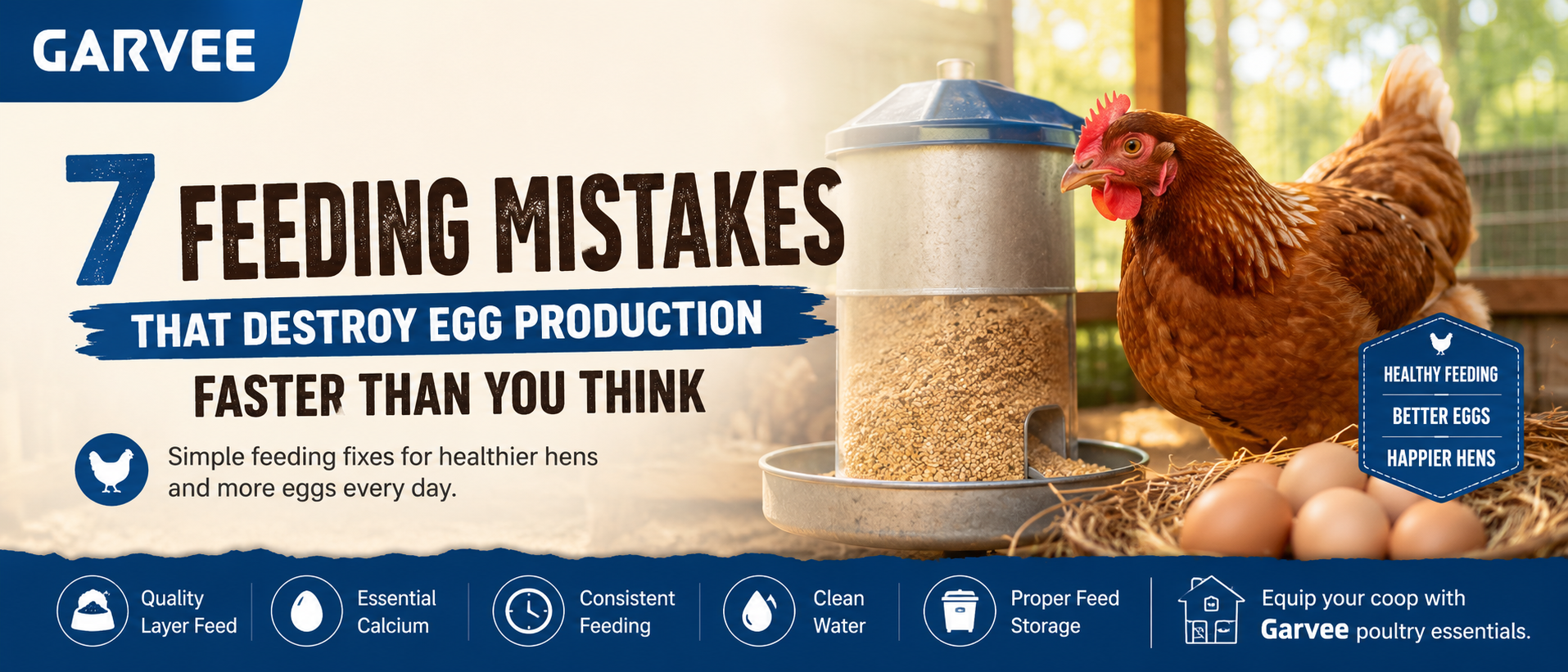
Keep your hens healthy with Garvee poultry essentials.So you've got a backyard flock. The coop looks great, the birds seem happy — and yet the egg basket stays almost empty most mornings. Frustrating, right? The truth is, most drops in chicken egg production come down to what's going into the feeder, not what's happening in the nesting box. Feeding mistakes are sneaky like that. They build up slowly, and by the time the hens stop laying, people have already started blaming the weather or the season. And speaking of having the right setup — Garvee carries a solid range of livestock and poultry equipment, from automatic feeders to egg-laying boxes, all designed to make backyard chicken care genuinely easier and more rewarding.
Mistake #1: Skipping Layer Feed — The Biggest Egg Production Mistake
This one surprises many new chicken keepers. Regular grain or scratch feed just doesn't cut it for laying hens. Hens not laying eggs at expected rates are often simply not getting the right nutrients. Poultry nutrition for layers is specific — they need elevated calcium, adequate protein (around 16–18%), and a balanced vitamin profile. Without this, the body simply won't support consistent laying. The best feed for laying hens is a proper layer pellet or crumble, not a mix of leftover grains and scratch treats.Mistake #2: Overloading Treats and Scratch Grains
Treats feel good to give. Watching hens run toward a handful of corn or mealworms is genuinely fun. But here's the thing — when treats make up more than 10% of the daily diet, poultry nutrition suffers fast. Scratch grains are low in protein and calcium. Too much of it literally dilutes the nutritional value of whatever layer feed is being offered. Hens that aren't consistently laying eggs often have diets that appear varied but are actually nutritionally poor. Keep treats small — like a tablespoon or two per bird — and always lead with quality layer feed first.Mistake #3: Ignoring Calcium Deficiency
Calcium is essential for chicken egg production. Without enough of it, hens either produce thin-shelled eggs that crack easily or stop laying altogether. Weirdly, some backyard flocks get decent feed but still run low on calcium because the soil around the coop is calcium-poor, and hens pick at the ground constantly. Offering crushed oyster shell on the side — free choice, separate from the main feed — is one of the simplest fixes in backyard chicken care. It lets each hen take what her body actually needs.Mistake #4: Inconsistent Feeding Times
Hens are creatures of routine. Really, their bodies work on internal clocks, and disrupted schedules genuinely affect laying. When feeding happens at random times, hens go through unnecessary stress cycles. Stress hormones interfere with the reproductive cycle, and that's a direct hit to egg production. This is also where an automatic poultry feeder pays off in a big way. Tools like the ones available through Garvee make consistent daily feeding much more manageable, especially for folks who travel or have unpredictable schedules.Mistake #5: Poor-Quality or Stale Feed
Feed that's been sitting in a damp garage for three months isn't doing anyone any favors. Oxidized fats, mold spores, and nutrient breakdown happen faster than most people realize, especially in humid climates. Stale feed is one of the quieter egg production mistakes — it looks fine, smells mostly okay, but delivers far less nutritional value than fresh feed. Buying in smaller quantities, storing in airtight containers, and rotating stock properly make a real difference. The best feed for laying hens is only as good as how it's stored.Mistake #6: Not Adjusting Feed for the Season
Poultry nutrition needs shift with the seasons, and this catches a lot of backyard flock owners off guard. In winter, hens burn more calories just staying warm, so they actually need more feed. In summer, heat stress can reduce appetite. Protein requirements may also shift during molting periods when feathers are regrowing. Sticking rigidly to the same feed amount year-round is a common egg production mistake — adjusting portions and monitoring body condition every few weeks makes a meaningful difference in keeping hens not laying eggs back on schedule.Mistake #7: Contaminated or Dirty Water Near the Feed
Water might seem separate from feeding, but contaminated water right next to the feeder affects how well hens digest and absorb nutrients. Hens that drink dirty or algae-filled water eat less, absorb fewer nutrients, and produce fewer eggs. Backyard chicken care fundamentals include checking waterers daily and cleaning them at least twice a week. If water sits in the sun and has turned green, it's already hurting the flock. Fresh, clean water alongside quality feed is the foundation every chicken egg production setup needs to function properly.Fix the Feeding, Fix the Egg Production Mistakes
Most egg production mistakes don't require expensive solutions — they just need attention and consistency. Start with a quality layer feed, keep treats minimal, offer calcium free-choice, and make sure water stays clean. Add consistent feeding times and proper feed storage, and the difference shows up in the nest box pretty quickly.For anyone looking to upgrade their setup, Garvee offers a practical range of poultry supplies, including automatic feeders, egg-laying boxes, and chicken coops — everything designed to support healthy, productive flocks. Whether managing five hens or fifty, having the right equipment makes good backyard chicken care habits a whole lot easier to maintain. Browse Garvee's livestock and poultry section at garvee.com to find what the flock actually needs.
Keep your hens healthy with Garvee poultry essentials.
Explore Newsbuck for more exclusive deals and important updates. We are your go-to source for all the news and trending stories across fashion, politics, health, entertainment and much more!
Read More Blogs:
Best Project Management Certifications Without A Degree
What Is An AI App Builder? How Anyone Can Build Real Apps Without Writing Code
Millions Shop On Shein—But Is Shein Legit And Safe To Use?
FAQs
Q1. What is the most common egg production mistake backyard chicken owners make?Feeding hens regular scratch grains instead of proper layer pellets is the most common mistake that directly drops egg production.
Q2. How does Garvee help improve backyard chicken care?
Garvee offers reliable poultry supplies like automatic feeders, egg-laying boxes, and chicken coops that make consistent, healthy flock management much easier.
Q3. Can inconsistent feeding times really affect hens not laying eggs?
Yes — irregular feeding disrupts hens' internal routines, triggers stress hormones, and directly interferes with their natural laying cycle.