
Overview
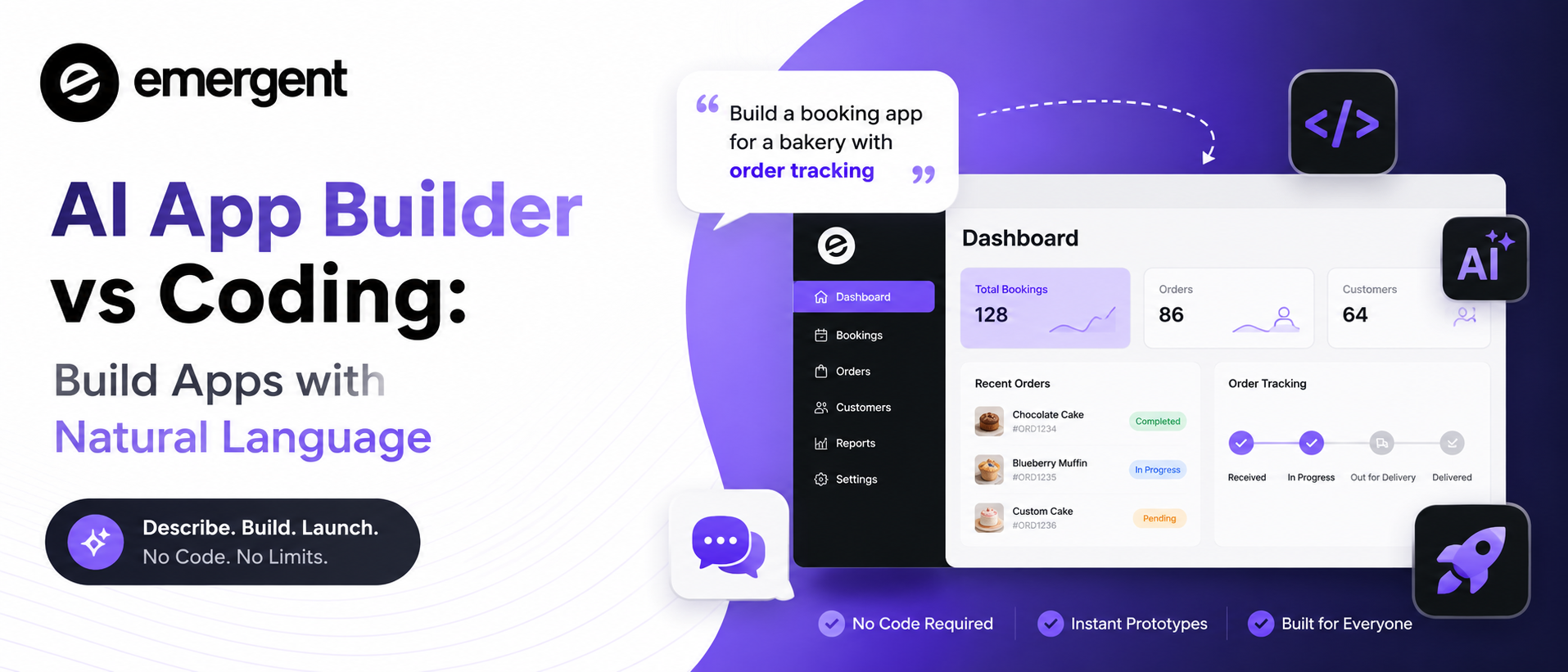
Build Your AppSo, an idea pops up - maybe it's a small booking tool for a local bakery or a workout tracker scribbled on a napkin at 2 a.m. Not long ago, that idea would've stayed a napkin sketch forever, buried under the weight of learn to code first. Things have changed. The whole AI app builder vs coding conversation is everywhere right now, and honestly, it makes sense why. Typing out a plain sentence, something like "build a booking app for a bakery with order tracking," can now turn into a working product in a matter of minutes. No frameworks and no late nights debugging missing semicolons. Platforms like Emergent are behind a lot of this shift, letting anyone, technical or not, just describe what's needed and watch it show up on screen. This post digs into how natural language app development works, why it's winning over traditional coding for most everyday projects, and why Emergent keeps coming up as the go-to name in this space.
What Does AI App Builder vs Coding Really Mean?
Here's the short version. AI app builder vs coding is really just two roads to the same destination. A working app. Coding involves years of learning languages, frameworks, and syntax rules that often don't stick the first time. An AI app builder? Skips all that. Plain instructions now perform many of the tasks that code syntax used to handle. Type a goal, hit enter, and the platform handles the messy technical stuff quietly in the background. Simple as that.How Natural Language Turns Ideas Into Apps
Natural language app development reads normal sentences and turns them into real, working code. No function-by-function typing required. A simple request, such as "create a to-do list with reminders," is truly sufficient to initiate the process. The system figures out what's meant, sketches a layout, wires up the logic, and does it all fast. The steep learning curve that everyone dreads with traditional development is mostly gone. Ideas matter more than syntax now, and that's a pretty big shift.Why Emergent Makes This Process Simple
Emergent keeps showing up as a favourite in the AI app builder vs coding discussion, and it's not hard to see why. The interface feels less like software and more like a conversation. No jargon, and no clunky menus. Describe an app idea the same way you would explain it to a friend, and Emergent runs with it. Small business tools, weekend passion projects and quick prototypes – it handles all of them without fuss. Reliable, straightforward, genuinely easy.AI App Builder vs Coding: A Quick Comparison
Sometimes a table just says it better than paragraphs ever could. Here's how the two approaches stack up when speed, budget, and flexibility are on the line, which, let's be honest, is most of the time for anyone starting a new app project without a full dev team on standby.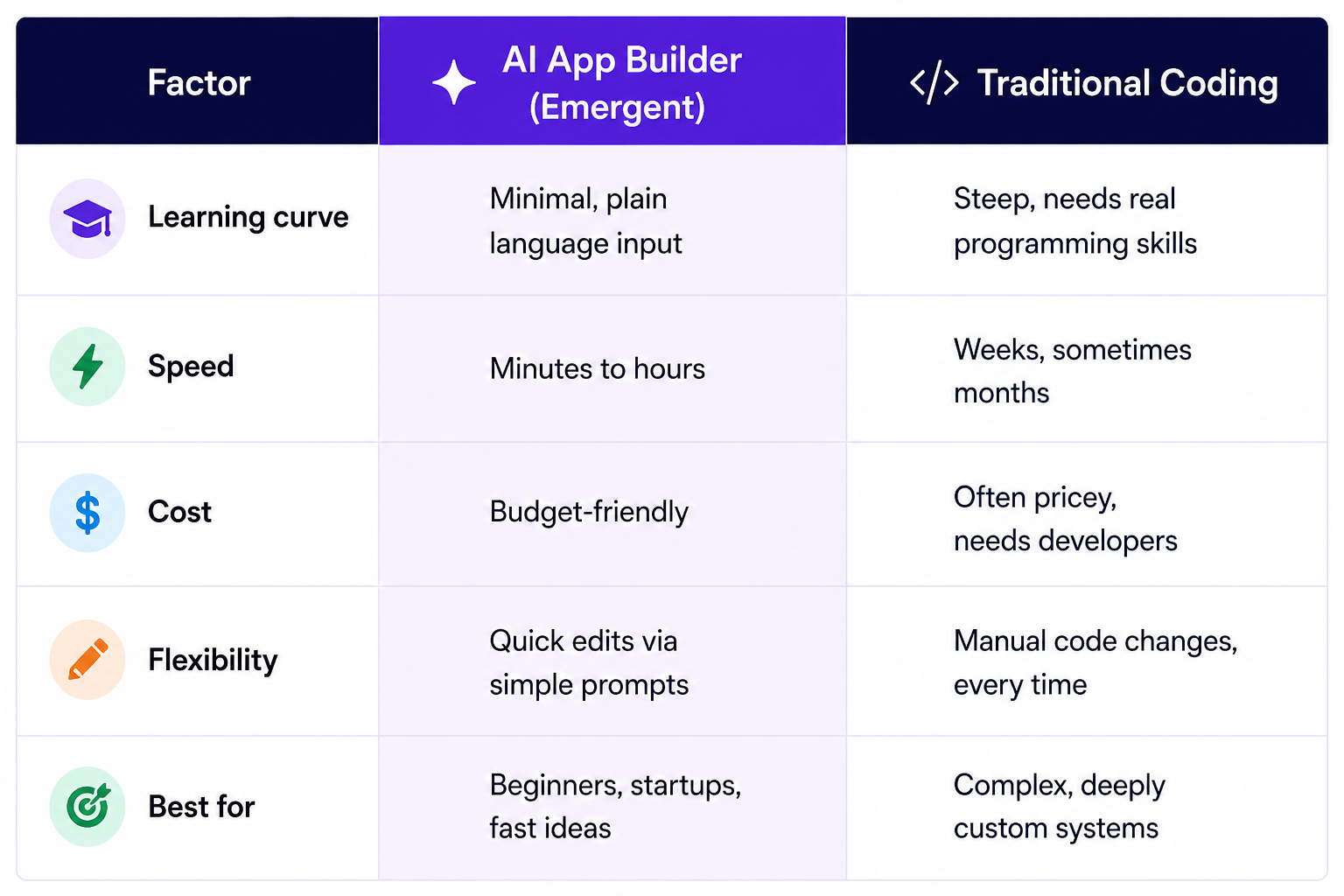
Steps to Build Your App From a Simple Idea
Getting started with build app with natural language tools doesn't take a manual. Honestly, it's pretty intuitive. Here's roughly how it goes, from that first vague idea to something live and working:- Jot down the app idea in plain, everyday words
- Let the platform sketch out structure, layout, and design
- Review what comes back, and ask for tweaks in follow-up prompts
- Add extras, logins, payments, and notifications just by describing them
- Test it out, fix small things, then hit publish
Benefits of Choosing an AI App Builder Over Coding
What are the advantages of choosing this route over hiring a development team? Several reasons quickly become apparent. Time, for one: ideas move from 'just thought of this' to 'it's live' almost instantly. Cost too, obviously – no large team on payroll. Flexibility is also a key factor, as making adjustments simply requires a request rather than rewriting extensive code at midnight. It's a genuinely less stressful way to build.- Faster launches than traditional development cycles allow
- Lower costs, no need for a full technical team
- Simple updates through natural, everyday instructions
- Friendly to non-technical founders, students, small business owners
- Room to experiment without burning through a budget
Who Can Use This Approach?
Honestly, pretty much anyone. Natural language app development works for the small bakery owner who needs an order tracker, the student turning a class project into a live demo overnight, and the freelancer prototyping something for a client pitch by Friday. Even bigger teams lean on it, testing ideas quickly before committing real engineering hours. Emergent fits all of these situations without asking users to be developers first.Common Myths About AI App Building
There's this idea floating around that apps built this way are somehow lesser, sloppy, and held together by luck. That's outdated thinking at this point. Emergent and platforms like it apply real structured logic behind every prompt, so results come out organized and dependable, not random. Another myth: only real developers are allowed to build things. Not true anymore. Clear communication has quietly replaced syntax knowledge as the main skill that matters here.Tips for Getting the Best Results with Natural Language Prompts
Specific prompts beat vague ones, every single time. Stating the app's purpose, core features, and target audience helps the platform understand it faster. Breaking a big idea into smaller chunks helps too, rather than dumping everything into one massive request. And reviewing each piece as it comes together, rather than waiting until the end, keeps the final product closer to what was actually pictured in the first place.Future of App Development with AI
Where's this all heading? The future is heading toward greater accessibility and reduced gatekeeping. As natural language tools continue to improve, that gap between "just an idea" and "it's live" keeps shrinking. Emergent sits right in the middle of that shift, standing for a future where technical skill isn't the deciding factor anymore. Ideas are becoming the real starting point, not code, and that's changing things across industries, classrooms, and side projects everywhere.Final Thoughts
At the end of the day, the whole AI app builder vs coding debate comes down to something pretty simple: accessibility, speed, and a bit of confidence for the person building it. Sure, traditional coding still matters, especially for huge, highly specialized systems that need deep customization. But for most everyday ideas, the ones scribbled on napkins or thought up during a commute, natural language platforms are just faster and friendlier. Emergent captures that shift well, turning plain, ordinary descriptions into real, working apps without demanding years of technical training or a hefty budget. Do you have a good idea, a clear goal, and a few spare minutes? That's genuinely enough now. As more people discover build app with natural language tools, the line between "just an idea" and "an actual working app" keeps getting thinner. Emergent's right there for that journey, simple, dependable, and honestly kind of exciting to use, one prompt at a time.Build Your App
Explore Newsbuck for more exclusive deals and important updates. We are your go-to source for all the news and trending stories across fashion, politics, health, entertainment and much more!
Read More Blogs:
Flash Sales Explained: Why Smart Shoppers Love Limited-Time Deals
Best Game Marketplaces For Buying & Selling In 2026
How To Transition One-Off Projects Into High-Value Monthly Retainers
FAQs
1. What is the main difference in the AI app builder vs coding debate?Coding needs years of learning languages and frameworks, while AI app builder like Emergent turns plain, everyday sentences into a working app within minutes.
2. Can someone with zero technical background use Emergent to build app with natural language?
Absolutely. Emergent is built for non-technical founders, students, and small business owners, so describing an idea in normal words is all it takes.
3. Is natural language app development suitable for complex, large-scale projects?
It works best for simple ideas, quick prototypes, and everyday tools; highly specialized, deeply custom systems may still benefit from traditional coding alongside it.