
Overview
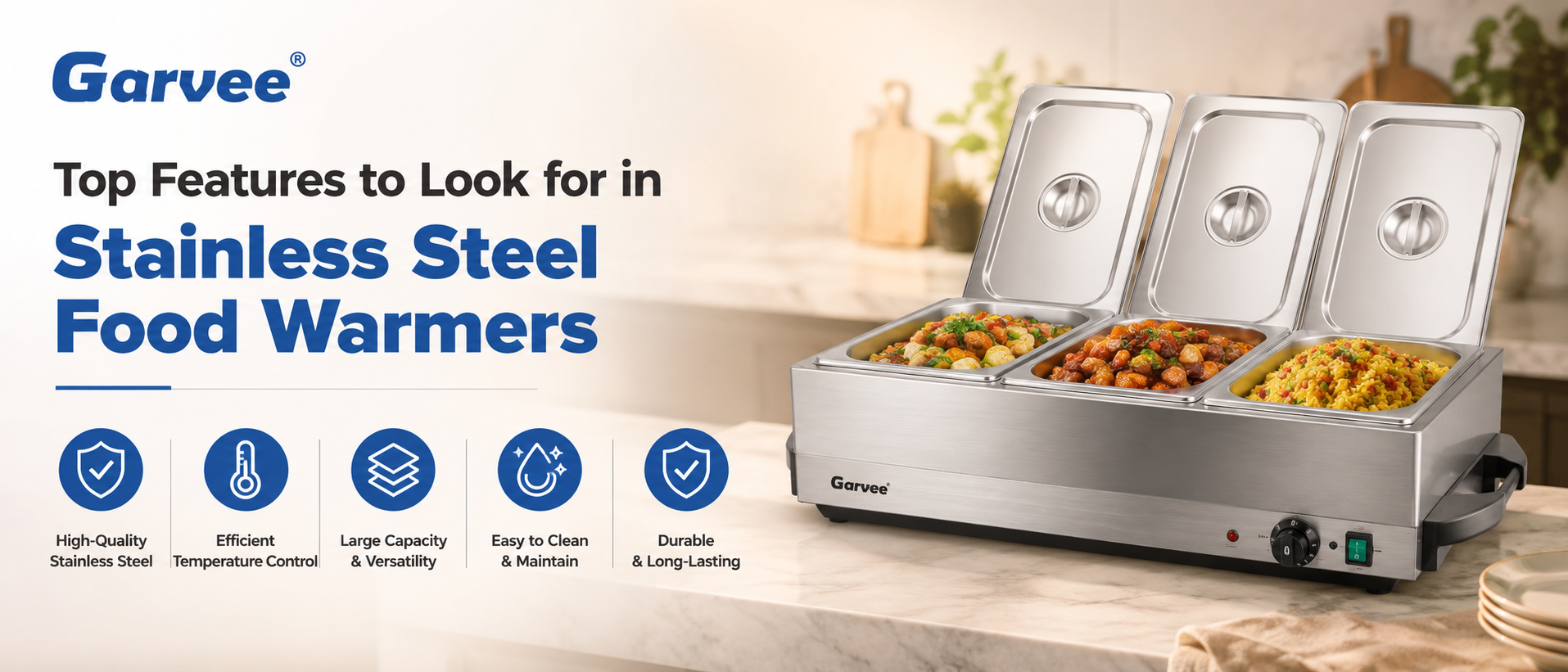
If you've ever hosted a dinner party and watched your carefully prepared dishes go lukewarm within twenty minutes—yeah, that's a specific kind of disappointment. Food warmers solve that problem. But not all of them are built the same, and honestly, walking into a kitchen supply store without knowing what to look for is a bit overwhelming. Stainless steel food warmers, in particular, have become a go-to choice for home cooks, caterers, and restaurant owners alike. They're durable, they look professional, and — when you pick the right one — they just work. With Garvee stainless steel food warmers, you get the perfect balance of durability, performance, and modern design for every serving setup.
So what actually separates a great food warmer from one that'll frustrate you mid-service? That's what this guide is about. We're walking through the features that genuinely matter—things like adjustable temperature control, integrated glass lids, easy maintenance, safety design elements, energy-efficient insulation, and heat source versatility. These aren't buzzwords. They're the difference between a product that serves you well for years and one that ends up collecting dust.
Why Stainless Steel Food Warmers Stand Out
Before jumping into specific features, it's worth pausing on the material itself. Stainless steel isn't just an aesthetic choice—it's a functional one. The material resists corrosion, handles high temperatures without warping, and doesn't absorb odors or stain the way plastic does. For anyone who's used a cheaper warmer and ended up with mysterious smells by month three, you'll appreciate that.
Beyond that, stainless steel food warmers are easier to sanitize. In commercial settings, that matters enormously. And even at home, knowing your warmer can be thoroughly cleaned without degrading the surface? That's peace of mind. The material also distributes heat fairly evenly—which ties directly into the features we're about to cover.
Adjustable Temperature Control: The Feature That Changes Everything
Let's start here because—honestly—this might be the single most important thing to check. Adjustable temperature control gives you the ability to match heat levels to whatever you're serving. A creamy soup needs gentle, steady warmth. Grilled meats need something a bit more assertive. A one-temperature-fits-all approach? That's going to disappoint you eventually.
Good food warmers offer a wide temperature range — typically somewhere between 140°F and 212°F — with precise increments. Some models use analog dials; others have digital panels. Both can work well, but digital controls tend to be more accurate and easier to read mid-service when you're rushing around. Look for clear markings, responsive controls, and ideally some kind of indicator light or display that confirms the current temperature. Guessing isn't a system.
One thing that often gets overlooked: temperature recovery time. When you open the warmer and cold air rushes in, how quickly does it return to your set temperature? Better-built units with quality adjustable temperature control systems bounce back faster. That's especially noticeable at buffets or events where the lid is being lifted constantly.
Integrated Glass Lids: More Than Just a Pretty Look
Integrated glass lids are — and I'll admit this sounds small — kind of a big deal. The visibility factor alone is useful. Guests or staff can see what's being served without lifting the lid repeatedly, which means less heat loss, less steam escaping, and less disruption to whatever's sitting inside. At a busy catering event, that matters more than you'd think.
But integrated glass lids do more than just show off the food. They create a tighter seal than some metal alternatives, helping maintain consistent internal temperatures. The glass itself should be tempered—regular glass around sustained heat is an accident waiting to happen. Tempered glass handles thermal stress and is far safer if it does ever get knocked.
Look for lids with built-in handles that stay cool to the touch. Some models have steam vents built into the lid design, which prevents excessive pressure buildup and condensation dripping back onto the food. Small detail, but it makes the whole experience cleaner and more pleasant. Nobody wants watery soup.
Easy Maintenance: Because Nobody Wants to Spend an Hour Cleaning
Here's something people don't think about until they're elbow-deep in a sink: how annoying is this thing to clean? Easy maintenance isn't just a convenience feature — it directly affects food safety and the lifespan of the product. Residue buildup in hard-to-reach corners is a hygiene problem waiting to develop.
The best stainless steel food warmers are designed with easy maintenance in mind from the start. That means removable water trays (for wet heat models), smooth interior surfaces with no sharp edges or unnecessary seams, and components that can be pulled apart and washed separately. Dishwasher-safe parts are a genuine bonus—not all are, so check the specs.
For the stainless exterior, avoid abrasive scrubbers — they scratch the surface and create micro-grooves where bacteria can settle. Most stainless warmers clean up well with warm soapy water and a soft cloth. That said, the quality of the steel finish varies. Brushed finishes tend to hide light scratching better than mirror-polished ones. Something to consider if the unit is going to see heavy daily use.
Safety Design Elements: Don't Skip This Section
Safety design elements in food warmers aren't just regulatory checkboxes. They're features that protect your food, your guests, and — frankly — you. The obvious ones: cool-touch exterior surfaces and handles. If the outside of the unit gets hot enough to burn, someone is going to get hurt. That's not an if; that's a when.
Overheat protection is another critical safety design element. Quality warmers include a thermal cutoff switch or auto-shutoff feature that kicks in if the unit exceeds safe operating temperatures. This is especially important in commercial settings where units may run for extended periods unattended.
Stability matters too — more than people realize until something tips over. A warmer full of hot liquid is a serious hazard. Look for non-slip feet, a wide base, and a design that sits low enough to feel stable even when bumped. Some models include locking mechanisms or securing straps for transport, which is a nice touch for catering setups. Anti-drip spouts on liquid warmers are another small safety design element that prevents burns and keeps surfaces clean.
Energy-Efficient Insulation: Warmth That Doesn't Cost a Fortune
Running a food warmer for four or five hours during an event adds up—especially if you're using multiple units. Energy-efficient insulation is what makes the difference between a warmer that maintains temperature with minimal power draw and one that's constantly working to compensate for heat loss through thin walls.
Double-walled construction is the gold standard here. The air gap (or insulating material) between the inner and outer walls dramatically reduces heat transfer to the exterior, meaning the heating element doesn't have to work as hard. This also keeps the outer surface cooler—which loops back to those safety design elements we discussed. Two birds, one stone.
When comparing models, look at the wattage relative to the capacity. A 200W unit maintaining temperature in a 9-liter warmer tells you something about the quality of its energy-efficient insulation. A 400W unit doing the same job is essentially compensating for thermal inefficiency. Over time — especially in commercial settings — that gap in energy consumption becomes a real cost difference.
Heat Source Versatility: Flexibility for Every Setting
Not every event has the same setup. Sometimes you're near a power outlet. Sometimes you're at an outdoor venue with limited access to electricity. Heat source versatility is what allows a single warmer to adapt to different contexts rather than locking you into one scenario.
Electric warmers are the most common and offer consistent, controllable heat. But chafing dish-style stainless warmers using gel fuel or Sterno cans are still widely used—and for good reason. They're portable, they don't require any power infrastructure, and they produce a gentle, diffuse heat that's surprisingly effective for maintaining serving temperatures over a couple of hours.
Some higher-end models are compatible with induction heating, which is an interesting option for settings where open-flame concerns apply (certain indoor venues restrict Sterno use). The heat source versatility of induction-compatible stainless warmers also means you can achieve much more precise temperature control than gel fuel allows. Worth considering if flexibility is a priority for you.
Capacity, Size, and Build Quality: Getting the Basics Right
Beyond the specific features above, there are a few foundational considerations. Capacity needs to match your use case — a 4-liter warmer is fine for a family dinner; a 9-liter or 12-liter unit makes more sense for catering. Going too large means the food is spread thinly and may dry out faster. Going too small means you're refilling constantly.
Build quality shows up in the details. The weight of the unit, the sturdiness of the hinges and latches, the thickness of the steel — these things communicate how the product was made. Budget warmers often use thinner-gauge steel that dents easily and loses shape over time. A well-built food warmer should feel solid, not hollow.
Final Thoughts
Choosing the right food warmers isn't a complicated process once you know what matters. Adjustable temperature control keeps your dishes at exactly the right heat. Integrated glass lids maintain temperature while keeping food visible. Easy maintenance ensures hygiene and longevity. Safety design elements protect everyone around the unit. Energy-efficient insulation keeps operating costs down. And heat source versatility means the warmer works wherever you need it to.
Stainless steel food warmers hit a sweet spot for most use cases—durable, professional-looking, easy to clean, and available at a wide range of price points. The features listed here aren't luxury add-ons; they're the baseline for a product that'll actually serve you well. Take them seriously when comparing options, and you'll end up with a warmer that makes every meal service—from family Sunday dinners to large catered events—noticeably smoother.
Warm Food Smarter 🍽️
Read Our More Blog
Motorcycle Lift Vs Car Jack: Key Differences Explained
Learn AEO And GEO Like A Pro: The Future Of SEO You Can’t Ignore
10 Best Unique Road Trip Routes In The USA For Adventure Travelers
Frequently Asked Questions (FAQs)
Q1: What temperature should stainless steel food warmers maintain to keep food safe?
Food safety guidelines generally recommend keeping hot foods at or above 140°F (60°C). This temperature range prevents bacterial growth in the "danger zone" between 40°F and 140°F. A quality food warmer with reliable adjustable temperature control should hold steady at this threshold or above. If you're serving food over multiple hours — say, at a buffet or catering event — check the temperature of the food itself periodically with a probe thermometer rather than relying solely on the unit's display. The warmer maintains ambient heat; the food's core temperature is what actually matters for safety.
Q2: How often should I clean my stainless steel food warmer, and what's the best method?
Ideally, after every use — especially in commercial or catering contexts. For easy maintenance, wipe down the interior with warm soapy water while it's still slightly warm (not hot) since residue is easier to remove before it sets. Remove any water or drip trays and wash them separately. For the stainless steel exterior, a soft microfiber cloth with a mild cleaner works well — always wipe in the direction of the grain to avoid scratching. Avoid chlorine-based cleaners, which can damage the steel over time. If mineral deposits build up around heating elements or water reservoirs, a diluted white vinegar solution handles those effectively.
Q3: Can I use stainless steel food warmers outdoors, and does heat source versatility affect outdoor use?
Yes — and this is exactly where heat source versatility becomes a deciding factor. Electric food warmers work outdoors if you have access to power, but fuel-based models using Sterno or gel fuel cans are often the more practical choice for open-air events where running extension cords is inconvenient or impossible. Some venues also have restrictions on open-flame heat sources indoors, which flips the equation — induction-compatible stainless warmers become the better option there. One practical note for outdoor use: wind significantly affects temperature retention, so positioning warmers away from direct drafts and choosing units with strong energy-efficient insulation will make a real difference to performance.