
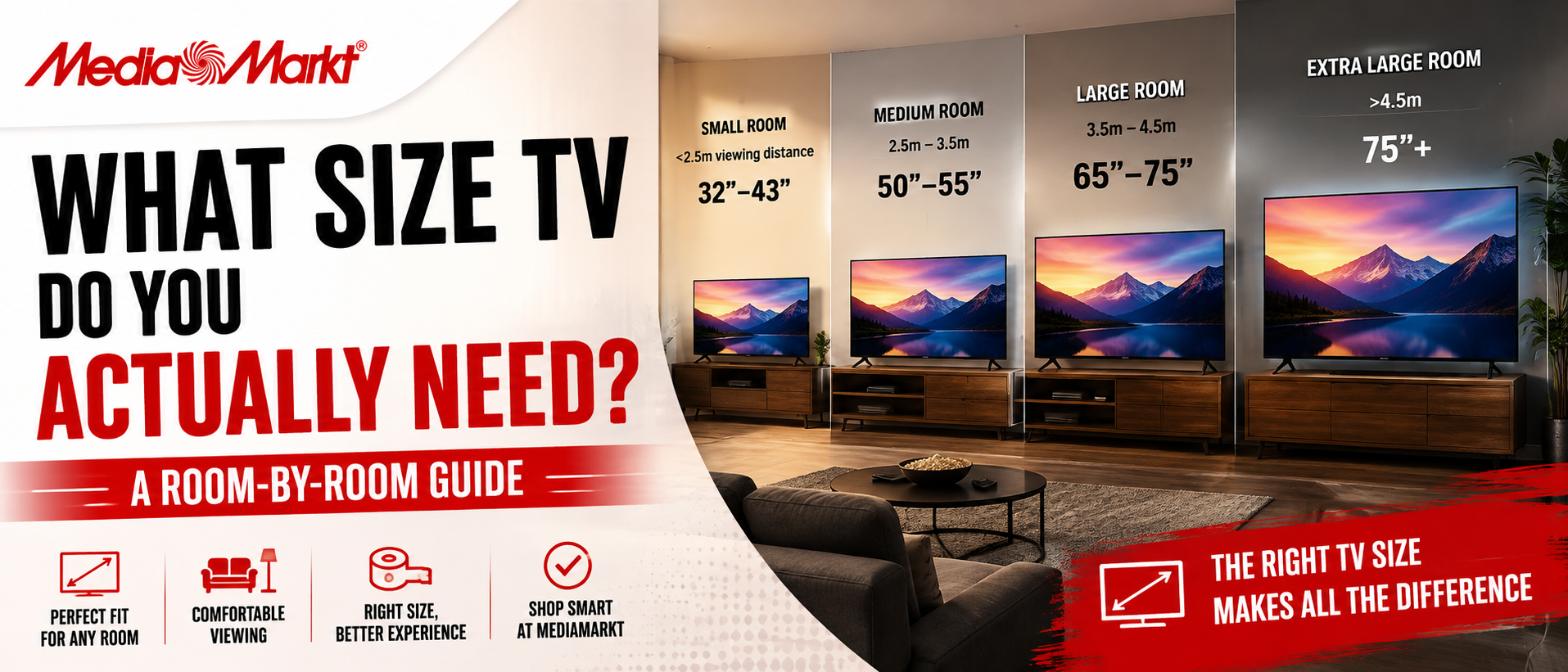
Introduction
📏 Choose Perfect SizeSo you're standing in an electronics store, neck craned up at a wall of TVs, and every single one looks huge and also somehow not huge enough. Sound familiar? Picking the right tv size for room setups is one of those decisions that seems simple until you actually try to make it. Too small and you squint. Too big and, honestly, it just looks silly perched on your console, like a billboard someone accidentally installed in your den. If you're comparing different TV sizes and brands, MediaMarkt offers a wide selection of televisions, expert advice, and regular deals to help you find the right model for your room and budget. This guide walks through it properly, room by room, so you don't end up returning a TV three times (I've done that, it's exhausting).
Why TV Size For Room Choices Actually Matter
People assume bigger TV equals better experience. Sometimes true. Sometimes not. If you sit too close to an oversized screen, you'll notice pixelation, or you'll be constantly moving your eyes side to side just to take in the whole picture, which honestly gets tiring after a while. Too far from a small screen and you lose detail, immersion, all of that.There's also the practical stuff. Wall space. Furniture placement. Whether your TV stand can even hold the thing (more on that later, because TV stand sizing trips up more people than you'd think). And glare! Nobody talks about glare enough. A massive screen next to a window that gets afternoon sun is going to be a nightmare, no matter how good the picture quality is on paper.
So yeah, it matters. A lot more than people give it credit for.
Best TV Size For Living Room
This is probably the question I get asked most. The living room is usually the anchor space, the one where size actually gets tested against real viewing habits, movie nights, sports, whatever.For most living rooms, somewhere between 55 and 75 inches works well. Wait, that's a big range, I know. Here's how to narrow it:
- Small to medium living rooms (up to 12 feet viewing distance): 55 to 65 inches
- Larger living rooms (12 to 16 feet viewing distance): 65 to 75 inches
- Very large or open-concept spaces: 75 inches and up, sometimes even 85
One thing people forget: the best TV size for living room spaces isn't just about the screen itself but where it sits relative to windows, other furniture, and how many people usually watch together. A household of five gathering for movie night needs a bigger screen than someone watching solo from a recliner ten feet away.
Best TV Size For Bedroom
Bedrooms are a different beast entirely. Smaller room, closer seating distance, and usually you're lying down or propped up on pillows rather than sitting upright on a couch.For the best TV size for bedroom setups, most people do well with something in the 32 to 55 inch range. If your bed is close to the wall where the TV sits, say within 6 to 8 feet, don't go above 43 inches. It'll feel like the screen is swallowing the room otherwise.
Here's a rough breakdown:
- Under 6 feet from bed to TV: 32 to 40 inches
- 6 to 9 feet: 43 to 50 inches
- 9 to 12 feet: 50 to 55 inches
Best TV Size For Small Room
Small rooms need their own category because the math changes. Apartments, studio setups, home offices doubling as media corners, dorm rooms even. Space is at a premium and the wrong TV size can make an already tight room feel cramped.For the best TV size for small room situations, think 32 to 43 inches for anything under 100 square feet, and maybe up to 50 inches if the room is a bit larger but still compact. The goal here isn't just fitting the TV physically. It's making sure the proportions feel right. A 55 inch TV in a room that's, say, 9 by 10 feet, is going to overwhelm everything else in there. The couch will look tiny. The walls will feel closer than they are.
Small rooms also benefit from wall-mounting rather than a stand, just to reclaim floor space. Something to consider if square footage is genuinely tight.
TV Size Based On Viewing Distance
This is the part with actual math, so bear with me. The general rule of thumb (and yes, rules of thumb are imperfect, but this one's decent) is to divide your viewing distance in inches by 1.5 to 2.5, depending on how immersive you want the experience. For 4K TVs specifically, you can sit closer without noticing pixels, so lean toward the lower end of that ratio.Quick reference for TV size based on viewing distance:
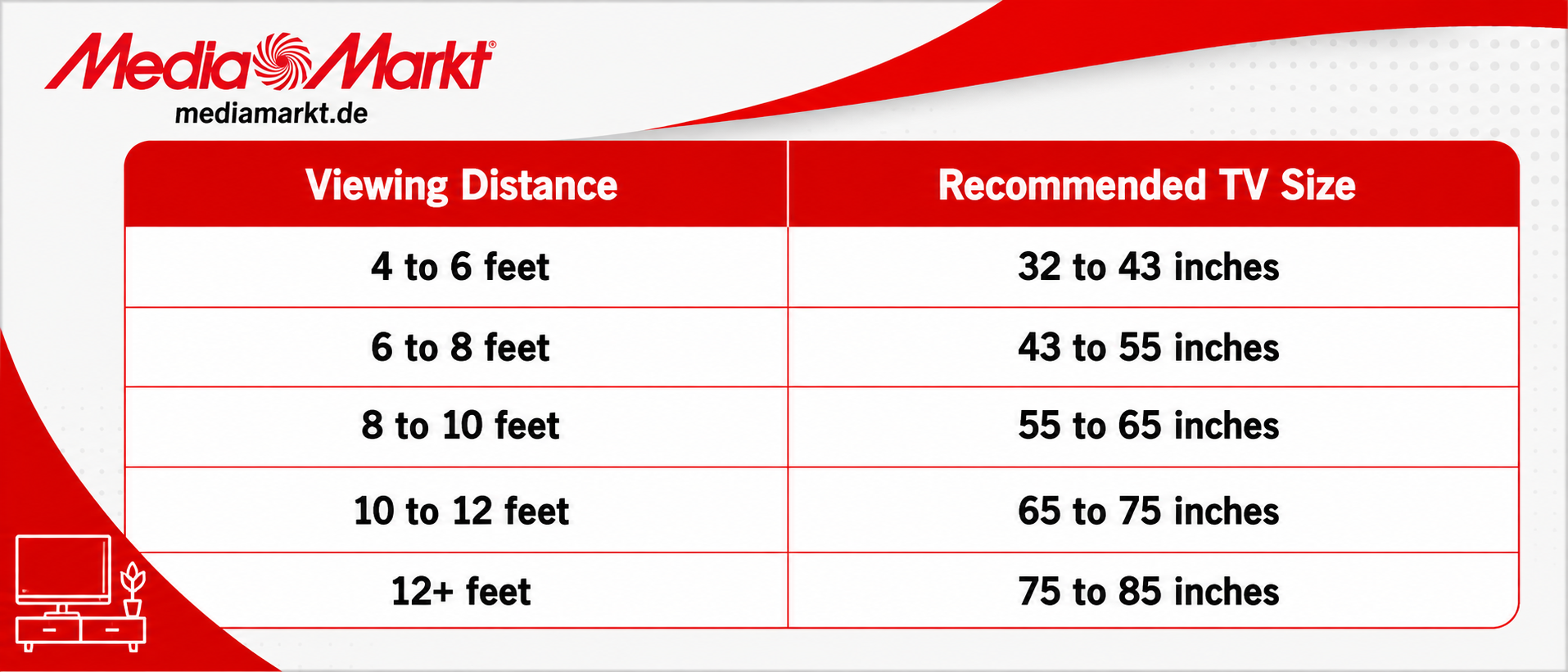
Not exact science, more of a starting point. Some people prefer sitting closer for that cinema feel. Others like a bit of distance so their eyes don't dart around the screen. Try sitting at your intended distance with a tape measure and just picture the size in your head. Sounds silly, works surprisingly well.
TV Dimensions Guide
Screen size (measured diagonally) doesn't always translate intuitively to actual physical dimensions, and this trips people up constantly. A 55 inch TV isn't 55 inches wide, it's roughly 48 inches wide and 27 inches tall, give or take depending on bezel design.Here's a simple TV dimensions guide for common sizes:
- 43 inch: approximately 37.5" wide x 21" tall
- 50 inch: approximately 44" wide x 25" tall
- 55 inch: approximately 48" wide x 27" tall
- 65 inch: approximately 57" wide x 32" tall
- 75 inch: approximately 65" wide x 37" tall
TV Stand Size Guide
Okay, this part gets overlooked way too often. People pick the TV first, then realize the stand they already own is either too small or comically oversized for the new screen. So let's fix that.As a general rule in any TV stand size guide, your stand should be at least as wide as your TV, ideally a bit wider, maybe 4 to 6 inches on each side for visual balance. So:
- 43 inch TV: stand at least 40 to 45 inches wide
- 55 inch TV: stand at least 50 to 55 inches wide
- 65 inch TV: stand at least 60 to 65 inches wide
- 75 inch TV: stand at least 68 to 75 inches wide, sometimes people opt for a media wall instead at this size
Final Thoughts
At the end of the day, choosing the right tv size for room setups isn't really about chasing the biggest screen you can afford. It's about matching the size to your space, your seating distance, and honestly, your own viewing habits. A movie buff who sits close and wants that immersive theater feel is going to make different choices than someone who just wants background noise while cooking dinner.If you're ready to compare TV sizes, brands, and the latest deals, MediaMarkt offers a wide selection of televisions to suit different room sizes and budgets, making it easier to find the right fit for your home.
Measure your room. Measure your distance. Think about glare, furniture placement, and whether your existing stand can handle the upgrade. Do that, and you'll land on a size that actually feels right, not just impressive in the store showroom but comfortable every single day you're sitting in front of it.
📏 Choose Perfect Size
Explore Newsbuck for more exclusive deals and important updates. We are your go-to source for all the news and trending stories across fashion, politics, health, entertainment and much more!
Read Our More Blogs:How Online Outlet Shopping Helps You Save Big Without Compromising On Quality
How Online Game Marketplaces Work (Explained Simply)
10 Reasons People Are Ditching Cooking And Switching To Meal Delivery
FAQs
1. What is the best TV size for a living room if I sit about 10 feet away?
Somewhere around 65 inches tends to work well at that distance. It gives enough screen real estate for group viewing without forcing anyone to sit too close for comfort.
2. Is a 55 inch TV too big for a bedroom?
It depends on the distance from bed to wall. If that gap is under 6 feet, a 55 inch screen will likely feel oversized. Anything past 8 or 9 feet, it works fine.
3. How do I know if my TV stand is the right size for my new TV?
As a rule, your stand should be at least as wide as the TV itself, ideally a few inches wider on each side. If you're unsure, measure the TV's actual width (not the diagonal screen size) and compare it against your stand's surface width before buying.