
Introduction
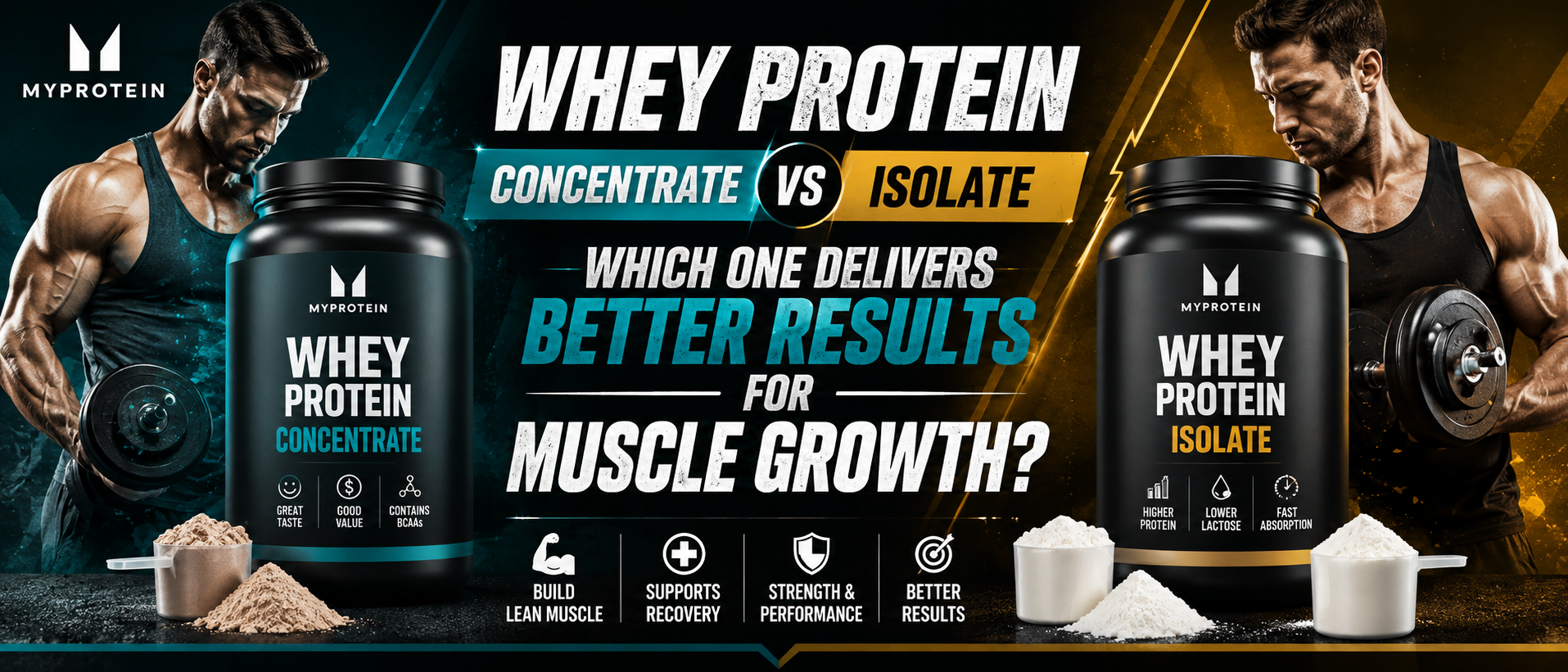
💪 Choose Your Whey!If you have ever stood in front of a supplement shelf, phone in hand, scrolling through reviews, you know the feeling. Two tubs. Same brand, sometimes. One says concentrate. One says isolate. The price tags don't match, and neither do the labels. So which one actually helps you build muscle faster? That is the question we are answering today, and honestly, the debate around whey protein concentrate vs isolate has been going on in gyms and nutrition forums for years.
Here's the short version, before we dig in: both work. Neither is "bad." But they are not identical, and depending on your goals, your budget, and even your gut, one might suit you better than the other. Let's get into it.
What Is Whey Protein, Anyway?
Whey is a byproduct of cheese making. Milk gets separated into curds (which become cheese) and liquid whey. That liquid whey is then processed, filtered, and dried into the powder you scoop into your shaker bottle. It's a complete protein, meaning it has all nine essential amino acids your body can't make on its own. That's a big deal for muscle repair and growth.But not all whey powders are processed the same way. That's where concentrate and isolate split off into two different products.
Whey Protein Concentrate: The Basics
Whey protein concentrate (WPC) is the less processed of the two. Manufacturers filter the liquid whey just enough to remove most of the water, lactose, and fat, but not all of it. What you're left with is a powder that's usually somewhere between 70 to 80 percent protein by weight. The rest is a mix of carbs (mostly lactose), fat, and a handful of other nutrients.Because it goes through fewer processing steps, concentrate tends to retain more of the natural bioactive compounds found in whey, things like immunoglobulins and growth factors. Some people argue this makes it more "whole food" in nature, even though it's still a powder in a tub.
It's also, generally, the cheaper option. If you've ever wondered why one tub costs half of another, this is usually why.
Whey Protein Isolate: The Basics
Whey protein isolate (WPI) goes through additional filtration, usually cross-flow microfiltration or ion-exchange processing, to strip away nearly all the fat and lactose. What's left is a powder that's 90 percent protein or higher. Less sugar. Less fat. More protein per scoop, essentially.This extra processing is exactly why isolate costs more. You're paying for the filtering, not just the protein itself.
For people who are lactose intolerant, or who just don't do well with dairy sugars, isolate is often the gentler choice on the stomach. Not always, but often.
Whey Protein Concentrate vs Isolate: The Real Comparison
Let's break this down properly, because a whey protein comparison isn't really about which one is "better" in some universal sense. It's about which one fits your body and your goals.Protein Content Per Scoop
Concentrate: roughly 70-80% protein Isolate: roughly 90%+ protein
On paper, isolate wins here. You get more protein and fewer extras per gram of powder. But in practice, this difference is smaller than people think once you account for actual serving sizes. A scoop of concentrate might have 24 grams of protein, and a scoop of isolate might have 25 or 26. Not exactly a night-and-day gap.
Lactose and Digestibility
This is where isolate genuinely pulls ahead for a specific group of people. If lactose bothers you, bloating, gas, that heavy stomach feeling after a shake, isolate is going to sit better. Concentrate still contains a meaningful amount of lactose, and for lactose-sensitive folks, that can be uncomfortable.
If you don't have any issue with dairy, though, this entire point is kind of moot. Your gut just won't care either way.
Fat Content
Concentrate has a bit more fat. Isolate strips most of it away. If you're tracking macros tightly, especially during a cutting phase, this matters. If you're bulking and don't mind a few extra calories, it's a non-issue, honestly, maybe even a small benefit.
Price
Isolate is more expensive, sometimes noticeably so. Per gram of protein, you're paying a premium for that extra filtration. Concentrate gives you more bang for your buck if cost is a real constraint, and for a lot of people, it is.
Taste and Mixability
Interesting one, this. A lot of people say concentrate tastes creamier, richer, almost more "milkshake-like." Isolate can taste thinner, sometimes chalkier, depending on the brand. Mixability is usually similar for both these days, though isolate mixes a touch more smoothly in water because there's less fat clogging things up.
Best Whey Protein for Muscle Growth: Does It Actually Matter?
Here's the thing nobody wants to hear: for pure muscle growth, the difference between concentrate and isolate is small. Muscle protein synthesis depends far more on total daily protein intake, training intensity, and recovery than on which specific whey product you choose.Research comparing the two for hypertrophy outcomes generally shows similar results when total protein and calories are matched. So if you're asking which is the best whey protein for muscle growth in some absolute sense, the honest answer is: whichever one you'll actually drink consistently, digest comfortably, and afford long term.
That said, there are scenarios where one edges out the other.
Whey Concentrate or Isolate for Bulking: A Closer Look
During a bulking phase, you're usually trying to eat in a calorie surplus while prioritizing protein intake to support new muscle tissue. So does it matter whether you reach for whey concentrate or isolate for bulking?Concentrate can actually be a smart pick here. The extra carbs and fat mean more calories per scoop, which helps some people hit their surplus without forcing down extra meals. It's also cheaper, and if you're bulking, you're probably drinking more shakes per week than during a cut, so the cost savings add up.
Isolate still works fine for bulking too, obviously, you'd just need to get your extra calories from elsewhere, whole food sources, carbs, healthy fats. Some lifters actually prefer this because it gives them more control over where their surplus calories come from, rather than baking them into the shake itself.
Neither choice will make or break your bulk. Total calories and protein intake do the heavy lifting. Pun intended.
Which Should You Choose?
Let's simplify this into a few quick scenarios, because that's really what most people want.Choose concentrate if you're on a budget, you don't have lactose issues, and you don't mind a slightly less "clean" macro profile.
Choose isolate if you're lactose sensitive, you're cutting and watching fat and carb intake closely, or you just prefer a leaner, more filtered product and don't mind paying more.
Choose a blend (yes, these exist, often labeled as concentrate-isolate blends) if you want a middle ground. A lot of popular protein powders actually combine both, giving you decent protein content without the full isolate price tag.
There's also whey protein hydrolysate, a third, even more processed option, that's partially broken down for faster absorption. It's pricier still and mostly used in specialized settings like clinical nutrition, so we won't dive deep into that here. Worth knowing it exists, though.
Reading the Label: What to Actually Look For
Marketing on protein tubs can get pretty loud, big claims, bold fonts, numbers everywhere. So here's a quick reality check on what actually matters when you flip the tub around.Check the protein-per-scoop number against the total scoop weight. If a 35 gram scoop only gives you 20 grams of protein, that's a lot of filler, regardless of whether it's labeled concentrate or isolate.
Look at the ingredient list order. Whey protein concentrate or whey protein isolate should be at, or near, the top. If sugar, creamer, or maltodextrin comes first, you're paying for a flavored filler product more than a protein source.
Check added sugar content. Some flavored powders, especially budget concentrate blends, sneak in more sugar than you'd expect. This won't ruin your muscle growth goals outright, but it adds up over weeks of daily shakes.
Look for third-party testing seals, Informed Sport, NSF Certified for Sport, or similar. This matters more for competitive athletes, but honestly it's a good habit for anyone who wants to know their supplement is actually what the label claims.
Timing and Usage Tips
Regardless of which type you pick, a few practical points apply across the board:Post-workout is a reasonable window to consume protein, though the "anabolic window" isn't as narrow as older bodybuilding myths suggested. Total daily intake matters more than exact timing.
Aim for roughly 0.7 to 1 gram of protein per pound of bodyweight daily if muscle growth is your goal, adjusting based on your activity level and individual response.
Mix your shake with water if you're watching calories closely, or milk if you want extra protein and creaminess (and don't mind the added calories).
Don't rely on shakes as your only protein source. Whole foods, chicken, eggs, fish, legumes, dairy, should still make up the bulk of your intake. Shakes are convenient, not magic.
Common Mistakes People Make
A few things worth flagging here, since they come up constantly in this whey protein comparison debate.Assuming isolate is automatically "better" simply because it's more processed and expensive. More refined doesn't always mean more effective for your specific goals.
Ignoring taste and digestibility. If a product upsets your stomach or tastes awful, you won't stick with it, and consistency beats theoretical optimization every time.
Overlooking third-party testing. Whether you concentrate or isolate, check for quality certifications. Protein powder quality varies wildly between brands, sometimes more than the concentrate-versus-isolate distinction itself.
Forgetting that whey is a supplement, not a replacement for a balanced diet built around whole foods.
Final Thoughts
So, whey protein concentrate vs isolate, who wins? Honestly, it depends on you. Concentrate is affordable, slightly creamier, and works well for most people without dairy sensitivities. Isolate is leaner, digests easier for lactose-sensitive folks, and fits neatly into a macro-focused approach, especially during a cut. For muscle growth specifically, both deliver comparable results as long as your total protein intake and training are dialed in.If you're still unsure, start with concentrating. It's cheaper, and if you notice bloating or digestive discomfort, switch to isolate and see if that resolves it. Simple trial and error, really, works better than overthinking it. At the end of the day, the best whey protein for muscle growth is the one that fits your budget, digests well, and ends up in your shaker bottle consistently, week after week.
💪 Choose Your Whey!
Explore Newsbuck for more exclusive deals and important updates. We are your go-to source for all the news and trending stories across fashion, politics, health, entertainment and much more!
Read Our More Blgos
15 Wellness Gift Ideas For Parents: Relax, Recover, Repeat
The Complete Beginner's Guide To Setting Up A Raised Garden Bed
How Online Outlet Shopping Helps You Save Big Without Compromising On Quality
FAQs
1. Is whey isolate really worth the extra cost over concentrate?
For most people without lactose sensitivity, not dramatically. The protein content difference per scoop is fairly small in real-world terms. Isolate becomes worth it mainly if you have digestive issues with lactose or you're strictly managing fat and carb intake during a cutting phase.
2. Can I mix whey concentrate and isolate together?
Yes, plenty of people do this, and many commercial blends are built exactly this way. It can offer a balance between cost, taste, and leaner macros without fully committing to one or the other.
3. Does whey concentrate or isolate build muscle faster?
Neither has a clear, proven edge for muscle growth on its own. Total daily protein intake, training volume, and recovery matter far more than which whey type you choose. Pick the one that fits your digestion, diet goals, and budget, and you'll be fine either way.