
Introduction
Find Your Perfect Refurbished Phone 📱If you have ever browsed a phone listing and seen the words "refurbished" and "used" sitting right next to each other, you have probably wondered if they mean the same thing. They don't. Not even close, honestly. The debate around refurbished vs used phones comes up constantly among shoppers trying to save money without ending up with a device that dies in three months. And look, I get confused. Both sound like "not new." Both are cheaper than buying fresh from the store. But the similarities pretty much stop there. For shoppers looking for professionally refurbished devices, Back Market offers a range of refurbished phones worth exploring.
Let's break this down properly, because getting it wrong can cost you more than just money. It can cost you a working phone.
Refurbished vs Used Phones: What's Actually Going On Here
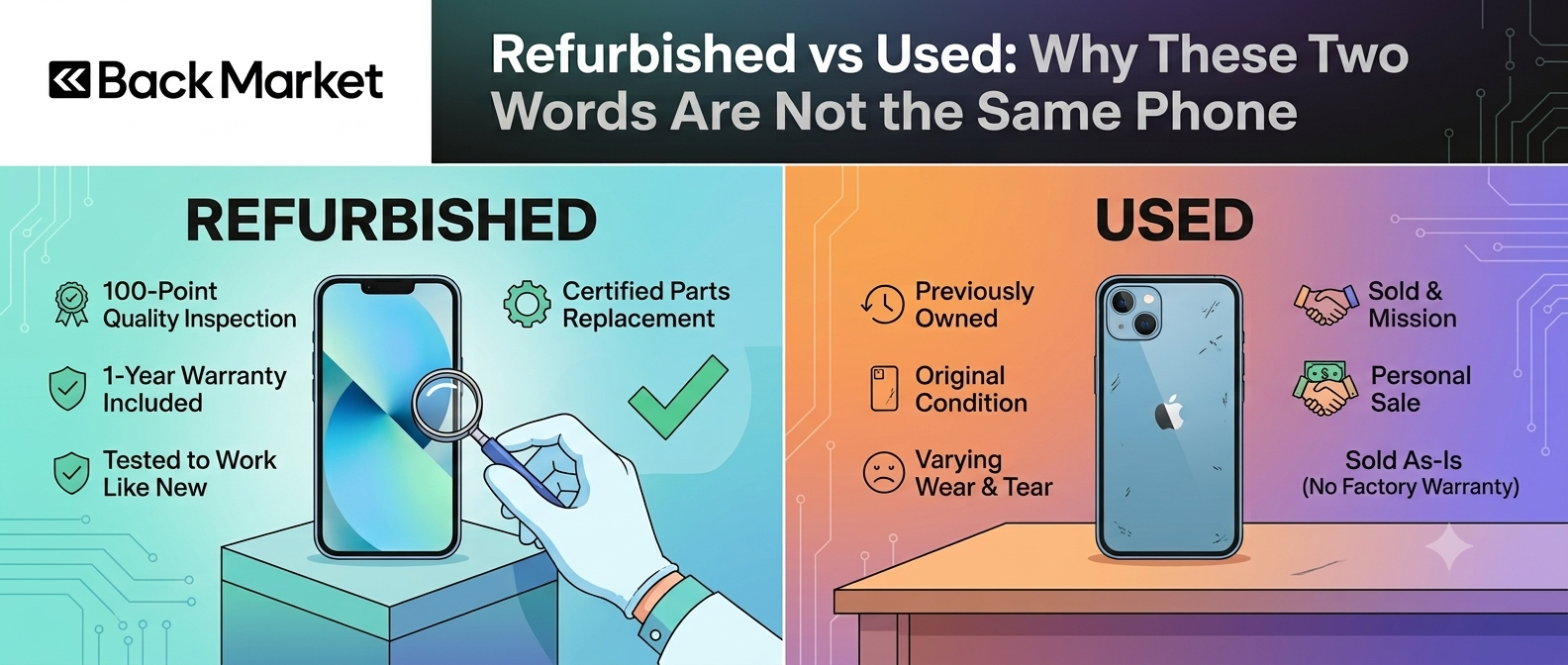
A used phone is exactly what it sounds like. Someone owned it, used it (maybe dropped it a few times, who knows), and then sold it. No inspection. No repairs. No guarantee that the battery isn't already on its last legs. What you see is, quite literally, what you get. Sometimes that's fine! Sometimes the seller genuinely took care of their device. But you're rolling the dice.A refurbished phone, on the other hand, has been through a process. Companies or certified sellers take the device, test every component, replace whatever is faulty (screen, battery, buttons, camera module, whatever needs it), and then run it through quality checks before it's resold. Some refurbished smartphones even come with a fresh battery and a factory reset that wipes any trace of the previous owner. It's not new, but it's not a gamble either.
I remember helping my cousin pick a phone last year. She almost bought a "used - like new" listing off a random marketplace app. No return policy, no warranty, nothing. I told her to hold off. We found a refurbished option from a certified seller instead, slightly pricier, but it came with a 6-month warranty and a working battery that didn't die by 3pm. She's still using that phone today.
Phone Functionality: The Part Everyone Forgets to Check
Here's something people overlook constantly. Phone functionality isn't just "does it turn on." Does the charging port actually charge properly, does the speaker crackle, does the camera focus, is the fingerprint sensor responsive, does the battery actually hold a charge through a full day. A used phone might power on just fine in the listing photo and still have five different issues you won't discover until week two.Refurbished devices go through functional testing specifically to catch these problems before the phone ever reaches you. Screens are checked for dead pixels. Batteries are tested for degradation. Ports are checked for connectivity. This is the whole point of refurbishment, honestly, it exists because manufacturers and certified refurbishers know that functionality is where cheap phones fall apart.
So when someone tells me "oh it's basically the same as buying used," I kind of disagree. Strongly, actually.
Used Phone Warranty: Does It Even Exist?
Short answer? Rarely. Most used phones sold peer-to-peer, through classifieds, or by random third-party sellers come with zero protection. If the phone breaks a week after purchase, that's your problem now. You bought it "as-is." No refunds, no exchanges, nothing.This is where the used phone warranty conversation gets kind of grim. A small number of used phone sellers, especially bigger platforms or certified resellers, do offer limited warranties. Maybe 30 days. Maybe 90 if you're lucky. But plenty of individual sellers offer nothing at all. You're trusting a stranger's word that the phone works, and once the money changes hands, good luck getting anything back if it doesn't.
Refurbished phones almost always come with some kind of warranty attached. It might be 6 months. It might be a full year, depending on the seller or manufacturer program. Apple's certified refurbished program, for example, includes the same one-year warranty you'd get on a brand new iPhone. Same goes for a lot of major refurbishers now, Samsung included. That warranty alone tells you something. It tells you the seller has enough confidence in the product to back it.
Buying Refurbished Phones: What You Should Actually Look For
Okay so you've decided refurbished sounds like the smarter route. Good instinct. But not all refurbished listings are created equal, and this is where people sometimes get burned even when buying refurbished phones.A few things worth checking before you buy:
Grading system: Most refurbished sellers grade phones (A, B, C or "excellent," "good," "fair"). Grade A usually means minimal to no visible wear. Grade C might have noticeable scratches or dents, purely cosmetic, but still worth knowing before you commit.
Battery health disclosure: A legit refurbisher will tell you the battery capacity, usually as a percentage of original capacity. Anything below 80% should make you pause.
Warranty length and terms: Read this carefully. Some "warranties" only cover manufacturing defects, not accidental damage or normal wear.
Certified vs uncertified: Certified refurbished means the manufacturer (or an authorized partner) did the refurbishing. Uncertified means some third party did it, quality varies wildly here.
Return window: Even a short 14 or 30 day return window gives you breathing room to test the phone properly before you're stuck with it.
I'll be honest, I once bought a "refurbished" phone from a seller that turned out to just be... a used phone with a new sticker slapped on the box. No grading info, no battery health stat, nothing. Lesson learned. Always check the seller's reputation and read the actual return policy, not just the headline claim.
Price Difference: Is It Actually Worth It?
Used phones are typically the cheapest option on the table. That's the appeal, plain and simple. You're paying for a working device (hopefully) at a steep discount, sometimes 40-60% off the original retail price depending on the model and condition.Refurbished phones sit somewhere in the middle. Cheaper than new, usually by 15-40%, but pricier than an equivalent used device. You're paying that extra bit for testing, repairs, warranty coverage, and peace of mind. Whether that's "worth it" really depends on your risk tolerance and how much you rely on your phone daily. If your phone is basically your lifeline for work, calls, banking apps, everything, spending a little more on something backed by a warranty just makes sense.
If you're buying a backup phone, or something for a kid who's going to drop it in a pool within a month anyway, sure, go use it. Lower stakes, lower cost.
Environmental Angle
Both refurbished and used phones keep devices out of landfills, which is genuinely a good thing. E-waste is a massive problem globally, and buying secondhand in any form reduces demand for brand new manufacturing, which uses a ton of raw materials and energy. So credit where it's due, either choice beats buying new if sustainability matters to you.That said, refurbished programs often go a step further by properly recycling parts that can't be reused and disposing of hazardous components responsibly. Not always, but often enough that it's worth mentioning.
Common Mistakes People Make
People assume "used" and "refurbished" are interchangeable marketing terms. They're not, and sellers sometimes exploit that confusion (intentionally or not) by mislabeling listings. Always ask direct questions: Was this professionally refurbished? By whom? What's the warranty? Can I see the battery health report? A legitimate seller will have answers ready. A sketchy one will dodge or get vague.Another mistake, people focus only on price and skip checking IMEI status. Whether refurbished or used, always check if the phone is blacklisted, stolen, or still tied to someone else's account (carrier locks, iCloud locks, that sort of thing). This applies to both categories equally.
Final Thoughts
At the end of the day, the refurbished vs used phones decision comes down to how much risk you're willing to take on. Used phones can absolutely work out fine, plenty of people buy them and never have an issue. But there's no safety net if something goes wrong. Refurbished phones cost a bit more, sure, but that extra cost buys testing, repairs, and usually a warranty that actually means something.Next time you're comparing listings, don't just glance at the price tag. Check the grading, ask about battery health, confirm the warranty terms, and figure out who actually refurbished the device. A few extra minutes of research can save you months of frustration with a phone that quits on you when you least expect it. For professionally refurbished devices, Back Market offers a convenient way to compare refurbished phones and find a device that fits your budget.
Find Your Perfect Refurbished Phone 📱
Explore Newsbuck for more exclusive deals and important updates. We are your go-to source for all the news and trending stories across fashion, politics, health, entertainment and much more!
Read Our More Blogs:
Cashmere And Premium Wool: The Best Luxury Knitwear Offers Today
How To Spot Genuine Brand Discounts When Shopping Online
What Is A Chatbot And Does Your Business Actually Need One?
FAQs
1. Is a refurbished phone as good as a new one?
Not identical, but close in most cases. Refurbished phones are tested and repaired to function like new, though they may have minor cosmetic wear like small scratches. Performance-wise, a well-graded refurbished phone should work just as reliably as a new one, especially if the battery has been replaced.
2. Can I trust the battery health on a used phone?
Not unless the seller explicitly provides battery health data, and even then, take it with a grain of salt. Used phones sold privately rarely include this info. If battery life matters to you (and it should), refurbished is the safer route since sellers typically disclose this upfront.
3. Do refurbished phones come with accessories like chargers and boxes?
It varies by seller. Some refurbished phones come with generic or third-party chargers rather than original manufacturer accessories, while others include everything. Always check the listing details or ask the seller directly before purchasing, since this can affect the overall value of the deal.