
Introduction
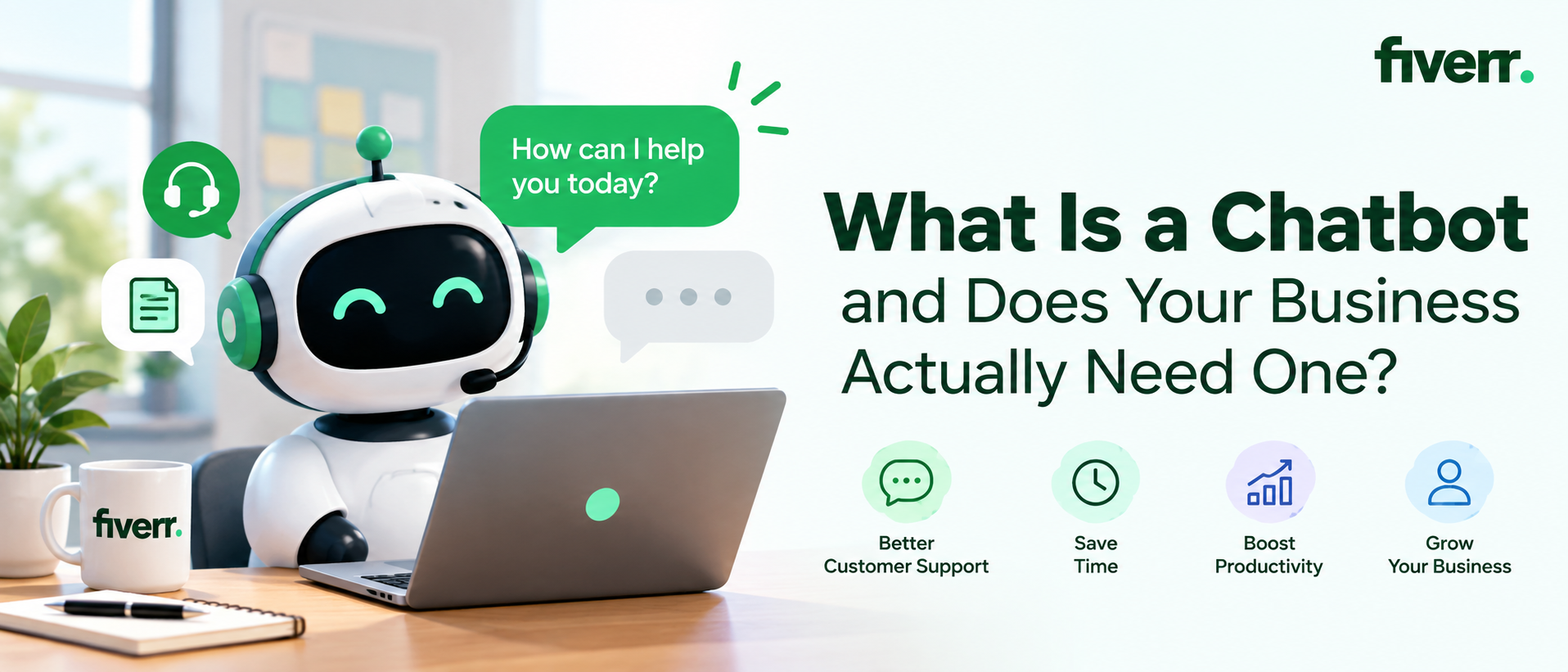
🤖 Automate Your Business SmarterIf you have spent any time browsing a company's website lately, chances are a little chat window popped up in the corner asking, "Hi there! How can I help you today?" That's a chatbot. And whether you realized it or not, you've probably interacted with dozens of them this year alone.
So what is chatbot technology, really, and is it something your business genuinely needs, or is it just another shiny tool everyone's rushing to adopt because their competitors have one? Let's actually dig into this, because the answer isn't as simple as "yes, get one immediately."
Need help finding a freelancer to build or customize your chatbot? You can find skilled chatbot developers and automation experts on Fiverr.
The Two Main Types of Chatbots
Before deciding whether your business needs one, it helps to understand there isn't just one flavor of chatbot.Rule-based chatbots follow a predetermined script. Think of them as choose-your-own-adventure books. You click a button or type a specific phrase, and the bot follows a preset path. These are cheap, easy to build, and honestly fine for simple use cases like FAQs or appointment scheduling. Their weakness? They fall apart the moment a conversation goes off-script.
AI-powered chatbots, on the other hand, use machine learning models to understand and generate responses dynamically. They don't need every possible question pre-written. Instead, they learn from data, context, and (in more advanced setups) large language models similar to the technology behind tools like ChatGPT or Claude. These are more expensive to implement but far more capable, especially for businesses handling complex or varied customer inquiries.
Most businesses today land somewhere in between, using a hybrid approach where AI handles the bulk of conversations and hands off tricky situations to a real person.
Why Businesses Are Adopting AI Chatbot Software
Here's the thing that surprises a lot of business owners: chatbots aren't just about customer service anymore. They've quietly become part of a much bigger conversation around business automation.Round-the-clock availability: Customers don't operate on a 9-to-5 schedule, and honestly, neither does frustration when someone can't find an answer at 11 p.m. A chatbot for business doesn't sleep, doesn't take lunch breaks, and doesn't need a day off. It answers instantly, every single time.
Cost savings that actually add up: Hiring, training, and retaining customer support staff is expensive. A well-built chatbot can handle a huge chunk of repetitive queries, things like order status, return policies, or basic troubleshooting, freeing your human team to focus on complicated, high-value conversations that actually need a person's judgment.
Faster response times. Nobody likes waiting on hold, and nobody likes staring at a support ticket queue wondering when someone will reply. Chatbots respond in seconds. That speed alone can noticeably improve customer satisfaction scores.
Scalability without the growing pains. Imagine your business suddenly gets featured somewhere and traffic triples overnight. A human support team would drown. A chatbot just keeps handling conversations, one after another, without breaking a sweat.
Data collection and insights. Every conversation a chatbot has is a small data point. Over time, this builds a picture of what customers actually want, what confuses them, and where your product or service might be falling short. That's valuable intelligence most businesses would otherwise have to gather through surveys or expensive research.
Finding the Best Chatbot Software for Customer Service
Not all chatbot platforms are created equal, and picking the wrong one can actually hurt your customer relationships instead of helping them. So what should you actually look for when evaluating the best chatbot software for customer service?Natural language understanding. If your chatbot can't understand basic variations in phrasing, it's going to frustrate people more than it helps them. Test it with messy, real-world questions, not the polished examples in a sales demo.
Integration capabilities. Your chatbot shouldn't live in isolation. It needs to connect with your CRM, your helpdesk software, your e-commerce platform, whatever tools already run your business. If it can't talk to your existing systems, you're creating more work, not less.
Human handoff options. No matter how sophisticated the AI, some conversations need a real person. The best platforms make this handoff seamless, with full context passed along so the customer doesn't have to repeat themselves.
Customization and branding. A chatbot that sounds robotic and generic doesn't do your brand any favors. Look for platforms that let you adjust tone, personality, and even the specific phrases it uses.
Analytics and reporting. You need to know what's working and what isn't. Good chatbot software gives you dashboards showing resolution rates, common questions, drop-off points, and customer satisfaction trends.
Popular options on the market right now include Intercom, Drift, Zendesk's AI-powered bots, and increasingly, custom builds using large language models. The right choice really depends on your budget, your technical resources, and how complex your customer interactions tend to be.
Does Your Business Actually Need One?
This is where a lot of the marketing hype needs a reality check. Not every business needs a chatbot, at least not right away.Ask yourself a few honest questions. Are you fielding the same handful of questions over and over, things like shipping timelines, pricing, or how to reset a password? That's a strong signal a chatbot could save real time. Is your support team constantly buried, unable to keep up with ticket volume? Automation could ease that pressure significantly.
On the flip side, if your business handles highly nuanced, emotionally sensitive, or legally complex conversations (think healthcare consultations or financial advising), a poorly implemented chatbot could do more harm than good. Customers in these situations want empathy and expertise, not a bot fumbling through a script.
Small businesses sometimes assume chatbots are only for big corporations with massive budgets, but that's not true anymore. Plenty of affordable, even free-tier, tools exist for smaller operations. A local bakery might use a simple bot to answer hours and take custom order requests. A software startup might use one to qualify leads before a sales call. The use case matters more than the company size.
Common Mistakes Businesses Make With Chatbots
It's worth mentioning where things tend to go wrong, because plenty of businesses have jumped into chatbot for business initiatives and ended up disappointed.One big mistake is over-promising what the bot can do. If your chatbot claims to "answer anything" and then gives a generic non-answer to a specific question, customers lose trust fast. It's better to be upfront: "I can help with X, Y, and Z. For anything else, I'll connect you with a team member."
Another mistake is neglecting ongoing maintenance. A chatbot isn't a "set it and forget it" tool. It needs regular updates as your products, policies, and FAQs change. An outdated bot giving wrong information is arguably worse than no bot at all.
Lastly, businesses sometimes skip the testing phase, launching a bot without stress-testing it against real customer language, slang, typos, and edge cases. That's a recipe for a frustrating customer experience right out of the gate.
How Chatbots Fit Into Broader Business Automation
It's worth zooming out for a second. Chatbots are really just one piece of a much larger trend toward business automation. Companies are increasingly using AI and automated systems to handle repetitive tasks across departments, not just customer service but also marketing, HR, and internal operations.An AI chatbot, when implemented thoughtfully, becomes a bridge between your customers and your internal systems. It can pull order information, update account details, trigger workflows, and log data automatically, all without a human lifting a finger for routine tasks. This isn't about replacing your team; it's about giving them room to focus on the work that actually requires human judgment, creativity, and empathy.
Final Thoughts
So what is chatbot technology when you take away all the buzzwords? It’s simply a tool, one that when used correctly can save time, cut costs and improve how your customers experience your brand. But it isn’t magic and it certainly isn’t a universal cure for all business problems.So before you jump in, take a good look at your customer interactions. What are the recurring pinch points? When can instant responses actually help satisfaction? If you can answer those questions, then you’re in a good position to explore AI chatbot software and find the best chatbot software for customer service that actually fits your needs instead of just following the crowd.
Ultimately, the businesses that benefit most from chatbots are those that view them as a thoughtful addition to their customer experience strategy, not as a replacement for real human connection. A business chatbot is not a trend if used wisely. It’s a pragmatic leap into smarter, more efficient business automation. If you need help finding skilled professionals to build, customize, or integrate chatbot solutions for your business, you can explore experts on Fiverr.
🤖 Automate Your Business Smarter
Explore Newsbuck for more exclusive deals and important updates. We are your go-to source for all the news and trending stories across fashion, politics, health, entertainment and much more!
Read Our More Blogs:
Refurbished, Explained: What You're Really Buying When You Skip 'Brand New'
15 Must-Have Camping & Hiking Equipment Essentials Every Outdoor Lover Needs
Value-Based Pricing Vs. Hourly Rates: How To Double Your Project Revenue
Frequently Asked Questions
1. What is chatbot technology used for besides customer service?
While customer service is the most common application, chatbots are also used for lead generation, appointment scheduling, internal IT support, HR onboarding questions, and even guiding users through product tutorials or troubleshooting steps.
2. Is AI chatbot software expensive to implement?
It varies widely. Basic rule-based bots can be set up for free or a low monthly fee through platforms like Tidio or ManyChat. More advanced AI-powered systems with deep integrations can run into thousands of dollars monthly, depending on complexity and volume of conversations handled.
3. Can a chatbot completely replace human customer support staff?
Not really, and it shouldn't try to. Chatbots excel at handling repetitive, straightforward questions quickly, but complex, sensitive, or emotionally charged situations still benefit from human interaction. The most effective setups combine both, using bots for efficiency and humans for judgment and empathy.