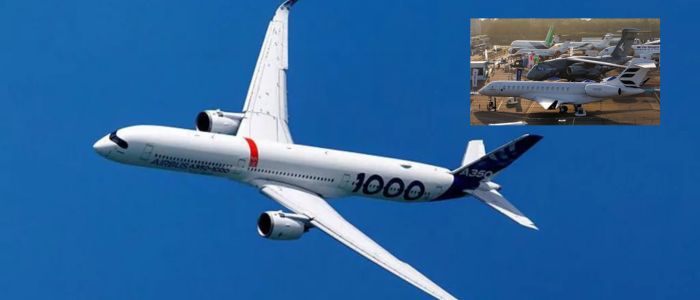
Comac's efforts to expand into the Asia Pacific region include marketing the C919 to airlines outside of China with the intention of being a viable alternative to the two top Western manufacturers, Airbus and Boeing, in Southeast Asia, while at trade shows such as the Singapore Airshow.
The Asia Pacific region is the fastest-growing aviation market globally; however, many airlines currently have challenges purchasing new aircraft due in part to the following: both Boeing and Airbus have experienced many delays in delivering their aircraft, there are current engine shortages, and there is an overall uncertainty regarding future aircraft purchases caused by tariffs and ongoing trade disputes.
According to senior executives within the aviation industry, many of the above-mentioned issues and pressure points within the aviation industry have opened up opportunities for another supplier to enter the aviation market. Willie Walsh, the Director General of the International Air Transport Association (IATA), has said that all indications are that Comac will eventually become a global competitor. He predicts that in 10-15 years, all three companies (Boeing, Airbus, and COMAC) will all be major aircraft manufacturers and that COMAC will have a substantial influence on the future.
The data from IATA show that the average age of aircraft is getting older, since airlines are waiting longer to take delivery of new aircraft. The older the aircraft are, the more fuel they use and the higher the operating cost associated with them; he stated that airlines in the Asia Pacific could achieve double-digit growth by 2026 if there are enough new aircraft available; however, most airlines are facing an average delay of 7 years from when they place an order for aircraft until they take delivery.
COMAC is stepping in to fill that void. The company has said it will provide over 200 C909 and C919 jets so far, with most of those jets currently in service in Laos, Indonesia, and Vietnam. GallopAir in Brunei has placed a significant order with the company, as has Cambodia, which has also indicated it will purchase approximately 20 jets. Subhas Menon, director general of the Association of Asia-Pacific Airlines (AAPA), said that the Asia-Pacific region needs more aircraft suppliers and that the supply chain for aircraft today is largely oligopolistic, and in some cases, duopolistic. He said that the emergence of COMAC as another aircraft manufacturer in the region is a positive development.
COMAC will also have advantages with regard to government support and pricing, which could give it a competitive advantage, especially among low-cost airlines in developing countries.CEO of low-cost airline Cebu Pacific, Mike Szucs, is optimistic regarding the amount of competition in this sector. He sees the substantial certification process for Comac's aircraft as creating potential opportunities for airlines such as his from the year 2030 onwards.
Challenges to Comac's certification will continue to delay its efforts to enter the international marketplace. This goes beyond obtaining approval from regulators in Europe to include raising funds required to build the infrastructure necessary for global maintenance, repair, and pilot training.
Although there's rapidly growing competition from other manufacturers such as the Brazilian Embraer, which has received orders from regional carriers such as Singapore's low-cost airline Scoot, Virgin Australia, and Japan's ANA, both Boeing and Airbus maintain strong representation at the Singapore Air Show and throughout the Asia-Pacific region.
Cebu Pacific's Szucs has indicated that he is seeing indicators that "the end of the tunnel" involving supply and certification improvements will soon materialize.
The questions surrounding Comac's order book remain as well. Comac has previously indicated that it possesses over 1,000 orders for C919 aircraft placed by domestic carriers; however, to date, it has only been able to deliver approximately 12. As a government-owned enterprise, it is difficult to verify Comac's official order book statement and claims as independently as could be done through a publicly traded corporation such as Boeing or Airbus.
The present issues will likely allow Boeing and Airbus to continue holding dominant positions until these challenges are resolved. Nevertheless, as Comac's footprint continues to expand in the Asia Pacific region, it will likely add a third significant manufacturer for airlines to consider, altering the competitive dynamics of the global airline industry.