Two Very Different Situations
The context of the two games was entirely different. Against Argentina, England led 1-0 in the 55th minute on neutral ground in Atlanta, with a full set of players. Anthony Gordon had scored, but Lionel Messi then set up Enzo Fernandez and later Lautaro Martinez.
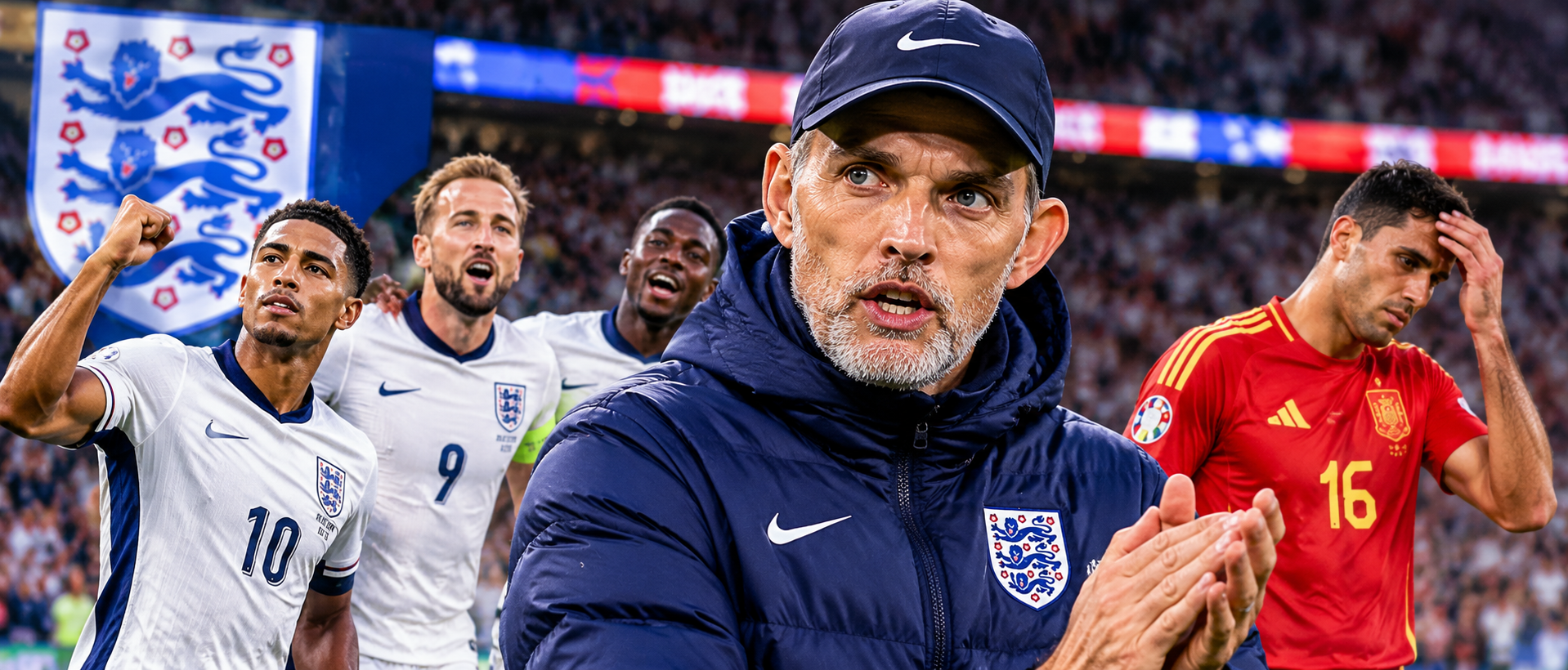
Against Spain, England produced the best performance of Thomas Tuchel's reign and led 3-0 through goals from Harry Kane, Ezri Konsa and Ben White. Then Elliot Anderson fouled Lamine Yamal for a penalty, which Mikel Oyarzabal scored. Anderson was sent off, and the siege began at a partisan Riyadh Air Metropolitano. Nico Williams made it 3-2, but Spain couldn't find an equaliser, partly thanks to England keeper James Trafford. "Half an hour feels like two hours against a team like this [with 10 men]," Tuchel said. "Without the red card we were clear winners."
A Different Approach to Substitutions
Defensive substitutions are fine when they work, but a manager hears about it when they don't. In the World Cup last 16, England led Mexico 2-1 at the Azteca when Jarell Quansah was sent off. Tuchel brought on three defenders for a defender, a midfielder and a forward. England won 3-2, and Dan Burn's cameo became the stuff of legend. Nine days later, leading Argentina 1-0, Tuchel did the same again. The first change, Konsa for Gordon, came in the 72nd minute, and England just sat back until Argentina broke through.
Against Spain, even down to 10 men and under constant pressure, Tuchel was slower to go defensive. Myles Lewis-Skelly replaced Kane after 78 minutes, 15 minutes after Anderson's red card. Five minutes later he added two more players, one of them striker Dominic Calvert-Lewin. Burn replaced fellow defender White in the 89th minute. "Harry played 78 minutes, Jude [Bellingham] 83 minutes and then just defending and defending, it's tiring," Tuchel explained. "So we needed fresh energy." He said he felt free enough to make any substitution he thought necessary, and that with so much defending needed, "we just went for some fresh legs."
What the Numbers Show
England actually faced more of a siege this time. In the final 30 minutes, Spain had 19 shots, seven on target, with an expected goals total of 2.53. Argentina had 10 shots, four on target, and 1.41 xG in the same period. England's passing was similar in both games, with 65 passes against Argentina and 61 against Spain, both at about 64% accuracy. In the 2-1 win over Croatia, by comparison, they attempted 557 passes at 89%.
"For half an hour it was Mexico reloaded and it felt like we were back in the Azteca," Tuchel said. "We had to overcome 30 minutes which, against Spain, felt like three hours." England defended in a 4-4-1, he added, and a red card plus a goal made it a completely new game. England had been criticised for blowing a 2-1 half-time lead in their first Nations League meeting with Spain at Wembley, but in the last 30 minutes of that game they faced only five shots and completed 176 passes at 90%.
Resilience and a Big Save
Perhaps the team simply showed more resilience and unity. After Spain pulled one back, England's players held a huddle. Former England defender Matt Upson liked that the manager stepped back to see the players' reaction. He even suggested the trauma of Anderson's sending off may have helped, giving the team a chance to come together and cope with a very hard situation. White, asked about the huddle, said it was about staying calm: "when you're one down it becomes more difficult and things change so it was all about managing that."
Trafford was another factor. He made six saves, four of them in the final 12 minutes with the score at 3-2, including an incredible double save to deny Fermin Lopez and Lamine Yamal in injury time. "I think that double save was the moment for Spain and Trafford had the answers," Upson said.