Pike, 50, was alive and loudly snoring after the attempted lethal injection, her attorneys said. She was taken by ambulance from the prison and treated at a hospital, though her lawyers said they hadn't been told about her condition.
A Day of Last-Minute Court Reversals
Pike was set to be executed at 10 a.m. Wednesday for a killing she committed at age 18. She would have been the first woman executed in Tennessee in more than 200 years. An appeals court stopped the lethal injection about an hour before it was due to begin, but hours later the U.S. Supreme Court overturned that stay.
The Sixth Circuit had voted 2-1 to issue the stay, saying more time was needed to consider whether Pike's allegations of childhood sexual abuse were fully weighed at her sentencing. The attorney general's office appealed, arguing that the late halt traumatized the victim's family and rewarded "abusive delay tactics" by Pike's lawyers. The court's conservative majority cleared the way without explanation. The three liberal members signed a dissent saying her claims deserved a closer look.
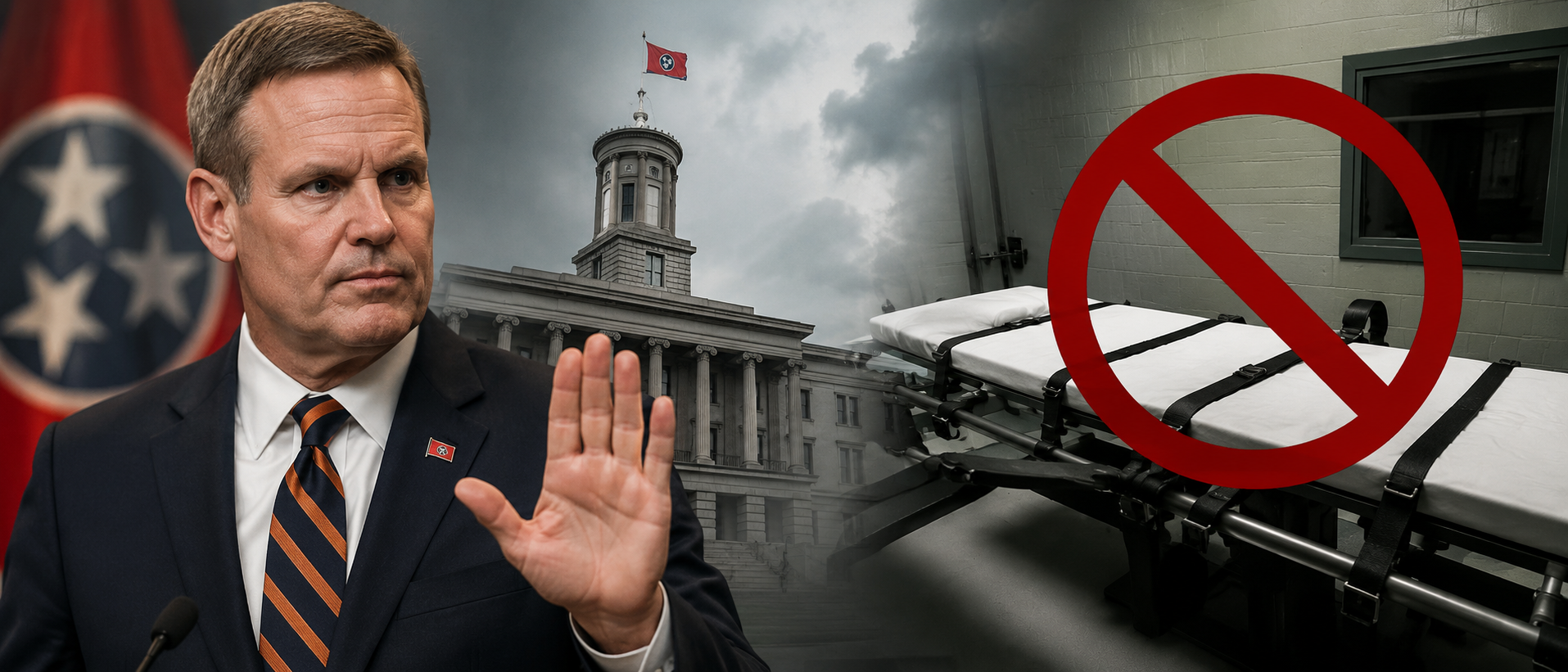
According to her attorneys' court filings late Wednesday, officials gave Pike two doses of pentobarbital. Gov. Lee said he has ordered "a comprehensive, third-party review to determine exactly what occurred." He added that carrying out a lawful sentence is among the State's most serious responsibilities and should be done in a way that is legal, constitutional and effective. The Tennessee Department of Correction said it followed every step of the established protocol approved by the Attorney General's Office.
That protocol calls for a second set of syringes if the inmate is not deceased after the first. It doesn't say what happens if the person is still alive after the second set.
Robin M. Maher, executive director of the Death Penalty Information Center, said what Pike went through is "singular and unparalleled." Seven other people have survived medical problems because executioners couldn't find a vein, she said, but no one has stayed alive after receiving the actual drugs.
What Witnesses Saw Inside
Media witnesses in a separate room said the curtains to the chamber were raised at 7:27 p.m., showing Pike strapped to a gurney. In her "last" words, she said, "I'm going to leave this world the way I spent most of my life and that is in love." She described herself as at peace.
But she stayed awake. At one point she lifted her head and asked prison officials whether her arm was supposed to feel that way. It wasn't clear what she meant. By 8:26 p.m., witnesses said the second dose had been given. Pike could still be heard snoring behind the closed curtain until the microphone was cut off at 8:53 p.m., when the media witnesses were escorted out.
Late Wednesday, her lawyers filed an emergency motion with the Tennessee Supreme Court, saying she was in "unnecessary agony" and that the execution violated her right to be free from cruel and unusual punishment. They also filed motions in the Sixth Circuit and a district court.
This was the second failed attempt in Tennessee this year. In May, officials called off the lethal injection of Tony Carruthers, convicted of kidnapping and killing three people in 1994, after executioners spent over an hour trying and failing to place an IV for the pentobarbital.
The Crime and the Debate Around It
Pike and her boyfriend were convicted in the 1995 stabbing and beating of 19-year-old Colleen Slemmer, a classmate at a job training facility in Knoxville. Prosecutors said Pike, afraid Slemmer was trying to steal her boyfriend, lured her to a wooded area on Jan. 12, 1995, cut her with a box cutter and beat her with a large chunk of asphalt. The boyfriend, Shipp, admitted he carved a pentagram into her body. The case drew wide attention because that symbol and other details fed fears of Satan worship during the "satanic panic" of the 1980s and 1990s.
Shipp was 17 at the time and received life in prison with the possibility of parole. Pike was the only one sentenced to death.
As the date drew closer, debate flared again over executing people who were young at the time of their crimes. Assistant Federal Defender Stephen Ferrell said her sentence is an outlier, since other 18-year-olds in Tennessee have had death sentences vacated. After the killing, Pike was diagnosed with bipolar disorder and post-traumatic stress disorder. She didn't deny the killing, but in her clemency petition said she only meant to fight Slemmer and couldn't "put the brakes on." In a statement she said, "I was a mentally ill 18-year-old kid."
Slemmer's mother, May Martinez, had traveled to Nashville hoping to witness the execution after waiting decades. She could not be reached after it was halted.
Executions of women are rare in the U.S. Since the Supreme Court reinstated the death penalty in 1976, 18 women have been put to death, about 1% of all executions. Pike would have been the 30th person executed in the country this year, after Florida carried out one on Tuesday. Tennessee announced in 2024 that it was switching from a three-drug series to the single drug pentobarbital, more than two years after it abruptly halted the execution of Oscar Smith and admitted it hadn't made sure its drugs were properly tested.