Anushila Bhandari, whose husband Aurus Bhandari is a 33-year-old engineer still missing from the project site, told reporters she simply wishes he could be found and brought home. Her words reflect the anguish felt by hundreds of families across the region as the search continues.
Death Toll Climbs as Search Operation Intensifies
The overall death toll from the flooding disaster along the Nepal-Tibet border has now reached 939, according to Nepal's disaster management authority. Officials also revised the number of missing individuals upward to 3,925, including 592 foreign nationals. Roughly one in every seven missing people is believed to be a hydropower plant worker. Nepalese Prime Minister Balendra Shah confirmed Monday that 279 people had been successfully rescued from the affected sites so far.
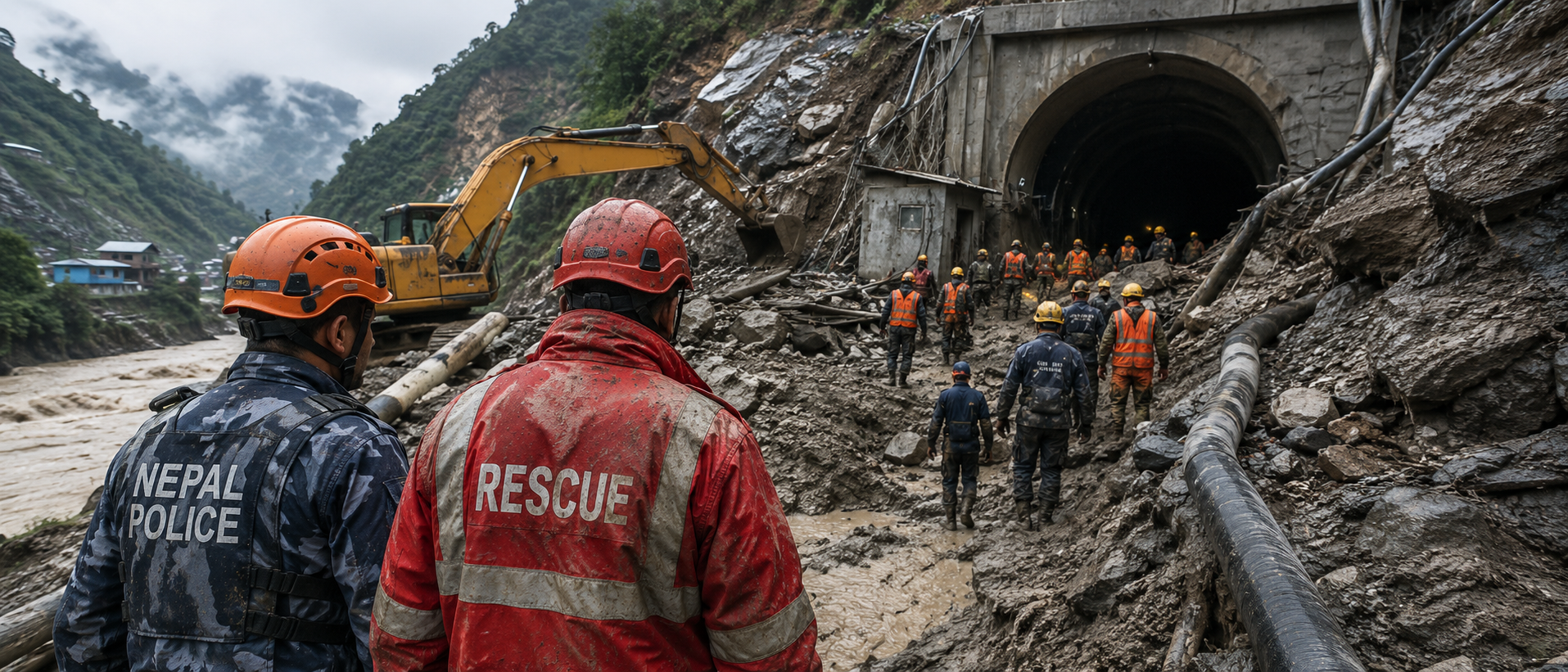
The rescue effort is being led by an international coalition made up of Chinese and Nepalese military personnel, with additional support from technical experts based in India, Korea, and Australia. Sita Pandey, whose husband was working inside the plant when the floods struck, said she still holds onto roughly 50% hope that he survived, given that an oxygen system exists inside the tunnel network.
Nepal has invested heavily in hydropower development along its mountainous river systems over the years, and officials confirmed that at least 11 hydropower projects, either completed or still under construction, sustained damage in the flooding. Rescue teams began pumping air into one tunnel over the weekend, though families have said that step should have happened much sooner. A rescue team managed to reach a tunnel leading into one hydropower plant earlier on Monday but withdrew after finding no one inside.
Jiban Khadka, whose relative remains trapped inside the plant, expressed growing frustration with the pace of the operation, saying hope fades with each passing hour and stressing that every second matters. He described the rescue effort as frustratingly slow.
Rescue Challenges Mount as Officials Warn of Climate Risks
Prime Minister Shah said rescue operations have been intensified, describing the floods as anything but an ordinary event. In a Facebook post shared late Monday, he wrote that the disaster highlights growing risks tied to climate change across the Himalayan region and said Nepal must now raise the issue of climate-driven disasters more forcefully with the international community.
Priya Kharel, whose brother Milan worked as an engineer at the Upper Trishuli-1 plant, said people who managed to escape the site reported hearing others still alive inside the tunnels, giving her hope that a swift rescue effort could still save lives.
Australian engineer Arnold Dix, who has been assisting Nepalese authorities remotely with underground search efforts, said rescuers have struggled simply to locate the tunnels themselves, describing the landscape as almost unrecognizable, comparing it to something resembling the surface of the moon. Once rescue teams identify where the power stations are located, Dix explained, they can determine the safest way to reach them, typically involving digging and blasting through massive boulders, some larger than houses, a scale he said he had never witnessed before in his career as former head of the International Tunnelling Association. Despite the challenges, Dix said he remains hopeful for those trapped underground, noting that the subterranean environment may have offered some protection from the flooding above.
Officials from Nepal's Ministry of Health said only about 4% of the roughly 900 recovered bodies have been identified so far. In Chitwan, a district located far downstream from where the floods originated, makeshift burials have been taking place after nearly 300 bodies were carried into the area by the country's swollen river systems. Workers wearing white protective equipment, including masks, have been transporting unidentified remains by truck amid the strong smell of decay. Over the weekend, a large section of forest outside the city was excavated, with medical staff and volunteers working to collect DNA samples from unidentified remains. Chief district officer Ganesh Aryaal said families will eventually be able to retrieve their loved ones' remains once DNA testing confirms identification, explaining that a lack of available freezers forced authorities to adopt temporary burial measures given how overwhelmed local resources have become.
Across the border in Tibet, Chinese state media reports an official death toll of 16, with 546 people still listed as missing. Footage of the flooding has faced heavy censorship within China, and authorities have issued administrative penalties, ranging from warnings and fines to short-term detentions, against individuals speculating online that actual casualty figures are far higher than officially reported. In Nepal, authorities have similarly ordered the removal of online content they consider to be misinformation related to the disaster.