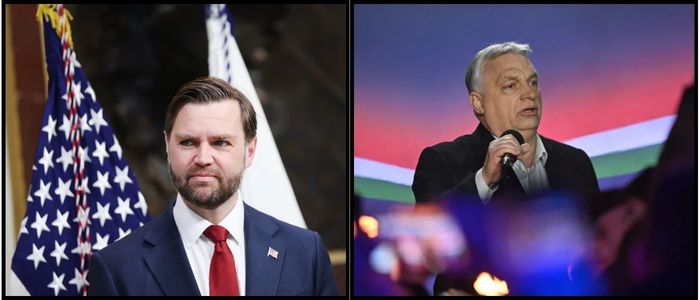
The visit took place shortly before the elections in Hungary; Orbán's current poll numbers are behind Tisza Party and behind his previous poll number. In a recent poll, Tisza Party has a lead of 19 votes over Orbán; Tisza Party at 56% of decided voters compared to Fidesz at 37%, with 26% of voters undecided. Despite the previous support from former President Donald Trump, Orbán's popularity has declined due to issues of political corruption within his administration as well as economic stagnation.
Usually, it is not typical for an American government official at a high level to visit another foreign country just days before national elections occur; therefore there are questions regarding the US administration's motivations toward the timing of Vance's visit. Vance plans to meet with Orbán and make a speech concerning the US-Hungarian relationship regarding energy, defense, and technology.The Vice President will visit Hungary during a period of escalating tensions with respect to the Iranian crisis. During his visit, Donald Trump's deadline regarding the reopening of the Strait of Hormuz for Iran will come to an end.
He plans to broker an agreement to end the conflict as quickly as possible and may have the chance to meet with Iranian ambassadors during this visit.
There is a significant amount of attention on his attendance at the upcoming NATO Summit due to the recent crisis in the Middle East, and President Trump expressed to Vance that he could be involved in future negotiations, but no formal meetings have been scheduled.
In addition, there has been some deterioration of U.S.-European relations because of President Trump's questioning of U.S. commitment to NATO, and some NATO member states will not support U.S. actions regarding the Strait of Hormuz. Multiple European leaders have been accused of limiting free speech, poorly managing immigration, and refusing to cooperate with the alternative right.
During the Vice President's visit to Hungary, this may demonstrate how the administration has one collective relationship with such leaders as Prime Minister Orbán, who hold similar ideologies regarding the importance of national sovereignty and how governments should function. The Prime Minister has created a close relationship with President Trump and the overall MAGA movement, making him one of the most recognizable leaders in the populist movement worldwide. Prime Minister Orbán has placed strict immigration controls and publicly called out the European Union on its immigration policies.
The Prime Minister has also gained the support of other prominent international leaders: Marine Le Pen, Giorgia Meloni, and Javier Milei.
Not only does Vance's visit support a key ally, but it also plays an important role in Prime Minister Orbán's campaign for re-election. However, it is unknown how much of a difference this will make to voters. Further, it provides additional evidence of a broader strategy by the U.S. administration to engage leaders with similar viewpoints and philosophies on difficult geopolitical issues such as Iran.
The outcome of both domestic and international events in the coming months will affect U.S. relations with Europe and the entire world as Hungary moves toward its election, as well as impact possible additional policies and strategies related to the U.S./Hungary relationship.