
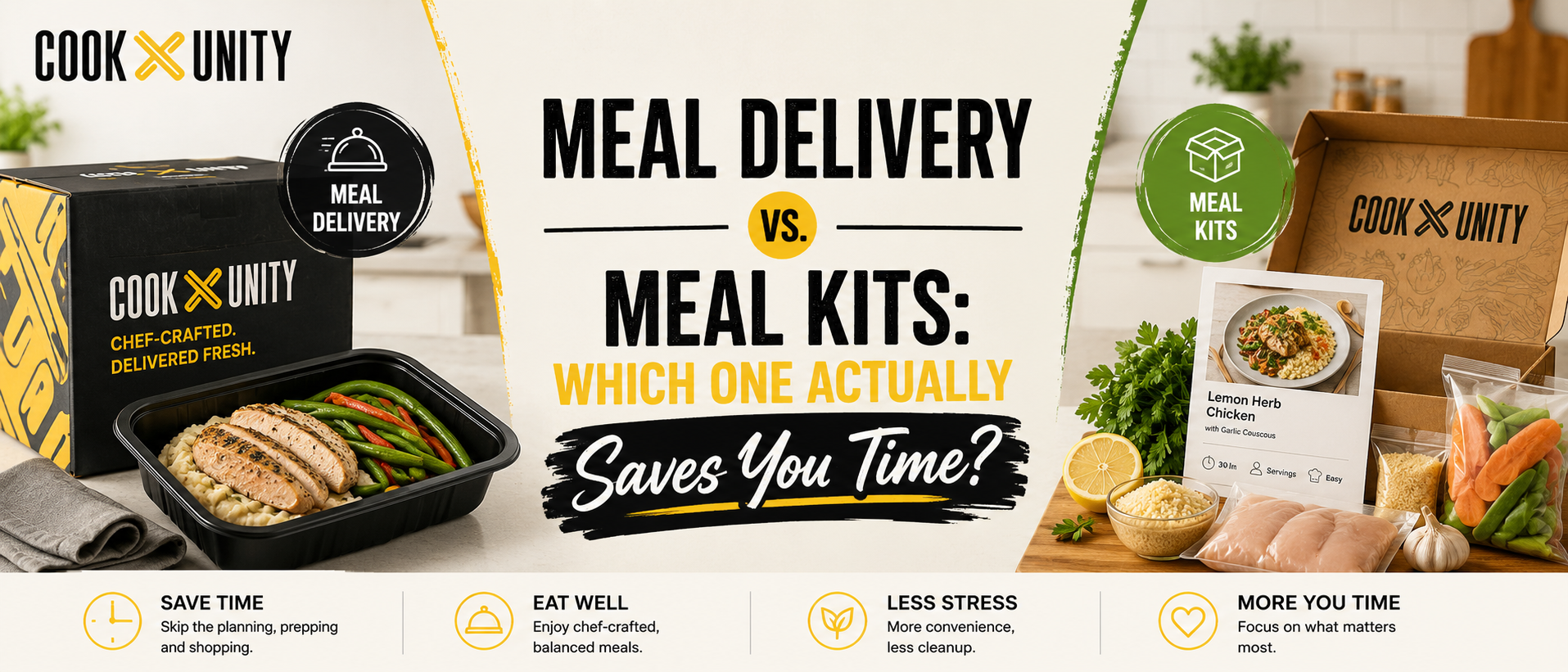
Introduction
🚀 Choose SmarterYou open the fridge. It's Tuesday. There's half an onion, some leftover rice, and a suspicious Greek yogurt you don't remember buying. And you have exactly 40 minutes before you need to be on a call.
Sound familiar?
That moment — that exact, slightly panicked moment — is where the whole debate between meal delivery vs meal kit actually begins. Not in a marketing brochure. Not in a comparison chart. But in your kitchen, when you're hungry and tired and just want something that works.
If you're leaning toward convenience without sacrificing quality, services like CookUnity make the decision easier by delivering fresh, chef-crafted meals that arrive ready to heat and eat—no shopping, prep, or cleanup required.
So let's really dig into this. No fluff. No sponsored rankings. Just an honest look at what each option actually costs you — in time, money, and mental energy.
Meal Delivery vs. Meal Kit
Here's the thing people get wrong. They think this is a food question. It's not. It's a lifestyle question.Meal delivery means someone else cooked it. You order, it arrives hot (or reheatable), and your involvement is basically just eating. Think DoorDash, Uber Eats, or dedicated services like Freshly and Trifecta. Done.
Meal kits mean the ingredients arrive pre-measured, pre-portioned, sometimes pre-chopped — but you still cook. HelloFresh, Blue Apron, Home Chef. You're in the kitchen. You're doing the thing.
Neither is objectively better. That's the honest truth. But one of them is probably way better for you specifically. Let's figure out which.
The Time Factor — And Why It's More Complicated Than You Think
Okay. So you want to save time. That's why you're here.With meal delivery, the time savings are obvious — order in 2 minutes, eat in 30. On a brutal Wednesday after a long commute, that's not just convenient. It's kind of lifesaving.
But with meal kits? It's messier. You still cook. Most recipes say 30 minutes, and honestly, sometimes they're right. Sometimes it's 45. Depends on your knife skills, how familiar you are with the instructions, whether your burner runs hot. There's a learning curve, especially the first few weeks.
Here's what nobody tells you though: meal kits eliminate decision fatigue. And that's a hidden time that people completely underestimate. You don't have to think about what to make. You don't have to make a grocery list, drive to the store, wander the aisles, forget the cilantro, go back... The planning overhead? Gone.
So if your time-suck isn't the cooking but the figuring out what to cook, meal kits might actually save you more time overall than delivery does.
Weird, right? But it's true.
When Meal Delivery Actually Wins
Let's be real about when food delivery is just the right call.You're sick. You're working late. You have guests unexpectedly. You just... I don't want to cook and that's a completely valid reason. Meal delivery is also significantly better for variety on demand — want Thai tonight and pizza tomorrow? Easy. No commitment.
If you're trying to compare meal delivery services, the key things to look at are:
- Speed — how fast does it actually arrive in your area?
- Quality — is it good when it shows up, or is the salad wilted?
- Cost per meal — which, spoiler, is almost always more expensive than cooking
- Dietary options — not all services are equal here
When Meal Kits Are Genuinely Worth It
Meal kits get a bad reputation for being overpriced. And yeah — they're not cheap. But the comparison people make is usually wrong. They compare kits to grocery shopping for the same meals, which doesn't account for:- Food waste (you buy a full bottle of fish sauce for one tablespoon)
- Time at the store
- The cognitive labor of recipe selection
- When do you factor all that in? Kits are more competitive than they look.
Best Meal Kits for Vegetarians — Because This Deserves Its Own Section
If you don't eat meat, this question gets more specific. And honestly, the options are better than ever right now.Not every service handles vegetarian cooking well. Some just... remove the chicken and call it a day, which is insulting. The best meal kits for vegetarians actually build meals around plant-based proteins with real flavor and thought behind them.
A few things to look for:
- Variety of plant proteins — lentils, chickpeas, tofu, tempeh, paneer. If a service only offers black bean tacos every third rotation, skip it.
- Global cuisines — Indian, Middle Eastern, and East Asian cooking are naturally rich in vegetarian dishes. A kit service that leans into this? That's the one.
- Clear labeling — some services have separate vegetarian or vegan plans. Others let you filter. Make sure you know what you're getting before committing.
- Portion satisfaction — this is subjective, but important. Vegetarian meals need to be filling, not just virtuous.
Comparing Costs — The Numbers No One Wants to Face
Let's just say it plainly. This stuff isn't free.Meal delivery from a restaurant app typically runs $15–25+ per meal when you factor in delivery fees, service fees, and tips. Some nights that number is fine. Some nights it's alarming.
Meal kits generally run $9–13 per serving, depending on the service and plan. That's more than cooking from scratch but less than most deliveries.
Cooking from scratch is cheapest — but only if you account for zero of your time.
When you compare meal delivery services broadly, the cost difference between platforms can be significant. Some offer steep introductory discounts (first box free, 60% off the first month) that make the math look very different upfront. Just know that the regular price kicks in fast.
One practical approach: use delivery for true emergencies, meal kits for 3-4 nights a week, and cook simply from scratch on the nights you have energy and time. That hybrid model is what a lot of people land on once they stop thinking it has to be all-or-nothing.
The Subscription Trap — Read This Before You Commit
Meal kits delivery almost always works on a subscription model. And they're... slippery. The skip-a-week feature exists, but it requires you to remember to use it. More than a few people have ended up with a pile of boxes they didn't need because they forgot to pause.Set a calendar reminder for yourself if you sign up. Seriously.
Also, read the cancellation policy before subscribing. Most services make it easy to cancel, but "easy" is relative and some have specific cut-off windows you need to hit.
Final Thoughts: What Actually Saves You Time?
Here's the honest answer to the question this whole post started with.Meal delivery saves you time at the moment. It's the fastest path from hungry to eating.
Meal kits save you time across the week. Less planning, less shopping, less waste, less wondering what's for dinner.
The best approach for most people isn't choosing one and sticking to it forever. It's using each tool for what it actually does well — and being honest with yourself about what your week actually looks like.
Some weeks you need delivery. Some weeks you want to cook. Most weeks you probably need both.If convenience is your priority, CookUnity makes it easy to enjoy chef-crafted, ready-to-eat meals without the prep, cooking, or cleanup—giving you more time for everything else that matters.
The meal delivery vs meal kit debate doesn't have a winner. It is the right fit for you right now. And that fit might change every season, every chapter of life.
Figure that out, and you've actually solved the problem.
Explore Newsbuck for more exclusive deals and important updates. We are your go-to source for all the news and trending stories across fashion, politics, health, entertainment and much more!
🚀 Choose Smarter
FAQs
Q: Is a meal kit actually cheaper than ordering delivery every night?
Almost always, yes — and by a meaningful margin. Most meal kits run $9–13 per serving, while restaurant delivery can easily hit $20–25+ per meal after fees and tips. Over a month, that difference adds up to hundreds of dollars. The caveat is that meal kits require you to actually cook, which is a time trade-off to consider.
Q: What are the best meal kits for vegetarians who want actual variety?
Look for services that actively build vegetarian menus rather than just removing meat from existing recipes. Green Chef, Purple Carrot, and Sun Basket are frequently recommended for their range of global plant-based dishes. The key is finding a service with rotating menus that include diverse protein sources — not just pasta and salads on repeat.
Absolutely — and honestly, most people find a hybrid approach works best. Meal kits for planned weeknight cooking, delivery for nights when life gets unpredictable. There's no rule that says you have to commit to just one. Think of them as different tools for different situations, not competitors you have to choose between.