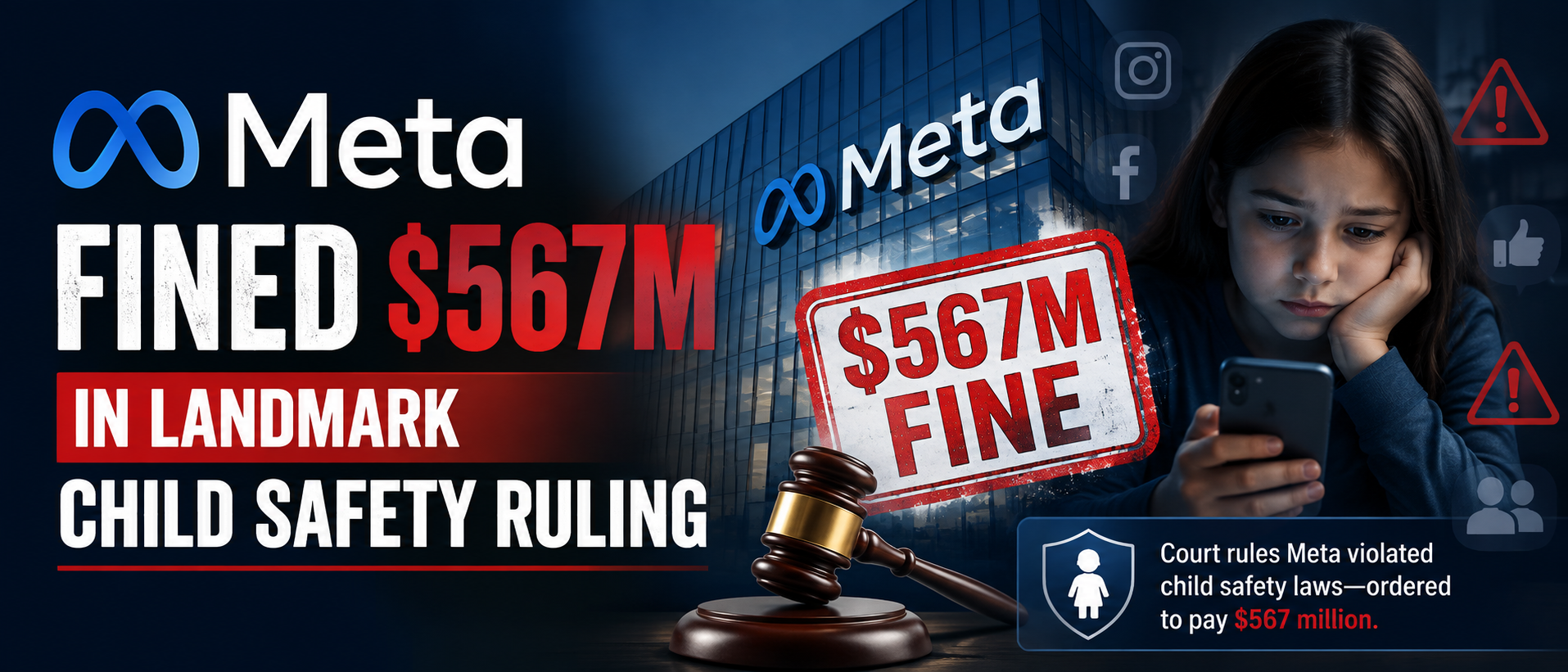
Meta, which owns Instagram, Facebook, WhatsApp, and Threads, rejected the ruling and announced plans to appeal. A company spokesperson said Meta works hard to keep people safe and has been transparent about the difficulties of identifying and removing harmful content, adding that the company remained confident in its record of protecting young users online. The same message had accompanied Meta's earlier response to the $375 million verdict, which was itself the first successful state lawsuit against the company over child safety.
What the Ruling Found and What the Money Must Be Used For
The New Mexico case originated from a 2023 lawsuit brought by the state's attorneys, which argued that Meta should be held liable for the way its platforms put children at risk, including exposure to sexually explicit material and contact with sexual predators. In the first phase of the trial, Meta was found to have violated the state's Unfair Practices Act by using recommendation algorithms that effectively directed young users toward harmful content and inappropriate contacts. In this second phase, the judge concluded that the harms had spread widely enough to constitute a public nuisance, reaching beyond the platforms themselves into children's daily lives, schools, families, and interactions with health services and law enforcement.
The $567 million penalty must be placed into a dedicated fund aimed at reducing future harms and addressing damage already done. The majority of the money, totalling $420 million, will go toward clinical and behavioural health programmes and professionals capable of treating the effects that exposure to harmful content has already had on affected children. Additional portions of the fund will be directed toward training initiatives for teachers and health professionals, helping them understand and respond to the specific harms associated with social media use among young people.
New Rules for How Meta Must Treat Underage Users
Beyond the financial penalty, the judge issued a range of specific operational requirements that Meta must now implement. No account belonging to a user under the age of 18 can be recommended to adult users, and adults must be blocked from sending direct messages to underage accounts. The sending or receiving of nudity by any underage user is banned outright, and a one-strike policy must be implemented for adult users found to have engaged in the sexual exploitation of children.
Further restrictions on the experience of users under 18 include the removal of visible like counts, mandatory push notification limits between 10 o'clock at night and 7 o'clock in the morning daily, and additional notification blackouts during school hours from 8 in the morning until 3 in the afternoon on weekdays during the school year. Meta must also enforce a monthly usage cap of 90 cumulative hours across Instagram and Facebook for users under 18, equivalent to roughly three hours per day on average.
The New Mexico verdict is unlikely to be the last major legal confrontation Meta faces over child safety. The company is currently dealing with thousands of similar lawsuits across the United States, and a major new trial is set to begin in California next week, in which nearly three dozen state attorneys general have joined together to sue Meta for violations of child privacy laws.