According to analysts and Shipping Companies, they continue to lack some fundamental communication, including both clear safety assurances from Iran and defined and detailed transit instructions, thus leaving shippers no choice but to avoid shipping through the Strait of Hormuz until those necessary assurances are provided.
It is worth noting that one of the world's largest shipping companies, Hapag-Lloyd, has six container vessels currently located in the region and has opted for a course of action that does not include shipping those vessels. Hapag-Lloyd has publicly stated that the safety of its mariners will always be a priority and that, at present, risk assessments do not support the company's resuming shipping activities through the Strait of Hormuz.
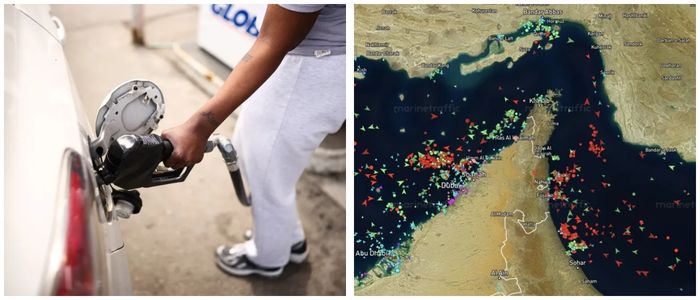
Although the initial optimism created by news of the ceasefire resulted in the fall of oil prices and the rise of the stock market, that optimism has turned to disbelief, which has been bolstered by the extremely low quantity of vessels that have recently transited through the Strait of Hormuz and the fact that oil prices have rebounded and are once again approaching the $100 level per barrel. Before the outbreak of hostilities in the Middle East, the average number of vessels per day that transited through the Strait of Hormuz was approximately 100 vessels.
That number had fallen to approximately 8 vessels as a result of the current geopolitical situation in the Middle East. Length and Uncertainty of Delays May Last Several Months.
According to industry experts, it may be up to 6 months before shipping activities can return to normal levels. Since the ceasefire began, it has been reported that only 2 oil/gas tankers have experienced passage through the Strait so far, with hundreds of vessels still stuck in the region. Moreover, thousands of vessels, including over 400 tankers, as well as multiple LPG & LNG carriers, are currently waiting in adjacent waters.
In addition to overcoming simply exiting the region, shipping companies have experienced much difficulty in reentering the region to load previously stored crude oil and complete the full cycle of transporting product. There is a significant risk that ships will not enter until there is certainty that routes are safe for outfitting the vessel in both directions; therefore, operators are reluctant to proceed.
Additionally, shipping companies have reported that they have had either minimal or no direct contact with the Iranian authority concerning safe passage procedures. Lack of direct communication with Iranian authorities makes it very difficult for shipping companies to have confidence in cease-fire conditions.
Mounting Geopolitical Tension and Increased Cost will increase the risk profile.The delicate nature of this region has continued to exist due to geopolitical tensions involving the Islamic Revolutionary Guard Corps (IRGC), along with disputes in which shipping companies claimed that their vessels were either slowed or stopped due to violations of the ceasefire agreement. Additionally, shipping companies have raised concerns about who has the authority to authorize a ship to move, causing additional uncertainty in the situation.
Although persistently high levels of energy costs, increasing supply chain pressure in the United States has caused gas prices to increase by approximately $1.18/gallon, or 40% increase since the conflict started.
As such, if oil begins flowing again shortly, the prices may still take some time to stabilize. Analysts have cautioned that should the current disruption continue for another week or two, the implications for Energy and Global Economic Markets could be devastating.
Overall, the cease-fire currently provides no long-term solution; additionally, without greater accountability, clearer rules, stronger assurance and lasting stability in the Strait of Hormuz will continue to present a significant point of concern for International Trade and Energy Security.