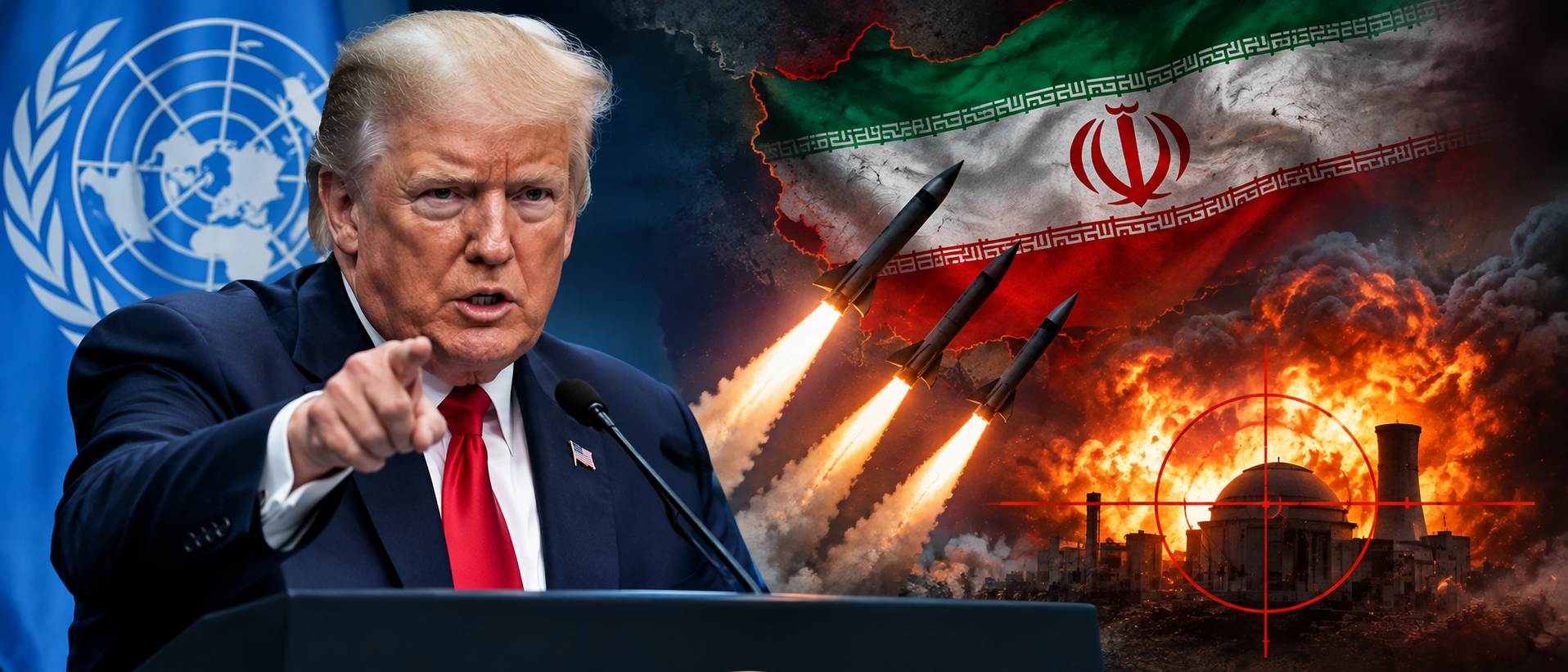
"Between both Iran and the U.S., I think both countries are interested in negotiating," said the U.S. President while speaking with reporters aboard Air Force One regarding his belief that negotiations would be successful.
"I believe the end result will be a deal reached between Iran and the USA," said President Trump while also discussing the indecisiveness of the Iranian government and how diplomats need to keep this in mind when preparing for discussions.
Trump' s confidence was demonstrated when he stated, "Iran knows that there are consequences when they do not reach agreements," and he referenced last summer when the USA bombed Iranian nuclear facilities using B-2 stealth bombers; "the USA could've reached an agreement with Iran instead of using B-2's to destroy their nuclear capability; therefore, I'm hoping that Iran will now be more rational.
The second round of negotiations in Geneva follow several other instances of military threats directed towards Iran due to their violent crackdown on anti-government protests and their refusal to resolve outstanding issues regarding Iran's nuclear program.On Monday, Iran's foreign ministry declared that it thought US posture to the nuclear issue had become "more realistic" on the part of the United States.
Iran has reiterated that the talks being held Tuesday under the direction of Oman would focus on both its nuclear program and the potential lifting of economic sanctions by the United States. In the past, US officials have announced that the United States also wishes to discuss a variety of other issues, including the Iranian missile stockpile.
Military Activity in The Area
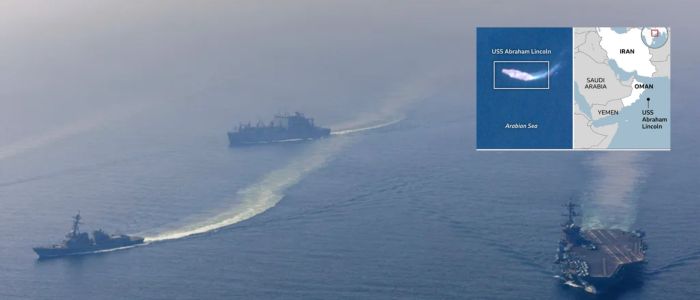
The diplomatic efforts are coupled with an apparent increase of military activity by the US in the Middle East. Satellite imagery has established that the marine aircraft carrier USS Abraham Lincoln is stationed off the coast of Iran. There has also been mixed reports of the USS Gerald R Ford, the largest vessel in the world, being sent to the region with an expected arrival within three weeks.
In addition to the Abraham Lincoln, there are a significant number of US destroyers, combat ships and fighters stationed in the area. This military presence shows the seriousness of the situation at the commencement of negotiations.
Iran has reacted similarly with public displays of military strength. On Monday, the Iranian Revolutionary Guard Corps (IRGC) conducted military operations in the Strait of Hormuz, which is a significant international oil transport channel between Oman and Iran. The importance of the Strait of Hormuz as an international oil transport lane from Arabia to all parts of the world makes the activities at this location of great interest to many countries.
Diplomatic Signals and Challenges
Iran's Foreign Minister Abbas Araqchi had a meeting with the director of the United Nations Agency for Nuclear Energy on Monday. Araqchi reported via Twitter that he was in Geneva "to reach a fair and reasonable agreement." He highlighted that Iran would not be intimidated into an agreement by threats: "What will not be agreed to is to submit to threats."
The White House has indicated that both Steve Witkoff, the US special representative to the Middle East, and Jared Kushner, the son-in-law of President Trump, would be trying to take part in the negotiations. Additionally, US Secretary of State Marco Rubio stated that reaching a final agreement could be extremely complicated.
"I think that we have a chance to reach an agreement through diplomatic means … However, I do not want to make it sound easier than it will be," Rubio said while in Budapest. "This is going to be hard."
With both sides having significant military forces deployed in the region, and with both sides having made very strong public statements about the seriousness of the negotiations, the resolution of these negotiations may potentially alter the future of US and Iranian relations.