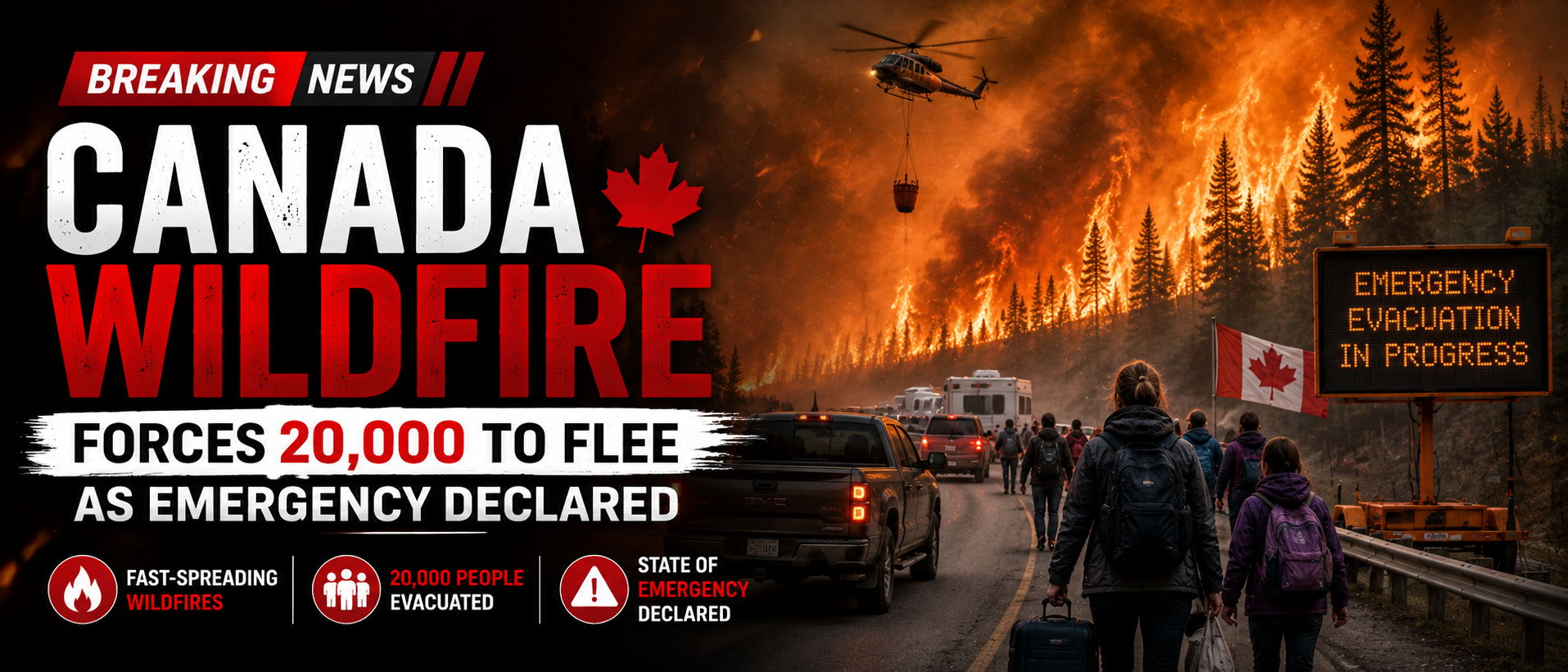
The fire has burned through 13,618 hectares, or roughly 33,650 acres, and has been described by fire officials as comparable to a bomb going off in terms of the speed and ferocity with which it spread. British Columbia Premier David Eby confirmed that homes had been lost, properties destroyed, and that some people had become trapped as conditions deteriorated so rapidly that they needed to be rescued. The blaze has reached such an intensity that it has been generating its own weather systems, including lightning, according to officials.
One fatality has been confirmed. An 80-year-old woman from Meadow Valley, north-west of Summerland, died suddenly while attempting to escape her home alongside a family member. Police indicated her death was directly connected to the wildfire.
Residents Describe Fear and Uncertainty
The experiences of those who fled capture the terrifying speed at which events unfolded. One Summerland resident described evacuating her home just moments before the fire reached her property, sharing footage that showed blazing treetops visible just beyond the road where she made her escape. Her voice was audible over the video. She has been unable to return since leaving on Friday with seven others, and described waiting anxiously for news about whether their home still stands. Neighbours who remained behind have reported that multiple homes on nearby streets have burned down.
Another resident of Peachland, a town of around 6,500 people also under evacuation, described watching the fire from a boat on Okanagan Lake on Friday afternoon. He had seen clear blue skies turn grey within a short time, and by nightfall a wall of smoke and fire was visible on the horizon, moving in his direction. Police knocked on his door that evening and ordered him and his family to leave. He and his wife are now safe but displaced. For a man who had lived in Peachland for 30 years and previously only experienced evacuation alerts, it was, in his words, unreal. Summerland itself, with a population of around 12,000 people, has been among the hardest affected areas, along with parts of Peachland and several other surrounding communities.
The Wider Impact and What Comes Next
The Bald Range wildfire has triggered the largest evacuation event in British Columbia this summer. Hundreds of residents from care facilities in Summerland, including senior housing, have been relocated to safer locations. The full extent of structural damage remains unknown as crews continue to fight the fire, but with dozens of confirmed homes already gone and fire still active across a vast area, the toll is expected to be significant. Evacuation orders have been issued across multiple regional districts including Central Okanagan and Okanagan-Similkameen, as well as the Snpink'tn Indian Band lands and the districts of Summerland and Peachland, with additional evacuation alerts in surrounding areas.
One of the more unusual challenges facing evacuees has been the difficulty of moving livestock, particularly horses. Some owners who could not transport their animals left gates open in the hope that the animals would find their own way out of the path of the fire. Others painted identification markings on their animals to make it easier to reunite with them later.
This summer has already been a severe one for Canadian wildfires more broadly. Close to 200 fires burned across Ontario in July alone, pushing Toronto's air quality to among the worst levels recorded anywhere in the world during that period. Smoke from the Canadian fires drifted south into parts of the United States, reaching as far as Minnesota and New York, and drew a response from US President Donald Trump, who threatened new tariffs on Canada in connection with the situation.