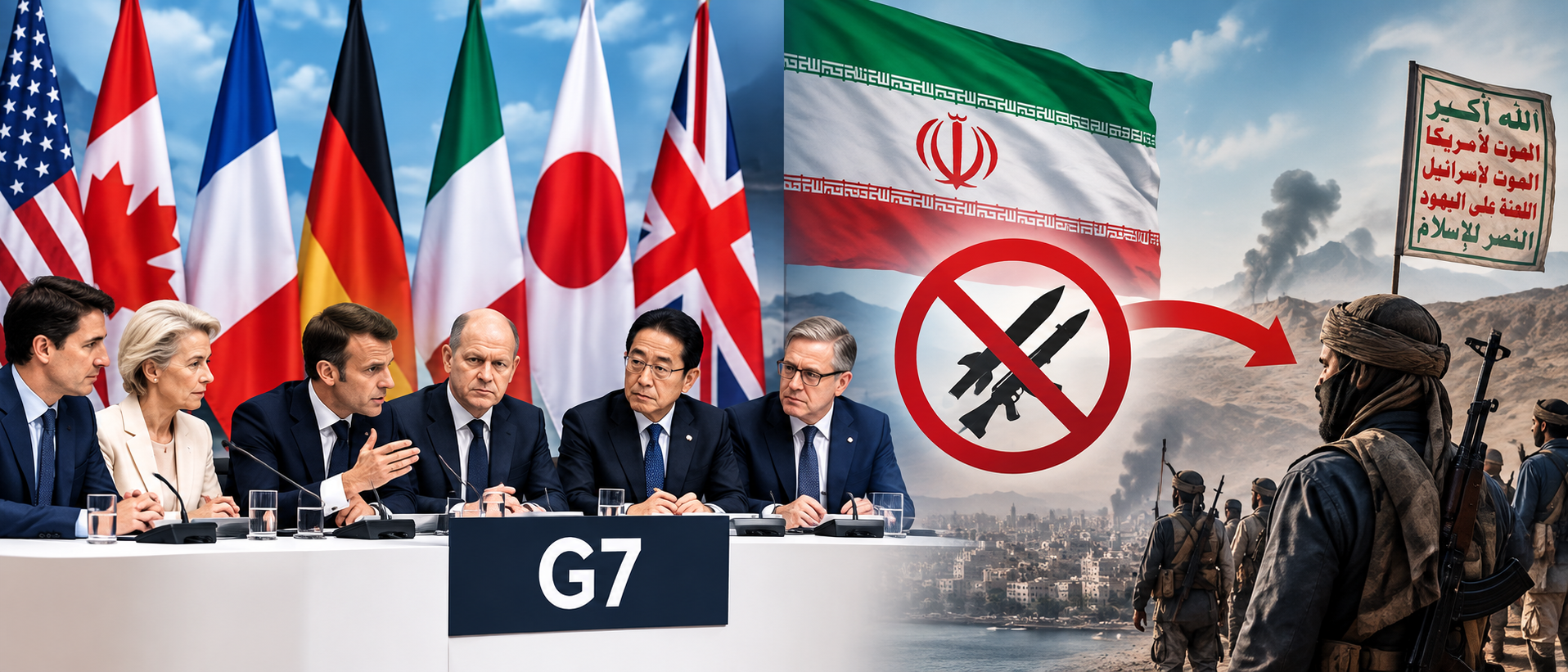
The warning comes as thousands of refugees flee Yemen after the Iran-backed group took control of territory along the country's Red Sea coast including in areas near the Bab al-Mandab Strait, a crucial passageway for international shipping.
Representatives from the UK, Canada, France, Germany, Italy, Japan and the United States called on the Houthis to immediately cease all military operations and attacks on civilian vessels and instead called for a real return to political negotiations. The recent actions of the group showed a dangerous pattern of escalation that could inflame the conflict, disrupt global trade and destabilize the world economy, ministers said. They also reiterated their continued support to the internationally recognized government in Yemen and their commitment to the country's sovereignty and territorial integrity.
Deadly Strikes and Mass Displacement Intensify Crisis
The statement followed a meeting held on the sidelines of the UN General Assembly. Separately, reports citing Houthi-affiliated media indicated that at least six people, including two children and a woman, were killed in Saudi airstrikes on the strategic city of Mokha, with eight others injured. The city had been seized by Houthi forces from government troops earlier this month. Saudi Arabia has not yet responded publicly to these reports.
According to United Nations estimates, more than 120,000 people in Yemen have been displaced due to the sudden intensification of fighting along the Red Sea coast. The Houthis, who already controlled most of Yemen's populated regions, recently took control of the Bab al-Mandab Strait, a narrow but critical passage connecting the Red Sea to the Gulf of Aden and beyond. In response, Saudi Arabia has carried out hundreds of airstrikes in the region, while the Houthis have retaliated with numerous drone and missile attacks targeting cities and infrastructure across southwestern Saudi Arabia, including the capital.
International Support Grows for Saudi Arabia
The UK Prime Minister announced that Britain would provide defensive aerial refueling support to Saudi Arabia, using a single aircraft stationed at a Royal Air Force base in Cyprus. He explained that the decision followed a direct request from Saudi Arabia for military assistance, made on the advice of top UK defense and foreign policy officials. A diplomatic source also indicated that France has pledged similar support, expressing willingness to help protect Saudi energy infrastructure through a strictly defensive approach.
Reports also suggest that Saudi Arabia's crown prince has requested military assistance from the United States, though the American president has reportedly been hesitant for weeks about how to respond to that request. He previously indicated he was still weighing his options regarding the broader situation involving Iran. Over the weekend, US embassies throughout the Middle East issued updated security alerts as fighting between the Houthis and Saudi-backed coalition forces continued to intensify.
The Houthis have long identified themselves as part of a broader Iran-aligned coalition opposing Israel, the United States, and Western influence in the region, alongside other armed groups. For its part, Iran has consistently denied supplying weapons to the Houthis, maintaining that its support for the group is purely political.