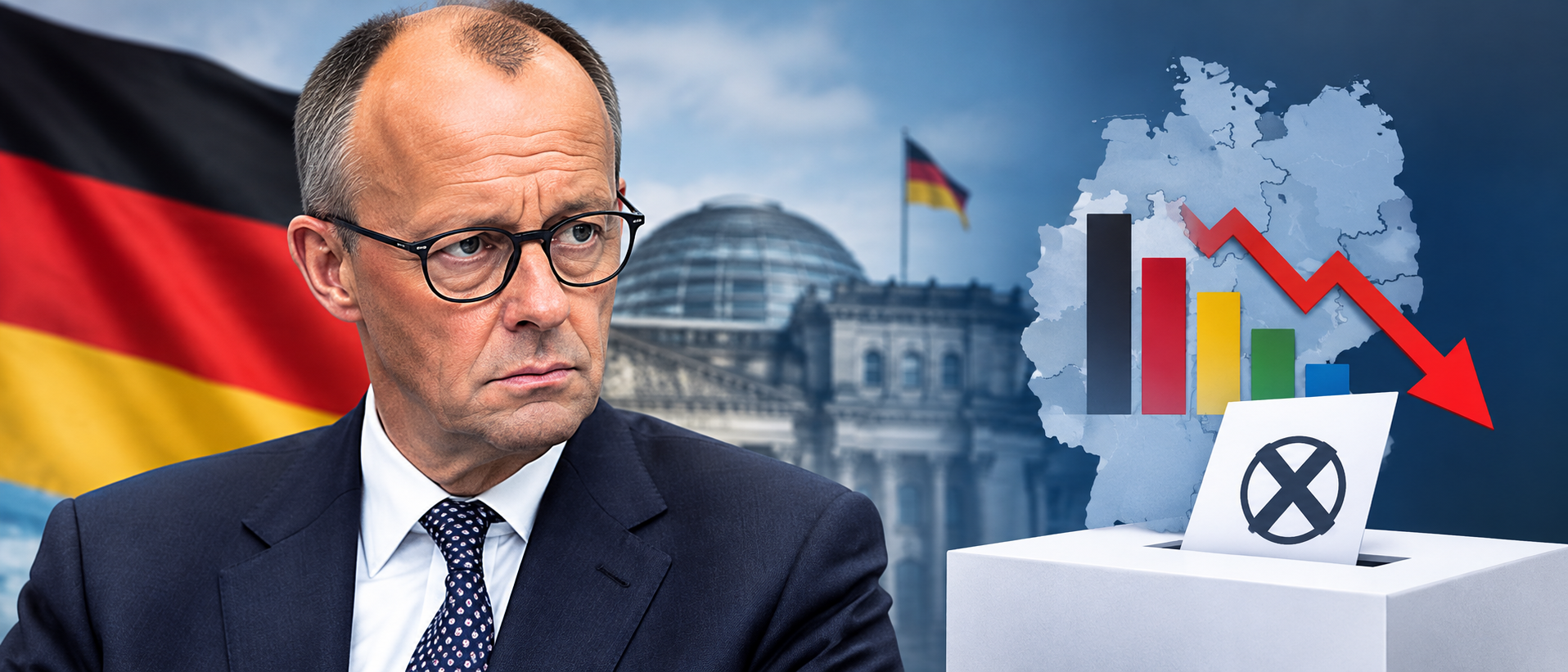
The far-right Alternative for Germany party appeared to win the largest share of votes in that state, though it remains unlikely to form a government there since other parties have refused to cooperate with it. Meanwhile, in Berlin, the Christian Democratic Union was projected to fall behind the Left party in that city's own election.
Pressure Mounts on Merz Amid Talk of Leadership Change
The chancellor has faced growing pressure in recent months due to weak approval ratings, with speculation swirling that he could be replaced before his term naturally ends. Following the election results, Alternative for Germany co-leader Alice Weidel was asked how much longer Merz would remain in power, and she responded that his departure would likely come soon.
These two regional elections took place on Sunday, just two weeks after the Christian Democratic Union saw its support cut in half in the state of Saxony-Anhalt, where the Alternative for Germany secured a significant win. Speaking to reporters at his party's Berlin headquarters, Merz reaffirmed his commitment to pushing forward with his coalition's planned economic, tax, and welfare reforms, stating that these changes were necessary and that he was prepared to take on that responsibility to move the country forward.
He added that the moment called for resilience, patience, and steady leadership, and said he intended to demonstrate exactly that both as party chairman and as chancellor. He went further, describing the reforms as a kind of countermeasure against what he called the growing pull of authoritarian ideology within society. Weidel, however, pushed back, claiming her party now represents the mainstream view among voters.
Election Results Reflect Deep Regional Divides
Some regional branches of the Alternative for Germany have been classified as right-wing extremist by domestic intelligence agencies, a label the party firmly denies. Even so, its stance on immigration, national identity, and closer ties with Russia has gained considerable traction in the country's former East German states.
Merz responded to the election results by making clear he has no plans to step aside, having long sought the chancellorship and showing little willingness to give it up now. Polls in both states closed at 6 p.m. local time, with final results expected later that night or early the following morning. Public broadcasters reported the Alternative for Germany slightly ahead in Mecklenburg-Vorpommern, where the Christian Democratic Union appeared to have recorded its worst result in any state since World War Two, with the far-right party projected to take 38 percent of the vote compared to 35 percent for the center-left Social Democratic Party in second place.
In Berlin, broadcasters placed the Christian Democratic Union at 19 percent, trailing the Left party's nearly 26 percent, a first-place finish that party had never previously achieved in the capital. The Alternative for Germany also gained ground in Berlin, with a projected 16 percent of the vote.
Ahead of Sunday's elections, speculation had intensified that Merz could lose his position if his party's standing didn't improve. Just days earlier, leaders from eight German states had publicly voiced their support for him, despite his having held the chancellorship for only sixteen months. One Berlin-based party official told reporters it was the right decision for Merz to remain in office, arguing there wasn't time to waste forming a new federal government and that voters needed to be more patient, noting that not every issue could realistically be resolved within a single year. He added that Merz deserved his full four-year term.
While supporters argue that many of the country's current challenges were inherited rather than caused by Merz, the chancellor himself remains widely unpopular. His shift toward more conservative positions on issues like immigration has failed to weaken support for the far-right, while simultaneously alienating voters further to the left.