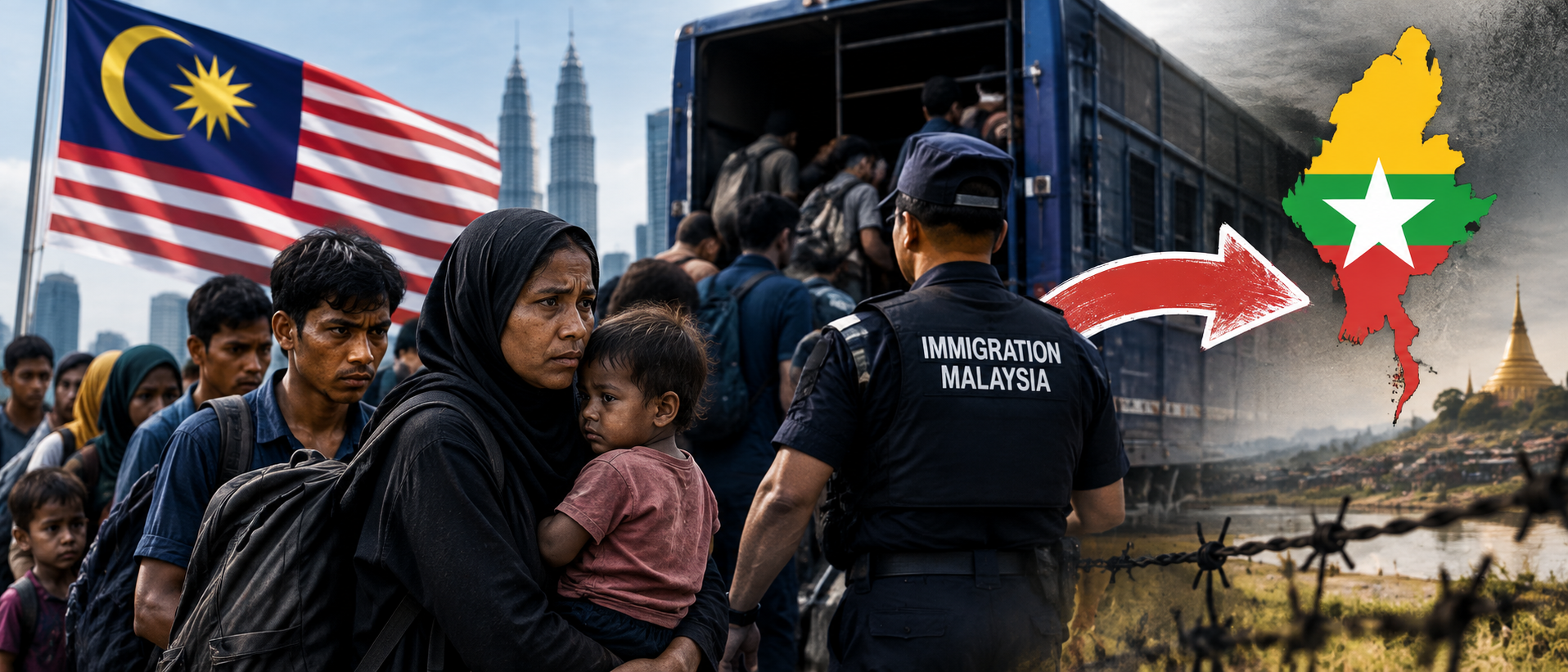
Human rights groups have sharply criticised the plan. They warn that the people sent back could face violence, persecution and forced recruitment into Myanmar's army. Malaysia describes the returns as voluntary, yet it has blocked the UN refugee agency from meeting or screening the returnees, who are being held in detention centres.
Prime Minister Anwar Ibrahim has confirmed that the group includes Rohingyas, a persecuted Muslim minority who are not recognised as citizens in Myanmar. Many have sought safety in Malaysia after being pushed out of their homeland. Anwar says rising public anger over their presence leaves him no choice but to negotiate with Myanmar's government.
The shift is striking. Anwar is a former political prisoner who has long presented himself as a defender of freedom and human rights, and he once urged more help for the Rohingyas. Under his leadership, Malaysia has refused to recognise Min Aung Hlaing's regime and has been one of the strongest voices in South East Asia calling for a negotiated end to Myanmar's civil war.
Why the Public Mood Has Turned
So what changed? Two things, mainly. The first is the economic pressure on lower-income Malaysians since the Covid pandemic, which has bred resentment toward the Rohingyas. The second is the unstable state of Malaysian politics since 2018. That year, a historic election removed the United Malays National Organisation (UMNO), the ethnic Malay party that had held power for more than 60 years. A revolving door of shaky coalition governments followed.
For years, things looked very different. Malaysians felt real sympathy for fellow Muslims in Myanmar. In August 2017, a brutal military campaign forced three quarters of a million Rohingyas from their homes in Rakhine State and into neighbouring Bangladesh. Conditions in the refugee camps there were so grim that those who could afford it risked dangerous sea journeys to reach Malaysia, hoping for safety and work.
The Malaysian navy and coastguard have long tried to turn Rohingya boats away. Even so, many arrived by other routes and were tolerated for a long time. More than 200,000 are now believed to live in the country, and most scrape by on manual labour.
Attitudes began to sour during the pandemic, which hit the economy hard. As fear of the new coronavirus spread, social media filled with accusations against Rohingya migrants, along with calls to deport them. The government of the day hardened its stance, said Malaysia could take in no more refugees, and ordered raids on communities thought to be sheltering illegal immigrants.
Much the same has happened in 2026. In May, an online complaint claimed Rohingyas had not disposed of animal waste properly after the Muslim festival of Eid al Adha. That set off a viral campaign falsely accusing Rohingya leaders of demanding land and citizenship in Malaysia. Soon after, an online petition on Change.org calling for the Rohingyas to be thrown out gathered more than 400,000 signatures before it was removed.
A Prime Minister Under Pressure
Given his reputation as a champion of liberal values, many expected Anwar to push back against this wave of hatred and false claims. He has said the Rohingyas should be treated humanely. In a recent podcast interview, he said authorities may arrest them but must not beat, intimidate or humiliate them. Rights groups say that is exactly what officials have done inside immigration detention centres.
Still, Anwar insists the Rohingyas must go. In the same interview, he called them a burden in terms of security and the economy, and a source of hostility among ordinary people.
Some of his former supporters feel betrayed. Latheefa Koya, the former head of the Malaysian Anti Corruption Commission, called the decision disgraceful and amoral, and said it shames the nation in the eyes of the world.
Anwar, though, is squeezed politically. Once seen as a perpetual prime minister-in-waiting, he finally won the top job in 2022, but only by forming an uneasy coalition with his old rivals in UMNO. Since then, his popularity has dropped sharply and his party has lost seats in recent local elections. He must call a general election by early 2028.
Tricia Yeoh, Director of the Asian Institute for Policy and Engagement at the University of Nottingham Malaysia, says he is cornered and at his weakest point. She points out that he has made concessions to his UMNO partners, faced several corruption scandals and watched his own party split. After four years of asking voters to accept this as the price of keeping a fragile coalition together, she says, they are no longer buying it.
Instead, Yeoh explains, ethnic Malays, who make up more than half of the electorate, are responding to UMNO's familiar message that they need special protection and support from the state. She says this kind of racial politics feeds fear and resentment of outsiders. It also echoes what people hear elsewhere in the world, she adds, with complaints that immigrants take jobs and that public money should not be spent on them.
An Uncertain Road Home
Even so, it is unclear how any Rohingyas can actually be sent back to Myanmar, since they are not recognised as citizens there. They cannot travel freely inside the country and are allowed to live only in Rakhine State, which borders Bangladesh. Nearly all of that state is now controlled by the insurgent Arakan Army and is under constant bombing by the Myanmar air force. On Monday, the day before the repatriation began, the Arakan Army said two bombs killed 49 people at a market in the town of Kyauktaw.
The only place the Rohingyas could realistically be taken is the state capital, Sittwe. But the city is besieged and cut off, and even there Rohingyas are confined to miserable camps with serious shortages of food and medicine. Rights groups also fear that any men among the returnees could be forced into the army to fight in the civil war.
Neither Malaysia nor Myanmar has explained how these huge obstacles will be overcome, or how the plan fits with basic humanitarian principles.
Nur Sadek, a Rohingya refugee rights advocate, says every Rohingya dreams of going home one day, but only when it is safe and by their own choice, never by force. For him, the most important thing is that refugees affected by this decision are listened to and treated with dignity.