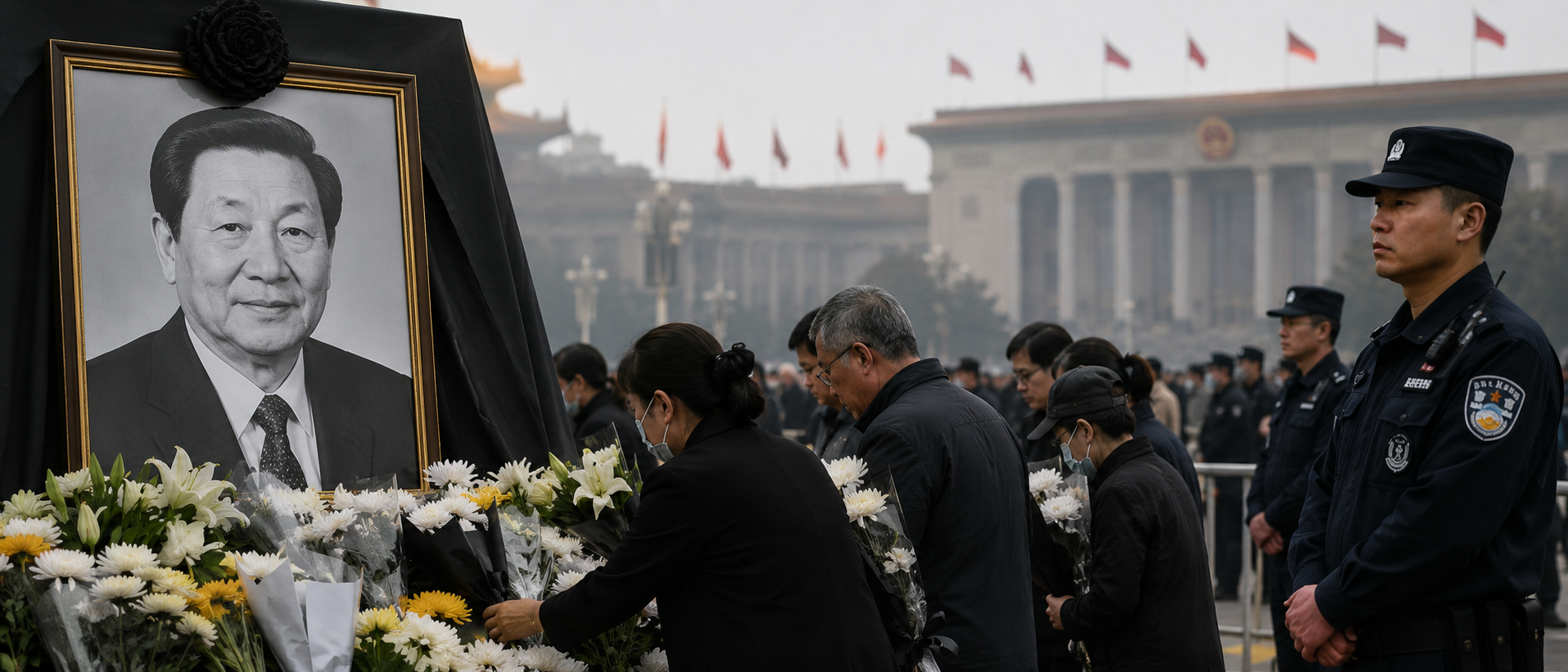
Zhu led China as premier from 1998 to 2003 and is widely regarded as one of the architects behind the country's most sweeping economic reforms. State media has honored him as a dedicated and loyal Communist Party figure, yet officials have simultaneously worked to keep public displays of grief firmly in check. The concern, observers say, is that nostalgia for Zhu's reform-driven era could easily slide into implicit criticism of the current leadership under President Xi Jinping.
A Carefully Managed Grief
Online tributes to Zhu have faced heavy moderation. One notable example was an essay from economist Zhao Jian, who described Zhu's era as a period when people had little money but a clearer sense of where their lives were headed. He wrote that back then, there were no smartphones or short videos flooding people's attention, and that life felt slower and more honest. The piece was pulled from WeChat within a day of being posted.
This kind of caution isn't new for the Communist Party. Past experience has taught officials that public mourning for senior leaders can spiral into something bigger. The deaths of former premier Zhou Enlai in 1976 and ex-general secretary Hu Yaobang in 1989 both triggered massive outpourings of grief that eventually turned into protest movements.
Zhu's death came just days before party leadership gathered to mark what would have been the 100th birthday of former President Jiang Zemin, who died back in 2022. With two towering figures from the same political era now gone, many in China are experiencing a wave of nostalgia for a period when the country seemed to be moving toward greater openness and personal freedom.
Remembering a Different Kind of Leadership
Before rising through the ranks, Zhu had been purged during Mao Zedong's rule and only returned to political life after Mao's death in 1976. He went on to serve as premier alongside Jiang Zemin, who took over as party chief in 1989 and became president in 1993. Together, the two guided China through a transformative stretch from 1998 to 2003, a period marked by shutting down failing state-owned enterprises, dismantling the old state housing system in favor of private property markets, surviving the Asian financial crisis, and ultimately securing China's entry into the World Trade Organization in 2001.
Part of what draws people back to that era is the personal style both leaders had. Footage from a state documentary shows Jiang alternating between pounding the table and bursting into laughter. Zhu had his own reputation for blunt talk, once calling corrupt bankers "half-wits" and comparing weak flood defenses along the Yangtze River to fragile tofu. At a 1999 press conference, when pressed about claims that China had funneled money into Bill Clinton's political campaign, Zhu dryly noted that with $146 billion in foreign reserves, giving just $300,000 would have been a strange and pointless move, a comment that drew laughs from reporters in the room.
On the day Zhu died, a documentary about Jiang happened to air footage of Zhu describing how he convinced fellow officials to push through difficult reforms, saying his focus wasn't on debating pros and cons but on actually getting things done. A photo of the two men laughing together has since circulated online, with one widely shared post praising them for being honest, taking responsibility, and genuinely trying to serve the public.
Xi Charts a Different Course
The deaths of these two leaders effectively close the book on the fast-paced reform era of the late 1990s and early 2000s, a period defined by private enterprise and wealth building. Xi's approach has taken a noticeably different direction, favoring tighter central control and a state-led economic strategy centered on technological self-reliance and strategic industry.
Speaking for 40 minutes on Monday, Xi urged the party to continue Jiang's legacy, framing today's leadership as a direct continuation of his political vision. He warned that vigilance was needed against emerging risks and called for resilience in facing what he described as major tests ahead. He also defended Jiang's decision to shut down a reform-minded Shanghai newspaper in 1989 after it expressed support for the pro-democracy protests that ended in the Tiananmen Square crackdown.
Kerry Brown, a professor of Chinese Studies and director of the Lau China Institute at King's College London, said Xi is focused on building a singular, unified version of history, one where past leaders are folded into the story of China's rise rather than seen as offering an alternative path. According to Brown, the current leadership has little interest in entertaining "what if" scenarios about a different national trajectory.
Yet Xi is now governing during a far tougher economic stretch. Growth has slowed considerably, the population is aging, home prices have dropped sharply, youth unemployment remains high, and factory activity has cooled. The double-digit growth rates of decades past are long gone.
In many ways, the mourning for Zhu and Jiang reflects mourning for a time when ordinary Chinese families believed hard work would steadily improve their lives. That confidence, for many, has faded. As Zhao Jian put it in his essay, life back then was difficult, but it was a hardship people endured with hope. He acknowledged that China today has far more material wealth, tall skylines, and busy streets, but still asked why so many people feel a persistent sense of emptiness inside.