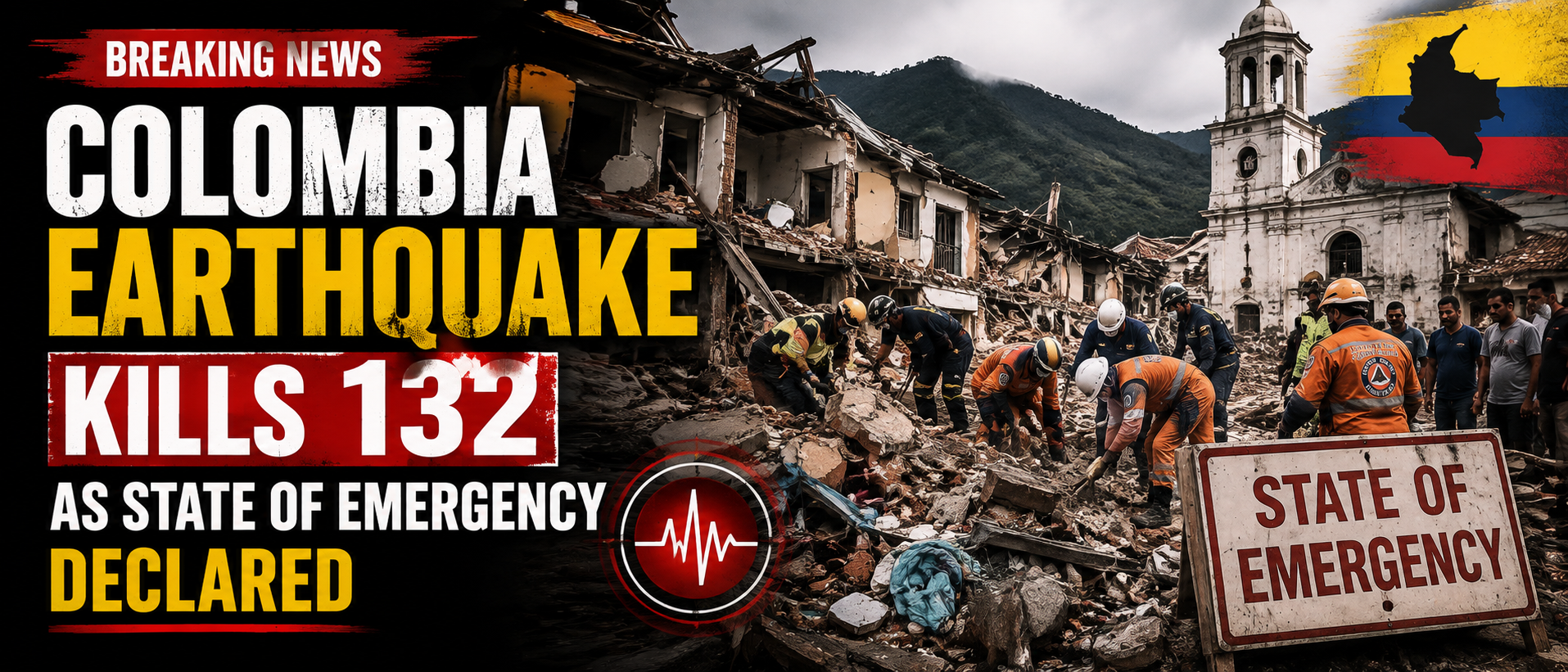
The epicentre was in a relatively remote area, and its local mayor reported no deaths or injuries in the immediate vicinity despite roads being blocked by the damage. But the destruction was severe in communities far beyond the epicentre, with the city of Pereira, located roughly 55 kilometres away in Colombia's coffee-growing region, bearing some of the worst of it. Videos showed at least one building collapsing in Plaza Bolívar, the city's central square, with dust and debris falling across an open space where people had gathered. Local authorities confirmed at least 40 deaths in the metropolitan area of Pereira alone, with 65 buildings having collapsed and people believed to still be trapped inside 15 of them. A curfew has been imposed in parts of the city until 5 o'clock on Tuesday morning.
How the Disaster Unfolded Across Colombia
The scope of the destruction extended well beyond Pereira. In Cali, located approximately 160 kilometres south and around 200 kilometres from the epicentre, 32 buildings collapsed. A tourist from London who had been in Colombia for two months as part of a longer trip was staying in Cali at the time. He described being woken by the earthquake and running outside with his partner in their pyjamas. The hotel they were in suffered no major structural failure but showed visible surface cracks, with paint and plaster falling from the walls. He said he had never experienced anything like it.
In Manizales, about 150 kilometres from the epicentre, at least two people were killed. The city has adopted strict seismic-resistant building codes following previous earthquakes, and that preparation appears to have prevented wider structural collapse. One local resident described the inside of his home after the tremor, with nearly all 450 of his books thrown from their shelves and the sound of glass breaking and people screaming filling the air. He called it a terrible and terrifying experience. In Quibdó, Medellín, and across the Chocó and Valle del Cauca regions, further deaths were also reported.
Infrastructure damage has been significant. Aviation authorities confirmed damage at multiple regional airports including those in Pereira, Manizales, Quibdó, Armenia, Cartago, and Buenaventura. In the capital Bogotá, buildings cracked and trees and traffic lights shook, but no serious structural damage to the city's infrastructure was reported. More than 1,500 homes across the country have been damaged according to the president's initial assessment.
International Response and What Makes This Quake Significant
World leaders and international institutions moved quickly to offer support. The United States Secretary of State said the situation was being closely monitored and that the country stood ready to help. The European Union confirmed that its Copernicus satellite system was already being used to support rescue operations. El Salvador's president offered both personnel and equipment for recovery efforts and sent a message of solidarity to the Colombian people.
According to the US Geological Survey, approximately 1.5 million people experienced shaking close to magnitude seven intensity. The survey also noted that deep earthquakes of this type, originating more than 100 kilometres beneath the surface, are typically less immediately destructive than shallow quakes, but they can release energy in ways that still cause significant structural damage to buildings, and tend to produce fewer but potentially stronger aftershocks. The earthquake comes less than two months after twin quakes struck northern Venezuela, killing more than 6,300 people, making this another devastating blow to the wider region in a short period. The death toll in Colombia is expected to rise as rescue teams continue working through collapsed buildings in search of survivors.