Although some Iranians are willing to talk with reporters under conditions of extreme anonymity, there is widespread fear that once the war ends, the government will use its retribution operations against its internal enemies as an excuse to increase their use of repression and strengthen state control, rather than decrease it.
Public displays of solidarity with the Islamic Republic are routinely staged, while any public display to oppose the government's authority is illegal. It is impossible to ascertain the actual level of support for the Islamic Republic from Iranians living in Iran due to these circumstances.
Ordinary Iranians in a State of Hopelessness and Hope
A young urban middle-class couple, whose names were changed to protect their identities, was indicative of the anguish that the mixed emotions of those living in Iran are currently experiencing. One partner expressed cautious optimism about the overall state of affairs, while the other firmly believed that Iran is now completely controlled by the Revolutionary Guard and is in complete chaos.
When senior regime figures were killed during the conflict, she experienced true satisfaction but later on changed to deep disappointment when they saw that by removing key figures (including Supreme Leader Ayatollah Ali Khamenei), it had not led to any new, moderate, or compromise-seeking regime. What remained within the regime's structures had stayed in place, and the hopes for change were left feeling defeated and abandoned.
A Record of Executions and Climate of Fear
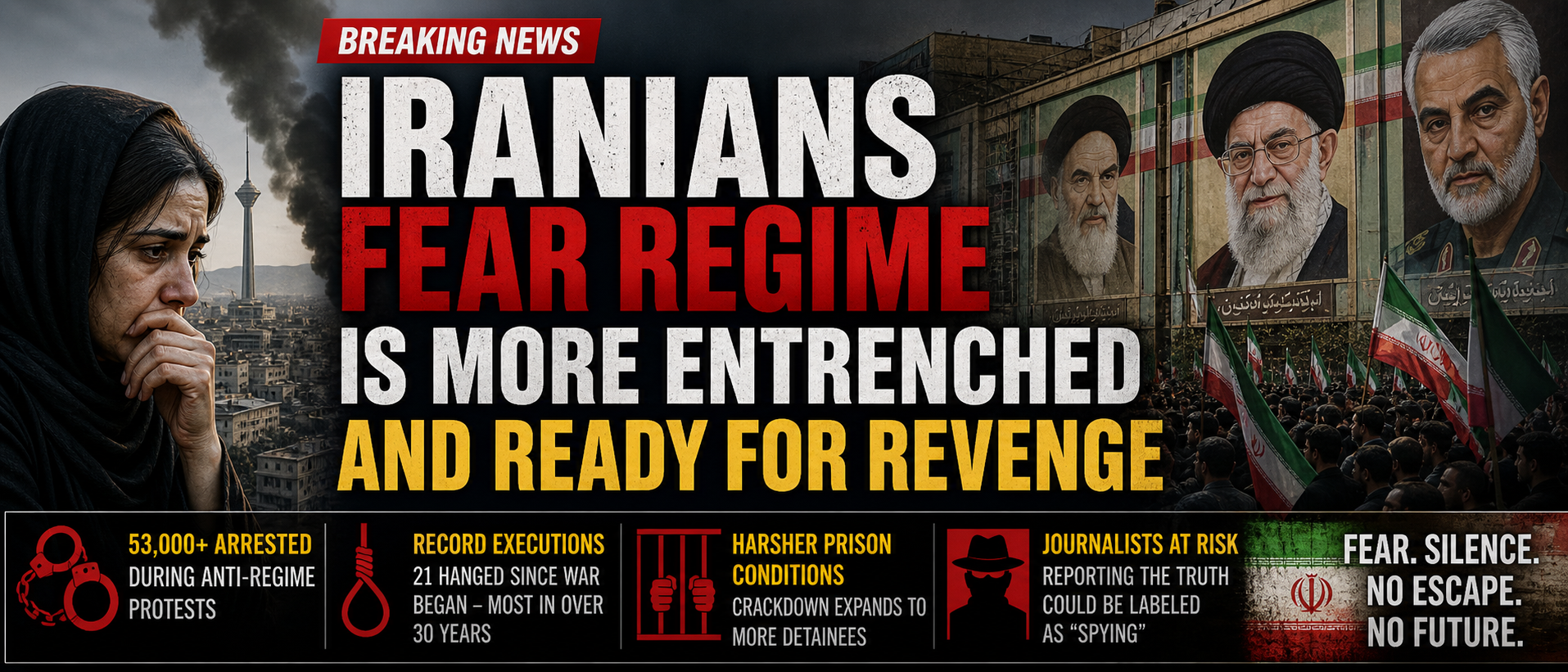
The internal crackdown by the regime has taken a major human toll, which is only getting worse. According to the Washington-based Human Rights Activists News Agency, more than 53,000 people were arrested during anti-regime demonstrations in January and before the conflict began. There are many thousands more people believed to have been detained since the beginning of the conflict.
There is also a record number of executions of political prisoners since the war started, with 21 hanged, which represents the largest number executed in a short time in more than thirty years. Of the 21 individuals that were executed, nine had some link to the protests in January, ten had alleged links to opposition groups, and two were alleged to be espionage agents.
An attorney who has been working with detainees, whose name has also been changed, said the harshness of prison conditions since the start of the war has been significantly increased. She stated that the severe treatment that had been reserved for individuals at the forefront of the protests has now been greatly expanded to many others in the prison population.
She emphasized the concern for current detainees because when the war ends, there is every expectation that the regime will express its accumulated anger toward detainees. In addition this year, four individuals have been executed for allegedly being linked to Israeli intelligence operations. Independent journalists working within Iran are facing equally grave risk because many have reported that simply reporting accurately about the war may lead to accusations of being a spy, possibly carrying a death sentence in Iran.
One journalist whose name has changed reported staying up at night worrying about the future and no longer focused on the broader political landscape but only on trying to keep himself and his family alive.