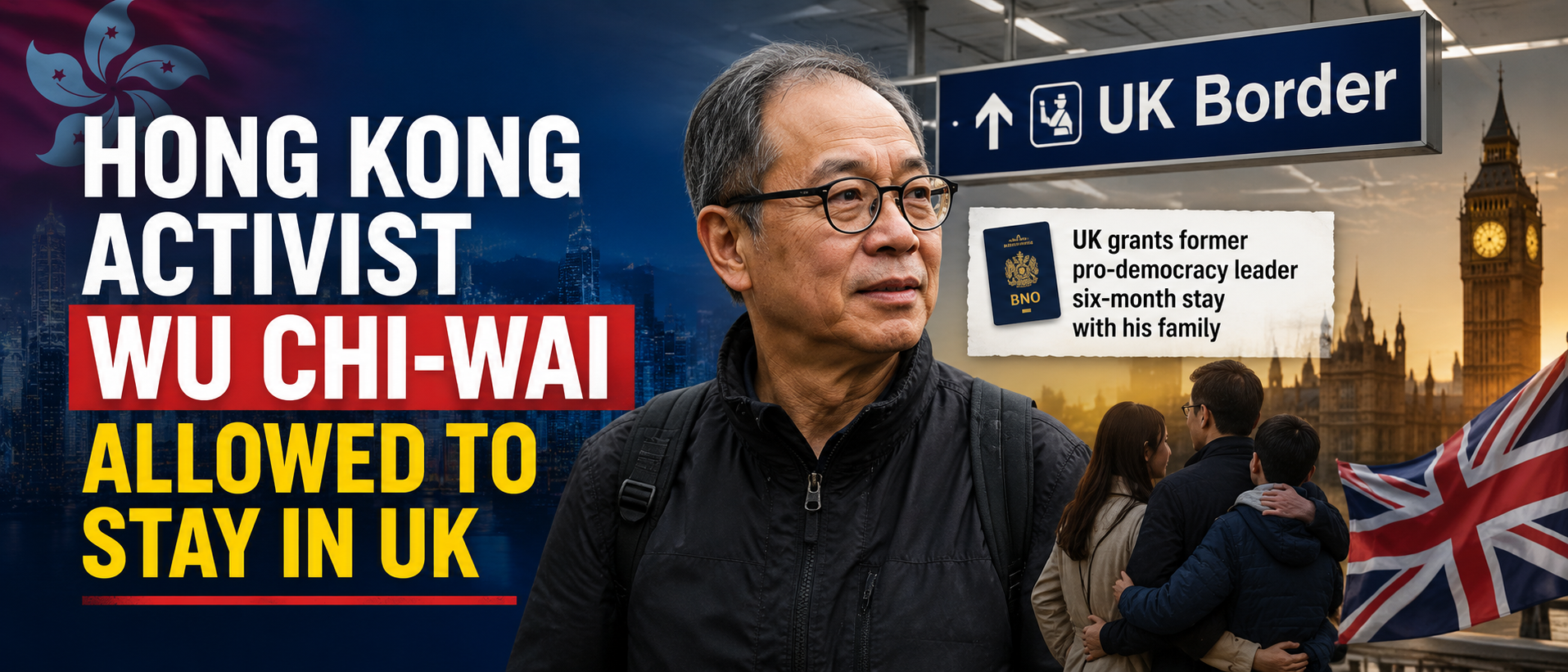
Wu arrived in London last Wednesday and was immediately pulled aside by border officials, who held him for close to ten hours before initially denying him entry. He later told reporters he was informed he could remain for just one week, after which he would need to head back to the airport for deportation. That changed on Monday, when the UK Border Force reversed course and granted him the standard six-month stay typically given to visitors.
From Prison Cell to Airport Hold
At 63, Wu is no stranger to confinement. He once led the now-disbanded Democratic Party and became one of the most familiar faces of Hong Kong's pro-democracy push before it was crushed. He is also among the group widely known as the Hong Kong 47, a collection of prominent democracy campaigners convicted in a heavily criticised national security case. Wu walked free in June after serving more than five years behind bars on subversion-related charges.
His family situation adds another layer to the story. His wife and son relocated to the UK back in 2022 and 2023, and since then, their relationship has been sustained mostly through monthly phone calls and the occasional letter. This trip, he said, was meant to be a long-awaited reunion.
Before flying out, Wu said he had reached out to staff at the British Consulate General in Hong Kong to check whether his travel would cause any issues. He was reportedly told there would be no problems, and that consulate staff intended to brief UK Border Force in advance about his criminal history and travel plans. Despite that, border officials concluded he did not qualify as a genuine visitor simply coming to see relatives. Wu has also pushed back against earlier media reports suggesting he planned to seek political asylum in Britain, saying that was never his intention.
Rights Groups Welcome the Decision, Though Some Question the Delay
A human rights organisation focused on Hong Kong issues, which had publicly urged UK authorities to let Wu remain, responded positively to Monday's outcome. A representative from the group said the decision was the correct one, though she noted it should never have dragged on for as long as it did, adding that Wu should never have had to face the threat of being sent back to the very city that imprisoned him.
Wu had entered the UK on his British National (Overseas) passport, a special document made available to Hong Kong permanent residents before the territory's handover to Chinese control on 1 July 1997. Holders of this passport are generally permitted to enter the UK visa-free for up to six months.
Back in 2021, the UK rolled out a dedicated visa scheme for BNO passport holders, allowing them to legally work, study and settle in Britain, eventually opening a path toward full citizenship. That scheme emerged in response to the massive pro-democracy demonstrations that shook Hong Kong, which were met with a heavy crackdown from authorities. In the years since, Beijing's grip over the city has tightened considerably, pushing many democracy advocates either into exile or behind bars.
According to figures from the UK government, more than 230,000 Hong Kong residents have been approved for BNO visas so far, with nearly 170,000 already having made the move to Britain.
When asked about Wu's case, the UK Home Office, which oversees Border Force operations, said it does not discuss individual cases but reaffirmed that the UK government remains firmly committed to supporting the Hong Kong community living in Britain. Meanwhile, a spokesperson for the Hong Kong government said no local residents had come forward seeking assistance in relation to this matter.