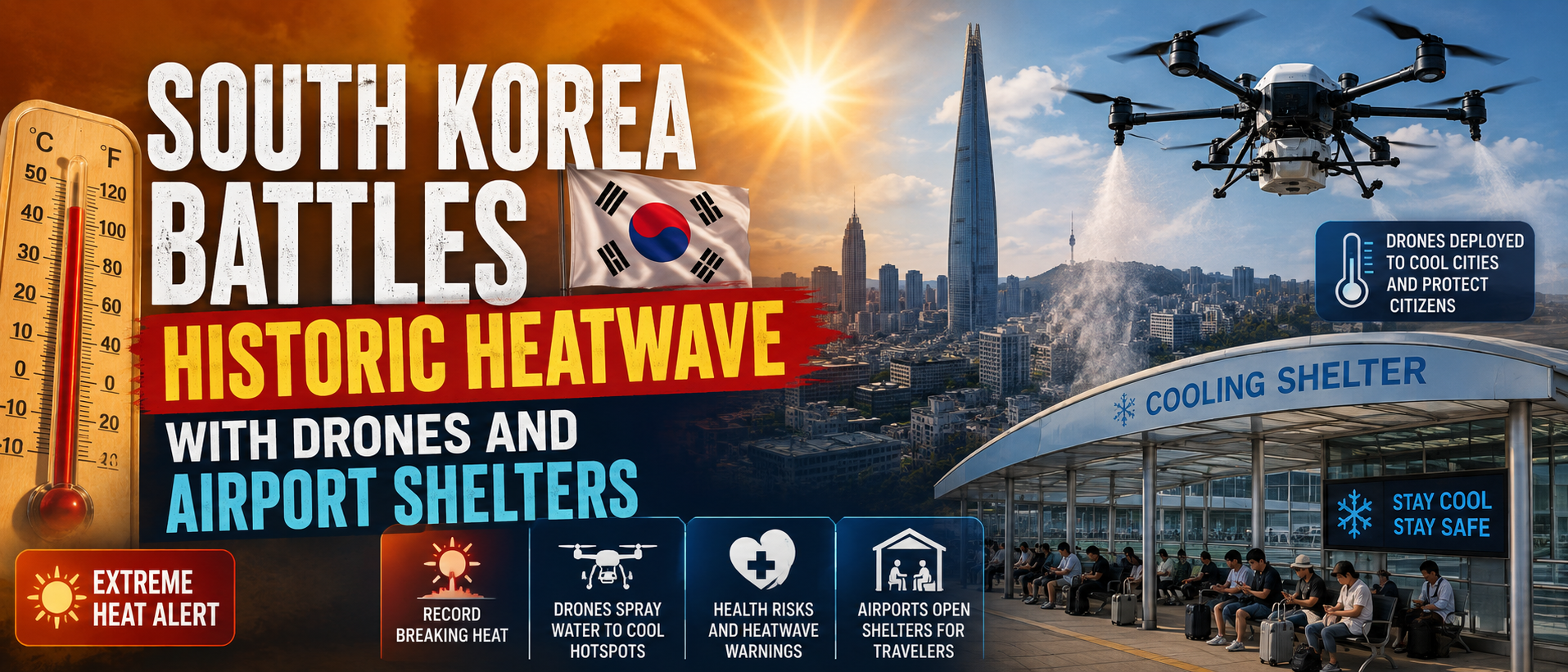
The scale of the crisis has prompted a broad and creative range of responses. Local governments in hard-hit areas have deployed trucks to parks, markets, and public transport stops to distribute free chilled bottled water. In Yangsan, where Sunday's temperature broke the national record, fleets of sprinkler vehicles have been moving through streets, spraying water across roads baking under the relentless sun. Outdoor events and activities have been cancelled on the advice of the national weather agency, including the daily changing-of-the-guard ceremony at Gyeongbokgung Palace in Seoul and the full slate of professional baseball games for the week. A 23-year-old spectator had collapsed at a game in Incheon on Tuesday due to dehydration and low blood pressure brought on by the heat, prompting the suspension of all scheduled matches.
Drones in the Fields and Airports as Refuge
In rural areas, local authorities in North Gyeongsang province have turned to an unusual but practical solution to protect agricultural workers, many of whom are elderly. Drones fitted with loudspeakers and thermal imaging cameras are being flown over fields, broadcasting direct reminders to farmers to stop working and cool down. The drones hover above the workers and play recorded warnings urging them to go inside when the heat becomes dangerous. It is a low-cost intervention designed to reach people who might otherwise push through extreme conditions out of habit or necessity.
In urban centres, South Korea's air-conditioned airports have become impromptu shelters for some of the country's most vulnerable residents. Incheon International Airport, the country's largest, and Seoul's Gimpo Airport have both seen homeless people and elderly individuals using public seating and platforms as resting places during the worst of the heat. Photographs from local media showed people stretched out on benches, using towels as improvised blankets. One person sheltering at Gimpo described it as an ideal place to rest without spending money, and said he returned there regularly with friends whenever summer temperatures became intolerable.
A Student App and Uncertain Outlook Ahead
One unexpected response to the crisis has come from a 23-year-old undergraduate named Yu Min-jun, who developed a mobile application to help city residents navigate through the most shaded walking routes available. The app, called Geuneulro, a name derived from the Korean word for shaded road, uses the position of the sun alongside the shadows cast by buildings and trees to plot cooler paths through the city. It has gained rapid traction online, particularly among students dealing with daily commutes in the heat. Yu said he built the app after struggling himself, and that the widespread response to it reflected how many people were genuinely suffering. He also used the app's popularity to raise a broader concern, saying he hoped the attention it was drawing would push more people to take climate change seriously, given that experts warn conditions are only likely to intensify in coming years.
Climate scientists have suggested the worst of the current heatwave may ease from this weekend onward, with daytime peaks potentially dropping to around 36 degrees Celsius. However, the relief may not last. Seoul's meteorological administration has estimated a 50 percent probability that temperatures through September and October will continue trending above average, leaving open the possibility that this summer's extreme conditions are not yet fully over.