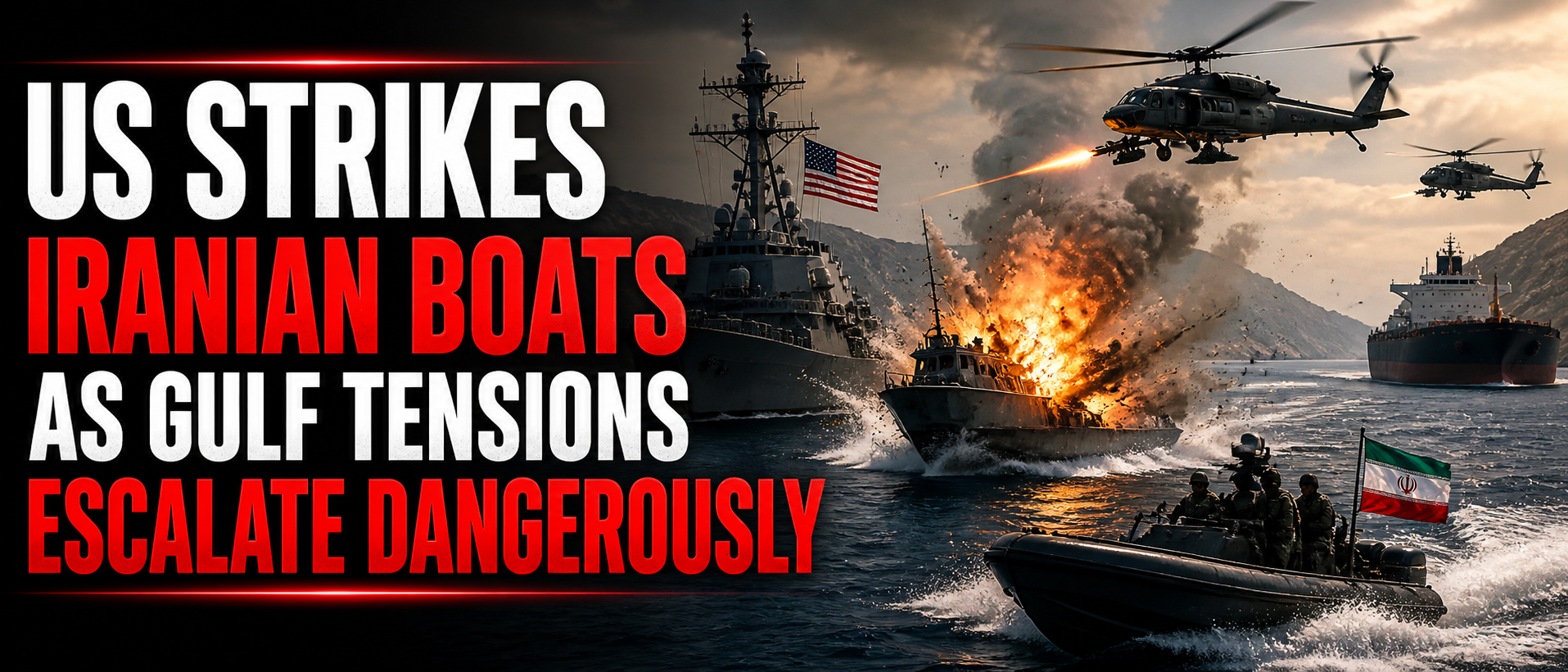
As part of an operation to aid stranded commercial ships in the Gulf of Hormuz, President Donald Trump confirmed that the US military had launched seven naval strikes against Iranian fast boats in the Strait of Hormuz. Helicopters from the US military carried out aerial bombardments, while US Navy destroyers escorted US-flagged commercial merchant ships traveling through the Strait.
Project Freedom (the US initiative led by President Trump) was developed to safely guide commercial vessels through the largely closed waterway surrounding the Strait of Hormuz.
Maersk Shipping, the shipping company that operates the US-flagged merchant vessel, Alliance Fairfax, has confirmed that the vessel has successfully transited the Gulf of Hormuz and exited the Gulf while under US military protection, with the company confirming that all crew members are safe and unharmed after the transit.
The vessel has been unable to leave the Gulf of Hormuz since the end of February when the US and Israel conducted air strikes against Iranian targets. President Trump said that the objective of this operation is humanitarian in nature and that if the operation should be interrupted with force, that force would be used.
At the same time that US forces have been conducting operations to support Project Freedom, Iran has been conducting a series of missile strikes against key oil facilities on UAE territory; the UAE had engaged 12 ballistic missiles, three cruise missiles, and four drones.
Two strikes caused a big fire and three injured people at Fujairah oil port on the UAE's east coast by the Gulf of Oman, and one of the two oil tankers belonging to Adnoc (the UAE state oil company) was hit. Meanwhile, a separate explosion occurred on another ship from South Korea that is anchoring adjacent to the UAE. The foreign ministry of India confirmed the three reported were injured by the attack and stated it must never have happened.
International Condemnation and Oil Price Surge
The attacks caused a swift international backlash, with world leaders releasing strong rebukes. French President Emmanuel Macron told reporters such attacks are unjustifiable and unacceptable; British PM Sir Keir Starmer reaffirmed support for their partners in the Gulf region; German Chancellor Friedrich Merz urged Tehran to return to negotiations and stop holding both the region and the world hostage; Saudi Arabia called for Iran to respect the standards of what constitutes good neighbors; Qatar called for a full, unconditional reopening of the strait.
Following the reports of the attack at Fujairah on Sunday, near the oil benchmark, Brent crude was over $115 per barrel ($/bbl, $USD) for the first time since May of 2024, increasing by greater than 5% in a single trading day.
Competing Claims & A Deepening Stalemate
There were starkly different accounts as to what went down on Sunday in the Strait of Hormuz between the US and Iran. The Iranian state-run news organization, Press TV, reported that two smaller cargo vessels were hit rather than two fast boats and stated that five civilian casualties occurred as a result of one of the strikes. Furthermore, Iran's military stated that they fired warning shots from one of their vessels at a US navy ship; however, the US has vehemently denied such actions occurred.
Abbas Araqchi, the Iranian foreign minister, asserted that what occurred in the Strait of Hormuz this week demonstrates that there is no solution from military force for a political crisis and that "Project Deadlock" is a farce. Since early February 2024, the Strait of Hormuz has been largely blocked, halting a vital shipping route that usually transports 20% of the world's oil supply and which has now trapped approximately 20,000 seafarers on over 2,000 vessels and has raised serious concerns regarding both reducing supplies of oil and/or liquefied natural gas (LNG) and the physical and mental well-being of crews across the region.