Trump's comments on a possible settlement.
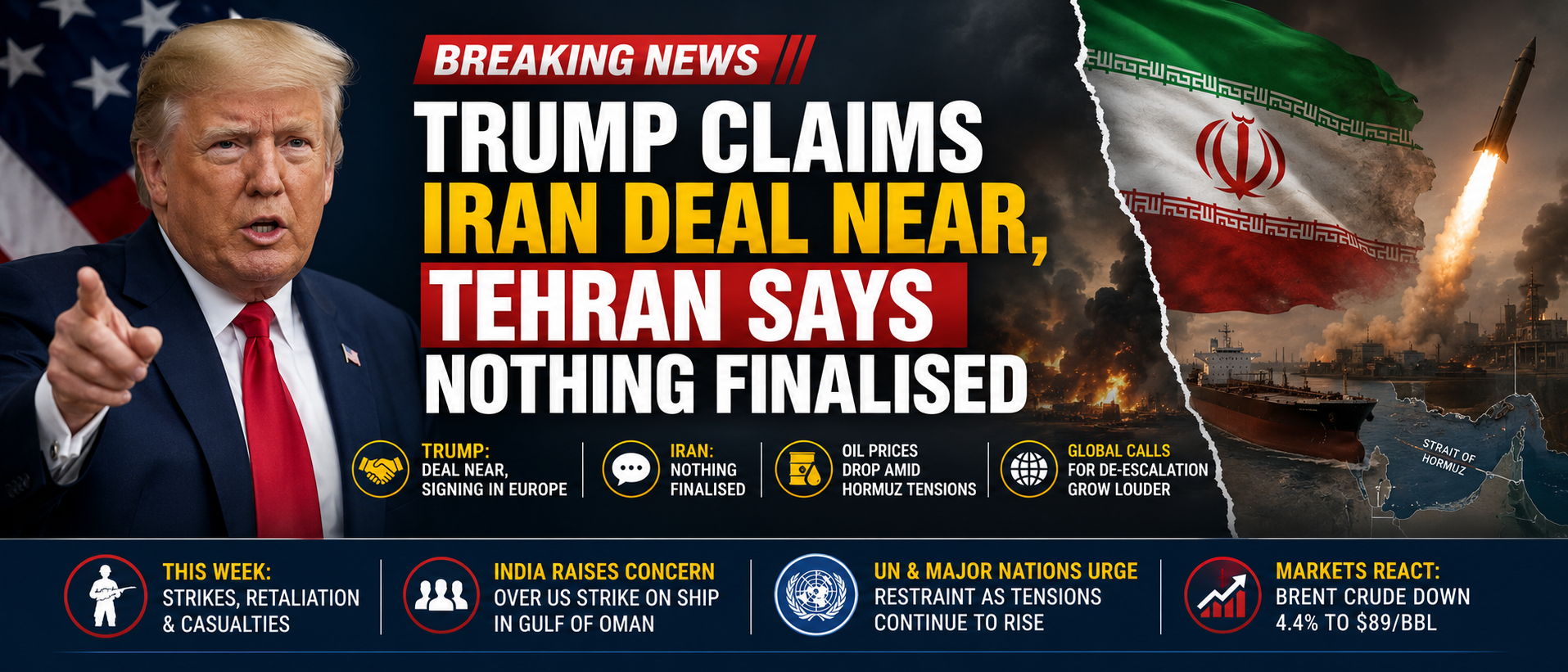
Earlier Thursday, Trump had said the US would hit Iran "very hard." Hours later, his tone changed dramatically when he told reporters that negotiators had reached a great settlement with Iran, though he said it was subject to the finalisation of documents, which he expected to be completed in the next few days. A signing ceremony will probably be held in Europe once the paperwork is ready, he said. The essence of the deal, Trump said, was that Iran would never have a nuclear weapon, which was the main point of the whole process. He also said the Strait of Hormuz would be reopened as soon as the agreement was signed, and said leaders across the Middle East, including Gulf allies and Israeli Prime Minister Benjamin Netanyahu, were happy with the progress made.
Iran's reaction and disputed facts
Iran's foreign ministry spokesman Esmail Baghaei told state television that talk of a finalised agreement was speculation and nothing had been confirmed. He said most of the text for the memorandum of understanding had been agreed upon, but accused the US of making excessive and new demands during the process. Iran would not cross its red lines, Baghaei reiterated. The Israeli prime minister's office confirmed Trump had spoken with Netanyahu, but said Israel is not a signatory to the memorandum. It said Netanyahu thanked Trump for his commitment to a final deal that would see the removal of enriched material, dismantling of enrichment infrastructure, limits on missile production, and an end to Iran's support for regional proxies.
Market Reaction and Tensions in the Strait of Hormuz
Brent crude prices were falling sharply after Trump's comments, down around $89 a barrel, down 4.4% on the day. Oil prices are very sensitive to anything happening near the Strait of Hormuz, a key transit point for world oil and liquefied natural gas shipments, and the market reaction reflects that. Trump had also previously threatened to seize Kharg Island and other Iranian oil infrastructure, which handles about 90% of Iran's oil exports. He added that the US would take complete control of oil and gas markets in the same way it did with Venezuela. Iran's military threatened to retaliate more strongly than before if attacked again.
This Week's Strikes and Casualties
The recent tensions come after a US Apache helicopter crashed in the Gulf earlier this week. The US Central Command confirmed Wednesday it had carried out a series of strikes against military, surveillance, and radar sites in southern Iran. Iran's Islamic Revolutionary Guard Corps retaliated with strikes on U.S. bases in Bahrain, Kuwait, and Jordan. Bahraini local authorities said an 11-year-old girl was hurt in an Iranian drone attack that damaged homes and vehicles. Jordan said it had shot down some 20 Iranian missiles, and Kuwait's military said it had engaged hostile aerial targets. Meanwhile, India summoned a senior American diplomat after confirming three Indian sailors were killed in a US strike on a ship in the Gulf of Oman that India said violated its blockade on Iranian ports. Twenty-one crew members of the vessel were rescued. US forces have now fired on nine ships in an effort to curb Iran's ability to profit from oil exports through its ports.
Global calls to de-escalate
The ongoing tit-for-tat exchanges of strikes have led to urgent calls for restraint from the international community. UN Secretary-General António Guterres' spokesman said he was "deeply concerned" by the continued escalation in the Middle East and called on all parties to return to full implementation of the ceasefire and avoid further deterioration. Several major nations, including Pakistan, Russia, China, Turkey, India, and Saudi Arabia, also called for de-escalation, underscoring international concern that the situation could spiral further despite the president's optimistic comments about a possible settlement.