President's Warnings, U.S. Strikes
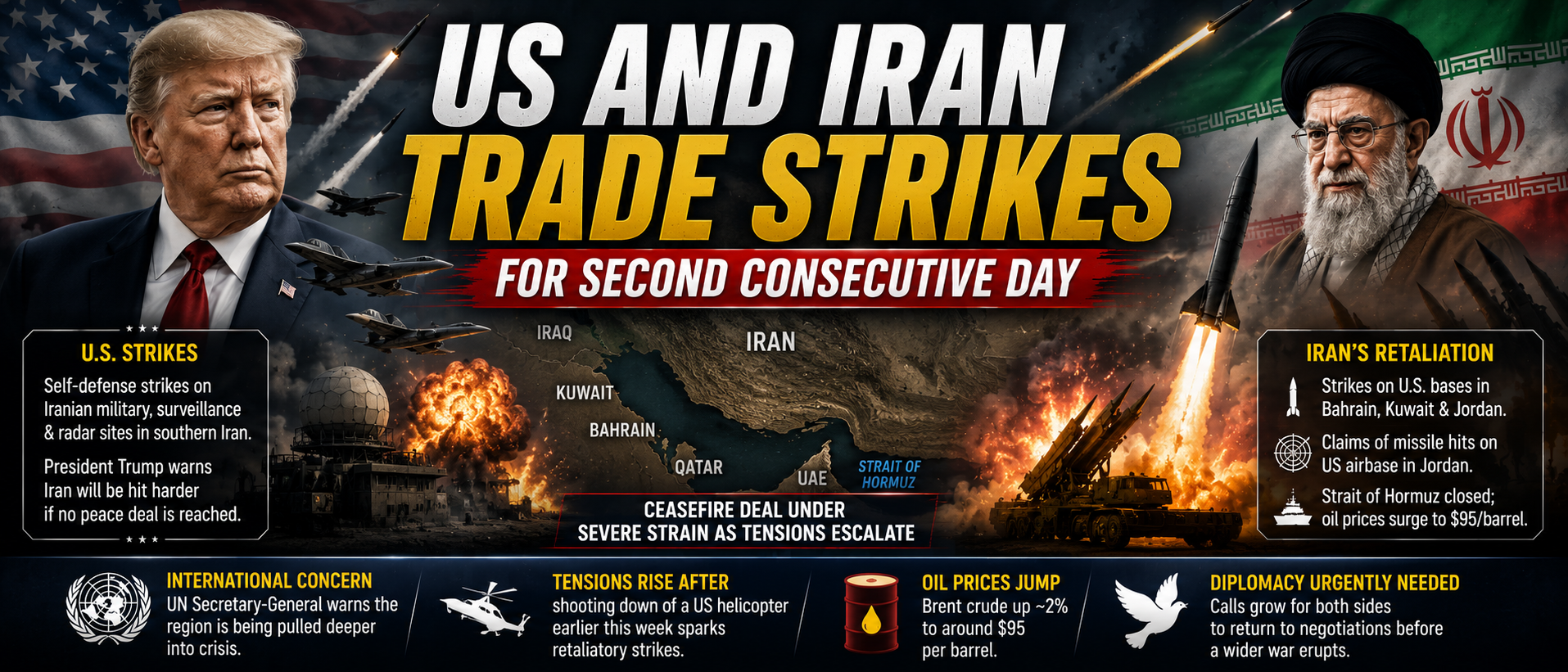
US Central Command said it had finished a series of strikes on Iranian military infrastructure. This operation follows strong warnings from US President Donald Trump, who said American forces would hit Iran hard and accused the Iranian leadership of taking too long to reach a permanent peace agreement. Trump wrote that if no deal was reached, Iran would be hit harder. US Defence Secretary Pete Hegseth confirmed bombs were being targeted at key facilities inside Iran. He said Tehran had been given an opportunity to negotiate but had not taken it.
Iran's revenge strikes on US bases.
In turn, Iran's Islamic Revolutionary Guard Corps conducted a series of retaliatory strikes against US military assets across the region. American bases in Bahrain and Kuwait were hit by Iranian fire for a second consecutive day. The IRGC also claimed to have fired 12 ballistic missiles at the Muwaffaq Salti Airbase in Jordan, stating they destroyed "a large number of US fighter jets and facilities," although these claims have not been independently verified. The interior ministry of Bahrain said overnight air raid sirens had been sounded, and Kuwait's military said its air defence systems shot down hostile aerial targets. Kuwait closed its airspace temporarily after the attacks.
Oil Prices and Strait of Hormuz Closure
The latest escalation of hostilities has also reached one of the world's most important shipping routes. Iranian state media reported the Strait of Hormuz had been fully closed to all vessels and the IRGC claimed to have hit two oil tankers passing through the waterway, but there was no immediate independent confirmation of the tanker strikes. The US Central Command said commercial ships continued to transit the strait. Oil prices nevertheless jumped after the closure announcement. Brent crude, the global benchmark, was trading at about $95 a barrel after climbing about 2 percent.
"Statements from Both Sides
Iranian President Masoud Pezeshkian said Tehran will not yield to any pressure or threat. Iran's foreign ministry accused the United States of sending contradictory messages and undermining the diplomatic process. Trump reiterated on the American side that Iran had been warned and that further strikes would follow if the peace talks did not progress. The tone from both governments is a major hardening of positions from earlier weeks when diplomatic talks seemed to offer some hope of a resolution.
International Concern as Ceasefire Unravels
The ceasefire between the US and Iran in April was originally supposed to last two weeks, but both sides have continued trading intermittent fire since without going back to outright full-scale war. Recent attempts to broker lasting negotiations have broken down, and the frequency and intensity of attacks have increased. The most recent round of strikes began earlier this week with the shooting down of a US helicopter in an attack attributed to Iran, which triggered retaliatory strikes on US bases across the Middle East. United Nations Secretary General António Guterres warned the region was being pulled deeper into crisis, calling the current situation more of a lesser-fire than a ceasefire. He called on all sides to seek a diplomatic solution now, warning that a small fire could easily become a large one.