How the helicopter was shot down
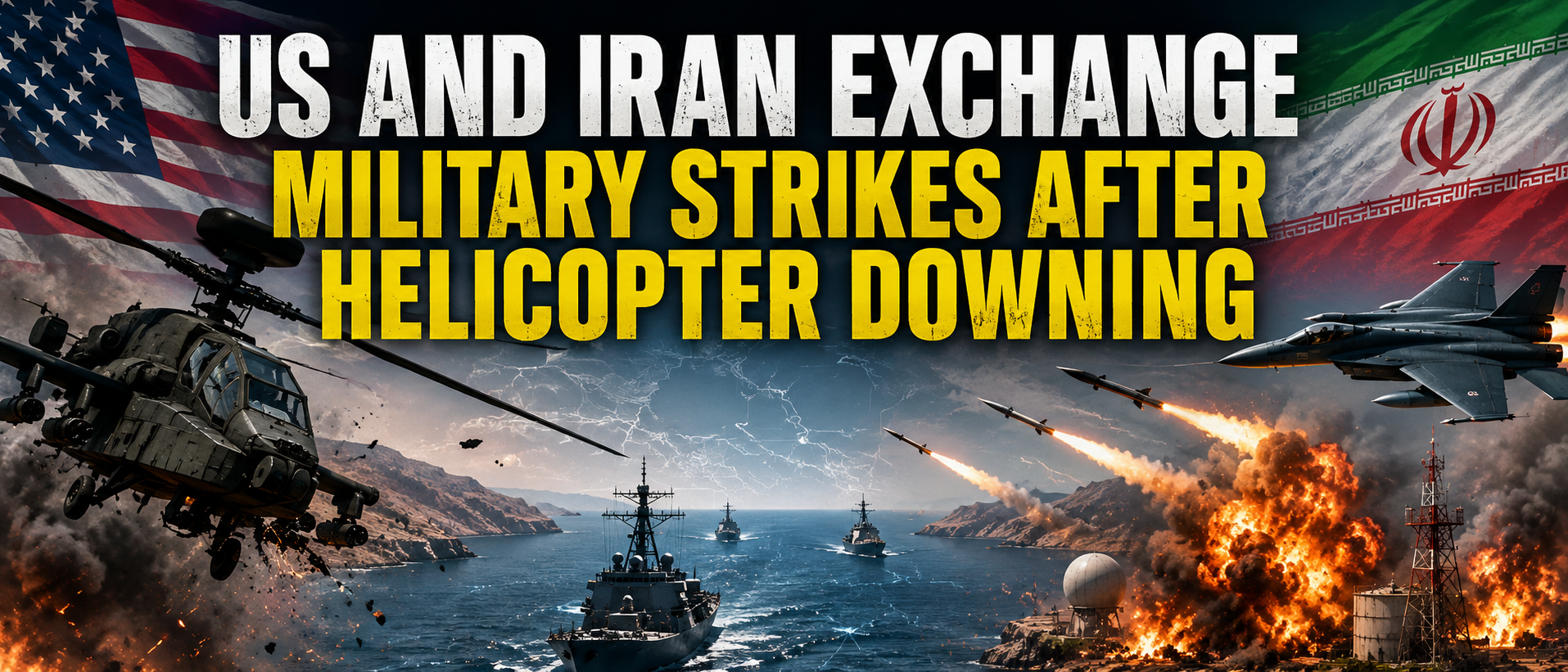
The incident began on Monday when an American Apache helicopter on a patrol of the Strait of Hormuz was downed. Two crew members aboard the aircraft were rescued by an American sea drone - the first time such a vessel has been publicly confirmed as used in a rescue operation by the US military. U.S. officials said Iran used a drone in the attack, but it was unclear whether the strike was deliberate. Iran has not officially admitted to shooting the aircraft down, Iranian state media reported.
U.S. military strikes on Iranian sites
The U.S. military's Central Command said American fighter jets struck Iranian air defense systems, ground control stations, and surveillance radar sites near the Strait of Hormuz in response. It was declared complete some three hours after the announcement of the first wave of strikes. Iran said the targets were in Jask and Sirik in the Gulf and on Qeshem island. Iranian authorities stated that the strikes damaged a telecommunications tower and two water tanks.
Iran hits back at US bases.
Iran's Islamic Revolutionary Guard Corps said it carried out retaliatory strikes on 21 targets at two US bases, one in Bahrain and the other in Jordan, after the US strikes. Kuwait's army also reported intercepting inbound attacks. Bahrain has issued an air raid alert after local authorities said the Iranian strikes had been repelled. It was unclear how much damage, if any, was inflicted at the targeted US bases, and American officials have not publicly commented on the reports.
Statements From Leadership on Both Sides
US President Donald Trump said the helicopter crew was safe, writing that both pilots were uninjured before saying the US was forced to respond. House Speaker Mike Johnson, R-La., said he was in the room when Trump decided to resume strikes against Iran, calling it a necessary but regrettable course of action. Iranian Foreign Minister Abbas Araghchi warned that Iran would not leave any attack unanswered and called on foreign forces to leave the region for their own safety. In a strong statement on social media, Iran's chief negotiator in the ongoing peace talks, Mohammad Baqer Qalibaf, also hinted at retaliation.
Escalation Happens, Diplomacy Still on the Table
But military exchanges have not completely stalled diplomatic efforts. Trump said that talks between Washington and Tehran were moving forward, describing the situation as being in the "final throes" of reaching an agreement. He said an agreement could be finalised in two to three days, after which the Strait of Hormuz would be opened immediately. The broader regional picture was further complicated by Israeli strikes in southern Lebanon on the same day, with Iran warning that such actions could trigger more waves of retaliation. Trump urged Israel and Iran to stop hostilities immediately, saying both sides were looking at an immediate ceasefire, but warned peace was vulnerable to miscalculation.