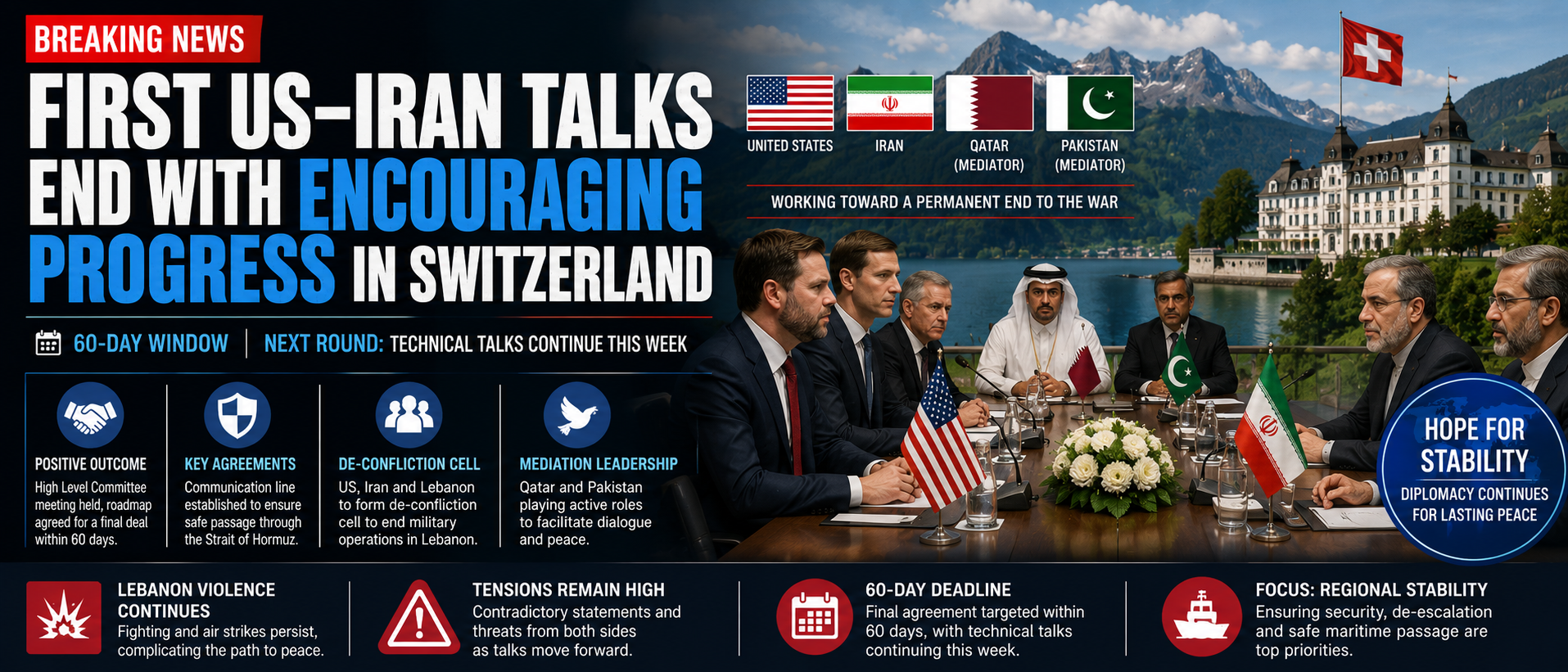
What was agreed in the first round
Qatar and Pakistan confirmed in a joint statement early on Monday a meeting of the High Level Committee, and agreed on a roadmap to achieve a final deal within the 60-day period mentioned in the memorandum of understanding. Iranian foreign minister Seyed Abbas Araghchi said the talks had made great progress in ending the conflict in Lebanon. The mediators also confirmed the setting up of a line of communication between both sides to avoid any incident or miscommunication, with the particular purpose of ensuring safe passage for commercial vessels through the Strait of Hormuz. Both sides agreed to the establishment of a de-confliction cell involving the US, Iran and Lebanon, facilitated by the mediating countries, to end military operations in Lebanon.
Lebanese Violence Continues, Making Things Difficult
The first round of talks had been positive in tone, but the situation in Lebanon remained a considerable complication. Fighting between Hezbollah and Israeli forces in southern Lebanon has escalated since the memorandum of understanding was signed last week, with Israeli air strikes reported to have killed dozens of Lebanese civilians, including women and children. The escalation led the US to announce a new ceasefire between Israel and Hezbollah on Friday. But clashes and air strikes went on, and on Saturday Iran said it had closed the Strait of Hormuz, although shipping tracking data showed vessels were still moving through the waterway.
Tensions and contradictory statements from both sides
As talks began in Lucerne, President Trump tweeted a sharp warning to Iran, calling on Tehran to immediately stop its proxies in Lebanon from stirring up trouble, and threatening to hit Iran very hard again if they did not. Iran's lead negotiator Mohammad Bagher Ghalibaf responded defiantly, questioning how effective such threats would be and emphasizing that Iran was the party acting, not talking. Israel will stay in southern Lebanon as long as it is necessary for the protection of northern Israel, Prime Minister Benjamin Netanyahu said. Hezbollah deputy chief Naim Qassem said his organization would defend itself and rejected any Israeli military presence in the south.
Who sat at the table
Vice President JD Vance led the US delegation, with Trump's son-in-law Jared Kushner and special envoy Steve Witkoff. Ahead of the talks, Vance said Trump had told the negotiators to start afresh, and that if Iran was willing to stop its role as a driver of regional instability and give up its long-term nuclear weapons ambitions, the US was prepared to fundamentally change its relationship with the country. Iran has always said its nuclear programme is for peaceful purposes only. Ghalibaf and Foreign Minister Abbas Araghchi represented Iran. Qatari Prime Minister Sheikh Mohammed bin Abdul Rahman Al Thani, also in Switzerland, welcomed the continuation of the talks, as did Pakistan's prime minister and army chief. Qatar and Pakistan have played active mediation roles throughout the conflict, and Pakistan has previously hosted an earlier round of talks between the two parties.
Next steps
The technical negotiations are expected to continue over the coming days after the first round of talks ended on a cautiously optimistic note. The memorandum of understanding includes a 60-day deadline to reach a final agreement, but the situation in Lebanon remains a live point of tension that could complicate progress. The next few weeks will test whether the encouraging start of formal negotiations can be turned into a durable and comprehensive settlement.