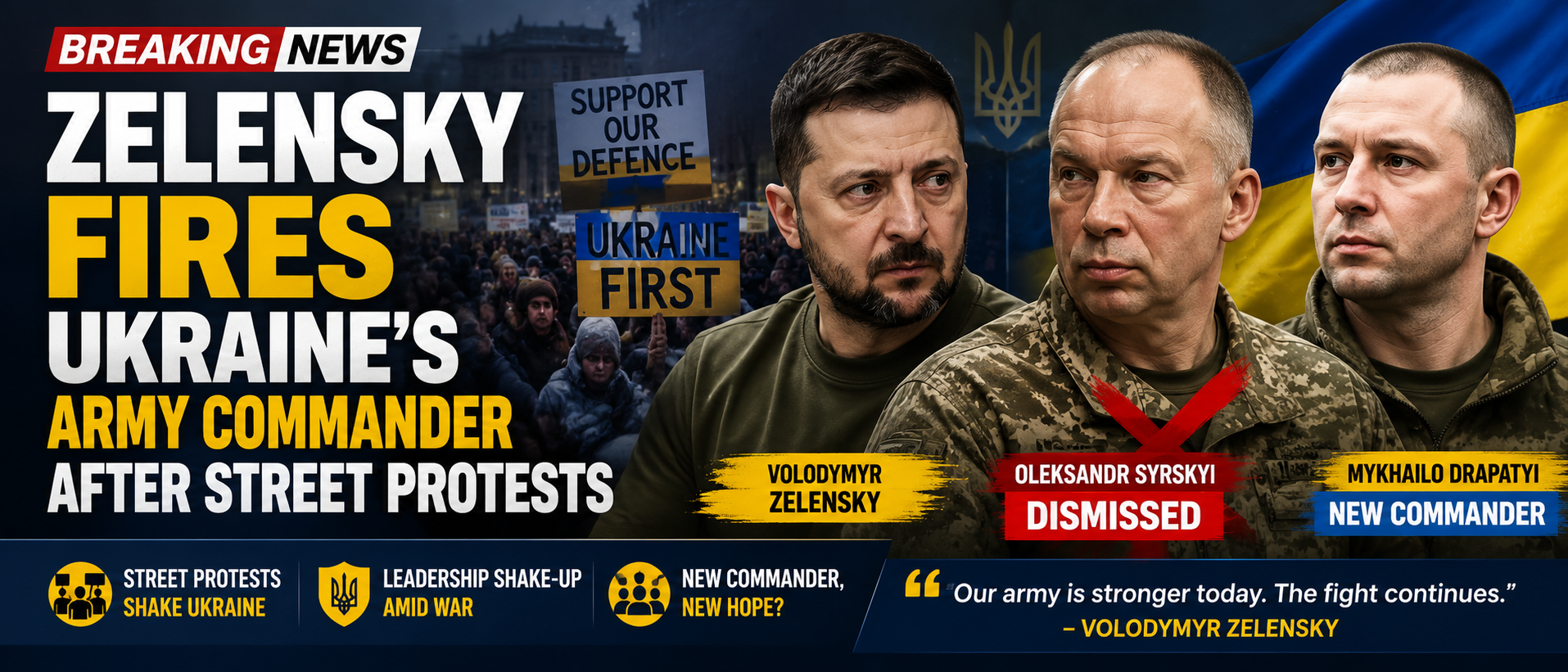
Syrskyi is widely regarded in Ukraine as a commander shaped by the Soviet military tradition, someone seen by critics as reluctant to implement the kind of radical reforms that the country's rapidly evolving battlefield demands. In a farewell message, he pushed back against that characterisation, pointing out that the army he was handing over was not the same defensive force from two years ago but one now capable of mounting offensive operations. He said he hoped that advance would continue under whoever came next.
Who Takes Over and What He Brings
Syrskyi's replacement is Mykhailo Drapatyi, 43, a battle-tested general regarded as a younger, more forward-thinking figure within the military. His appointment was welcomed in certain quarters, including by Fedorov himself, who described Drapatyi's arrival as a new hope in the ongoing struggle and acknowledged it as a voice of change that could no longer be ignored. Drapatyi accepted the role with a message of focus and respect for those serving on the front lines, also expressing gratitude to Syrskyi for his role in building the force Drapatyi was now inheriting. The two men are also reported to be close friends of Fedorov, which gives the new appointment a symbolic significance beyond military qualifications alone.
Zelensky, in a video address late Tuesday, acknowledged Syrskyi's contributions, including his role in the defence of Kyiv during the critical early days of Russia's full-scale invasion in 2022. He also revealed that he had met Fedorov earlier that day and offered him what he described as a worthy position within the government, though he did not confirm whether that offer had been accepted.
The Political Fallout and What Comes Next
The removal of Fedorov had been deeply unpopular. He was appointed defence minister only in January but had already earned widespread respect for his data-driven approach to improving frontline performance, his anti-corruption work, and his innovative methods of mobilising support for the war effort. Before taking the defence portfolio, he served as minister of digital transformation and was among the first to organise cyber resistance in the early days of the invasion, establishing a volunteer IT Army to conduct operations against Russian infrastructure. He also created the Army of Drones fundraising initiative and introduced a credit-based reward system for military units that struck Russian targets, injecting elements of motivation and accountability into the war effort that had previously been absent.
His removal triggered six days of protests, and public opinion was clearly behind him rather than the administration's decision to push him out. Drapatyi's appointment, combined with Fedorov's clear and public endorsement of the new commander, is expected to ease some of that political tension, though the deeper frustration with Zelensky's handling of the situation will not simply disappear. Acting Defence Minister Yevhenii Khmara, who replaced Fedorov last week, remains in position for now. Zelensky has tasked both Khmara and Drapatyi with developing a new defence strategy that addresses core challenges including military corps reform, weapons procurement, drone supply, and mobilisation. Whether Fedorov himself returns to a position of genuine influence remains the key question for many of those who took to the streets over the past week. If he does, Zelensky may manage to repair some of the damage done by the decisions that set this crisis in motion.