Significance of the Visit
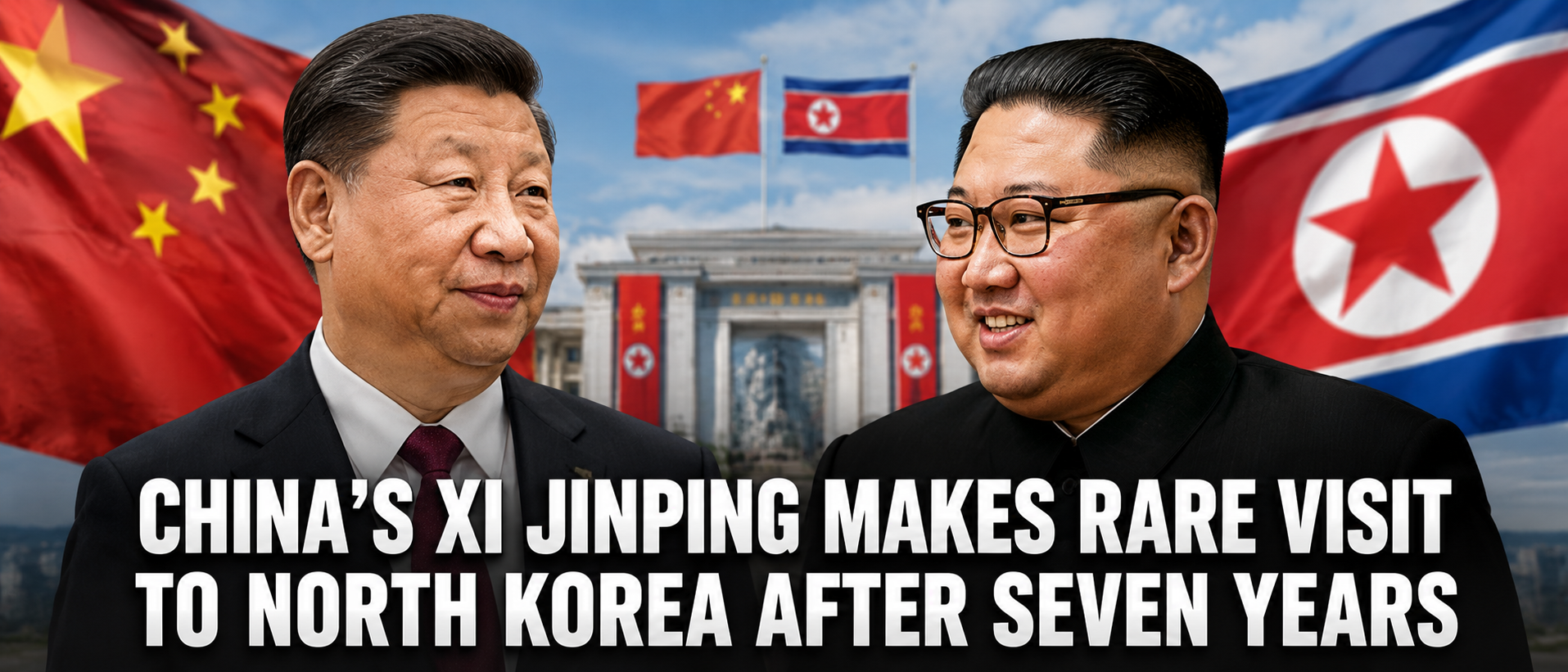
China is North Korea's most important economic and political partner, providing a vital lifeline to a country facing sweeping international sanctions over its nuclear weapons programme and alleged human rights violations. The two countries have a 1,400-kilometre border and are linked by a mutual defence pact, the only such formal treaty China has with any country, which guarantees the other will come to the other's aid if attacked. That treaty was signed 65 years ago this year, adding to the symbolic significance of Xi's visit. And Beijing has long acted as an intermediary between Kim's isolated regime and the international community, which gives China important leverage over the course of events on the Korean Peninsula.
What Kim Wants to Gain
The propaganda gains for Kim Jong Un from hosting Xi in Pyongyang are significant. It has shown itself to be a country that has withstood enormous external pressure, survived the pandemic in isolation and entered the war in Ukraine on the side of Russia, all without caving to American demands or even interacting with South Korea. On his own terms, Kim has been parading North Korea's nuclear and missile might before visiting dignitaries and highlighting the building of the capital Pyongyang as proof of national strength. The added leverage is seen pushing Pyongyang to seek more trade across the land border with China and more Chinese tourism to fill the country's newly built beach and ski resorts.
Xi's Reticence on Kim, Putin
Although Beijing is close to both Pyongyang and Moscow, Xi is said to be growing uncomfortable with the deepening alliance between Kim Jong Un and Vladimir Putin. Kim has vowed to stay loyal to Russia and the two countries have strengthened their military and political bonds via North Korea's involvement in the Ukraine war. China's discomfort with this dynamic is rooted in the desire to keep its role as the leading outside power in North Korea and the fear that a more robust Kim-Putin alliance could undercut Beijing's influence over Pyongyang and make things more complicated for China's own delicate dealings with both Russia and the world at large.
Seoul Looks to Xi to Be a Mediator
Seoul is watching the visit closely and hopes Xi will use the opportunity to nudge North Korea to return to dialogue with both Seoul and Washington. Relations between the two Koreas have been under serious strain since Kim announced an end to reunification efforts with the South in December 2024, calling South Koreans then a sworn enemy and cutting all levels of communication with Seoul. The depth of the freeze was on full display recently when the North Korean women's professional football team arrived in South Korea for a match, with the visiting players barely acknowledging the South Korean public who had come to welcome them, and playing in notably rough and aggressive style during the game. The unification minister of South Korea said he thought Xi would bring up resuming talks between North Korea and the United States during the visit.
The Nuclear Issue
The North Korea nuclear issue hangs over the visit and over regional diplomacy more broadly. The two leaders reaffirmed their common commitment to the denuclearisation of the Korean Peninsula, a White House summary of the recent summit between Trump and Xi in Beijing said. But when pressed, a Chinese foreign ministry spokesperson declined to confirm the agreement directly, only saying that China's stance on the issue remains consistent and continuous. It was a notably vague statement that hinted that Beijing's commitment to denuclearisation may have softened in practice. North Korea has made its position perfectly clear. Alone during a tour of a new nuclear facility this week, Kim announced that North Korea's weapons-grade nuclear materials production capacity had more than doubled in the past five years, an unambiguous statement of intent that leaves little room for optimism about any near-term shift in Pyongyang's nuclear ambitions.
A defining moment for regional diplomacy
Xi's visit to Pyongyang comes amid a flurry of unusual diplomacy across the region, as major powers recalibrate their positions in the face of shifting alliances and continuing conflict. The series of high-level meetings in Beijing and Xi's trip to North Korea demonstrate that China is determined to be a key and active player in shaping the geopolitical landscape of East Asia and the broader international order. Whether there will be any concrete developments on the issues of denuclearisation, inter-Korean dialogue or the tempering of North Korea's burgeoning partnership with Russia remains to be seen, but the symbolism of Xi's presence in Pyongyang sends a clear message about the continuing importance China places on its relationship with its closest and most strategically significant neighbour.