The Iranian conflict is serving as the most definitive example of how his approach is revealing clear limitations.” His decision to escalate and target Iranian military and nuclear development goals represents a significant escalation compared to previous presidents. However, this response has created a significant level of complicated efforts to achieve a clear resolution due to the fact that Iran did not yield in response to prior escalations.
As a result, President Trump finds himself in a very difficult situation where he must decide to escalate the conflict further with the potential risk of creating more casualties and causing additional damage to the global economy or to step back from this conflict without any significant gains, which would reduce perceived success; particularly when considering that Iran has continued to exert influence in the Strait of Hormuz and their capability to produce near weapons-grade nuclear material.
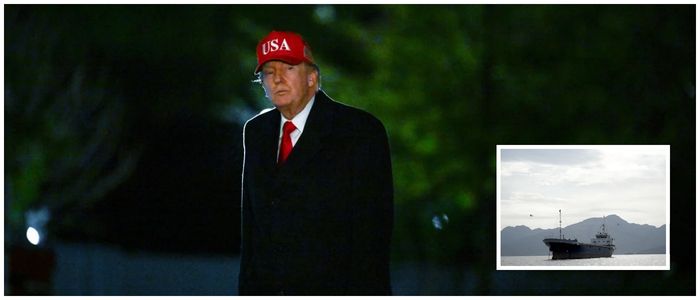
The recent US blockade of the Strait of Hormuz demonstrates President Trump's attempt to apply economic pressure to Iran for not yielding by enabling other countries to continue trading without fear of harm from Iran, while avoiding direct confrontation. Still, this action will also have global ramifications in regards to energy markets.
Additionally, President Trump's strategy is also exhibiting pushback from both allies and adversaries. For example, NATO members are claiming their own interests take precedence over that of supporting President Trump's efforts. American options with regard to unilateral decision-making are becoming increasingly restricted. And this outrageous behavior by America has resulted in China mapping out its response to America's conduct in recent years, using an economic component of its overall strategy with the intention of resisting American coercion through the use of economic leverage.
There is ample evidence that large-power countries – such as China – can achieve an outcome from beyond their own borders by resisting attempts to exert force from another country. One obvious way that China has done this is to develop and implement a "response strategy" in response to the American economic pressure it has faced; and that has been the case with Iran as well.
The events unfolding in Europe, specifically the declining influence of Viktor Orbán within European political structures associated with Trump-like politics, demonstrate that long-term support for tyrant-like leaders may not be sustainable.
Domestic Pressure on Trump in the United States
Trump faces an increasing amount of domestic resistance. This has come about principally via public disapproval of his policies on issues like mass deportation, as well as ongoing protests in Minnesota over key issues pertaining to Trump's domestic policies and governmental conduct. There are also significant institutional barriers impacting Trump's conduct, including both the legal and political systems that place limits on executive authority.
Others, including Pope Leo XIV, have made negative comments about US policy on Iran, and have specifically condemned US actions. These are examples of how opposition to Trump can arise from sources outside of traditional political adversaries.
Evolving uncertainty
A critical aspect of Trump's leadership style is the centralisation of executive authority through the provision of a strong and centralised Executive Branch. However, based upon the evidence provided by the current Iran crisis, `exercise of authority does not guarantee success amid complex global conflicts relating to global conflict. In light of Iran's willingness to sustain significant economic consequences and the significant strategic advantages that it holds over a number of critical resources, it is unlikely that externally imposed economic pressure on Iran will produce conclusive results.
At this time of significantly evolving circumstances, the critical question remains whether there will be continued instances of escalatory events further enhancing undermining Trump's credibility (and ability) both domestically and internationally as it relates to his approach to those issues he is currently facing. The answer to this question will have significant implications on the outcome of the Iranian conflict and on the international perception of America's declining power internationally.