Authorities uncovered thousands of bogus vendors, phony licenses, and a systematic effort to provide low-quality food through fierce price competition. These findings stunned both consumers and regulators, leading to substantial fines being levied against some of the largest technology and e-commerce companies in China. In addition, this case has also prompted a renewed discussion among Chinese citizens regarding the dangers associated with ongoing price wars in key industries.
The Origins of the Investigation
The investigation began last summer when a man in Beijing, who has only been identified as Mr. Liu, ordered a birthday cake through an online delivery service. Although the bakery delivered the cake as requested, when Mr. Liu opened the box, he discovered that the cake was decorated with an artificially colored flower that was not edible. Mr. Liu attempted to file a consumer complaint against the bakery for poor customer service but was not expected to uncover a long history of criminal activity.
The "bakery" that Mr. Liu ordered from had nearly 400 phantom stores listed as its business locations, and none of the stores actually existed. Mr. Liu's single complaint was the tipping point for regulators to begin an investigative process that would last several months and create a national crisis. Investigators often discover things that were not previously known, and this is especially true when they are able to dig deep enough to uncover a sophisticated illegal shadow food supply chain that had been operating mostly below the radar until now. In this shadow food supply chain, a merchant would take a customer's order via a delivery platform, and then, without the customer knowing it, they would repost that same order (much like reposting on social media) from an intermediary platform and have multiple suppliers compete for that order.
Once the ordering process was completed, the supplier that offered the lowest bid would be awarded the contract and thus be able to supply that customer with the food. Unfortunately, in this competitive pricing environment, the expectations for food quality and food safety have been diminished significantly, as suppliers are racing to be the low bidder.
A specific example shared by Xiuying's state news agency highlights how dramatic the downward spiral of food quality and food safety can become. A customer purchased a six-inch cake and paid 252 yuan for it (about US$35). After the customer placed his/her order, the merchant reposted his/her order on an intermediary platform, and suppliers started bidding to supply that cake. Initially, suppliers were looking to bid 100 rupees.
Each subsequent bid dropped to 90 to 80, etc. When the bidding was completed at 80 rupees, the ghost merchant kept nearly half of what the customer paid (252 yuan); the delivery platform charged a 20% service fee of 252 yuan; and the baker (the actual vendor) only received 30% of the original price of the cake (252 yuan). This left the baker with virtually nothing in terms of profit.
The number of ghost vendors identified in the investigation was shocking. The investigators identified over 67,000 ghost vendors, and those ghost vendors have been responsible for selling over 3.6 million cakes in total. According to Han Bing (official of China's State Administration for Market Regulation), this extensive investigation is not a minor violation or infraction.
According to Han, the most recent case study demonstrates that there is a new form of criminal behavior that has reached an industrial scale and has spread throughout the country. The research results suggest that food delivery marketplace companies are under immense pressure to continue cutting their prices, forcing consumers to absorb the costs associated with receiving unsafe, unsatisfactory, and/or substandard foods.
Huge fines for the leading platforms
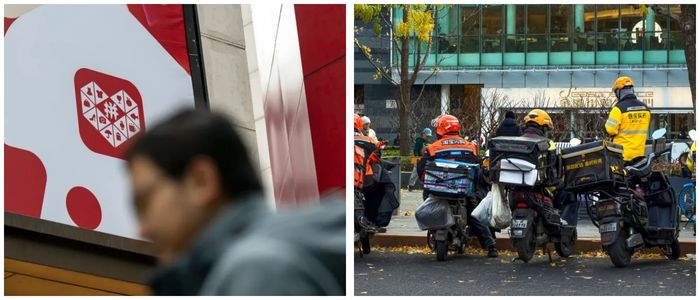
The State Administration for Market Regulation (SAMR), China's marketplace regulator, has completed an investigation on 7 of the largest and most notable food delivery companies in the country, which include Temu's parent company (PDD), Alibaba, Douyin (owned by ByteDance), Meituan, JD.com, and several other major delivery companies.
During this investigation, a total of approximately RMB 3.6 billion ($528 million) was assigned as an overall fine by the SAMR against all the companies examined and represents the largest fine since the changes to the Chinese food safety law in 2015. The largest single fine imposed on a parent company was against PDD at approximately RMB 1.5 billion ($221 million). PDD's substantial fines can be attributed to their continuous failure to provide useful requested information and their submission of fraudulent documentation to the RM and many instances of aggressive resistance to the RM.
Obstruction during the investigation
The investigation into delivery platforms was not performed without obstruction. Reports in China Quality Daily, a state-run newspaper, reported a number of acts of obstruction from employees of the delivery platforms while the RM was conducting the investigation. In December, an employee at one of the largest food delivery companies in the United States was being interviewed by regulatory officials when an employee from another nearby department wrote "stay silent" on a piece of paper and passed it along to him. When regulators noticed this employee crumpling the note and swallowing it, they continued their investigation.
On another occasion in December at the same unnamed company, the director of security led a group of company employees into the business of regulatory officials and began to physically push and shove them. Shortly after this incident, an executive also collapsed from fatigue during an interview with regulatory officials and had to be transported to the hospital by ambulance; however, doctors found no significant medical issues upon examining this executive after being taken to the hospital.
The investigators pointed to the above incidents as evidence of a pattern of intentional obstruction of regulatory authority, including intentionally delaying or failing to provide requested documents as well as providing incomplete documents.
Corporate Responses to Penalties
After the penalties were announced, the affected companies provided statements indicating their respective responses to the fines and their intent to comply with the imposed penalties. PDD stated in their public statement that they will comply with the penalties and will work with the regulatory agency to make improvements in their internal operations following the results of their investigations. Alibaba, Douyin, Meituan, and JD.com provided statements indicating similar views and offered that they will implement enhanced compliance and governance procedures to eliminate the illegal activities identified by regulators. Collectively, the responses reflect that the subject companies accept the regulators' findings and publicly display an intent to reform.
China's Larger War on Price Involution
The ghost cake scandal has been categorized as an incident within the overall economic context of China. Extreme price competition, known in China as involution or neijuan, has become increasingly widespread in multiple industries, including electric vehicles, solar panels, and a variety of other industries, and has caused price decreases in China, thus aggravating China's deflationary environment at the same time as consumer demand for products has been declining. Beijing's response to this price competition is reflected in their 2023 "anti-involution" campaign to reduce involution practices throughout the Chinese economy.