Airlines Coupled With High Fuel Prices
According to a spokesperson from Korean Air, the airline will implement internal cost-cutting measures to ensure stability in a rapidly changing economic environment. An internal memo sent out to employees provided details regarding the transition to "Emergency Management Mode" commencing in April, in order to prepare for the incoming surge of(/) rising fuel costs.
Brent crude oil prices have gone up over 50% since the 28th of February, resulting in over $110 (£83.33) per barrel. Consequently, jet fuel prices have skyrocketed as well, with jet fuel averaging almost $200 (£151.45) per barrel on the 20th of March, which is now over double February's level as reported by the International Air Transport Association.
Experts say that this has created a "Double Shock" for airlines in Asia by way of the combined forces of the rise of global oil prices and the enactment of a regional shortage of jet fuel. Airlines have been using similar Emergency Plans in prior crises (i.e. COVID-19) to combat financial distress.
Airlines in South Korea such as Korean Air, Asiana Airlines, and Busan Air are all currently implementing measures to reduce future capital expenditures and review operational procedures.To cut costs, many airline companies might have to cut flights. How This Impacts Airlines in Asia
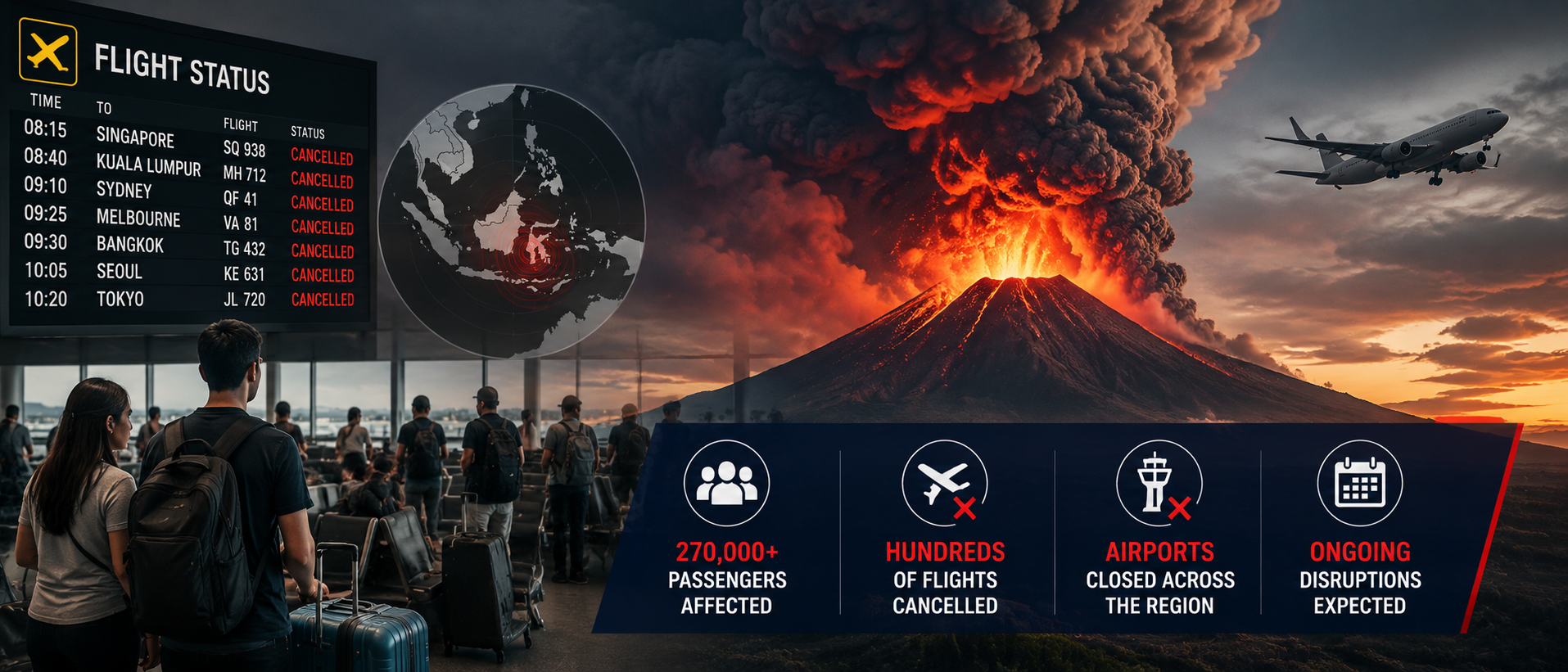
The fuel crisis is affecting aviation industries all over Asia. For example, many China-based airlines ( such as China Southern Airlines and China Eastern Airlines) have actually raised fuel surcharges (or fees) for passengers. Fuel availability may be impacted as authorities have reportedly asked refineries not to export fuel from China in order to stabilize supply in China which will limit the availability of refined fuel to other countries.
In Hong Kong, Cathay Pacific has added fuel surcharges to every flight, causing an increase in airfare. Similarly, Japan's All Nippon Airways (ANA) has not yet increased surcharges on tickets for travel purchased for travel in April and May that was purchased prior to the current conflict but have announced that an increase will likely occur due to mounting demand for flights to Europe as a result of the disruptions to air travel caused by events in the Middle East.
India's airline industry has also faced severe disruptions as a result of the discontinuation of the majority of the flights connecting India to the Middle East. Evidence suggests that domestic flights between March 2022 and October 2022 will be about 10% less compared to previous periods. The government of India has made adjustments to their fare- structure regulations, suspending fare caps to allow for increased fares due to increased fuel costs.
Additionally, Singapore Airlines, and its low-cost operating subsidiary Scoot airline, have increased their fare structure because approximately 30% of the airlines' total operating costs are incurred by purchasing fuel. To help relieve the increasing fare situations, Singapore has deferred its planned introduction of a green jet fuel tax that would have been enforced in April 2026.
The aviation industry globally is looking at more and more challenges as the global energy crisis moves forward. The Philippines recently issued a national energy emergency declaration from President Ferdinand Marcos stating that, due to a lack of available fuel supplies, flight disruptions should be expected.
Large-scale airlines such as Singapore Airlines and Qantas Airlines are benefitting from the current energy crisis and are able to easily implement strategies to address mounting fuel costs by adjusting routes to obtain higher yields and deploying aircraft in more lucrative markets. For example, Singapore Airlines has increased flights to London, and Australia's Qantas Airlines has increased flights to Europe as a result of large increases in demand for flights to locations where airline service is usually provided.
Conversely, smaller airlines, especially those operating older and less fuel-efficient equipment, are being negatively affected as they have fewer choices available when attempting to offset increasing costs associated with the current global energy crisis.
As escalating fuel prices remain unstable, airlines are adapting to continued rising operating costs. Overall, airlines can use the current fuel crisis as an opportunity to increase their fuel contingencies and produce continued growth in the aviation industry.