GDP Growth Exceeds Economists' Predictions
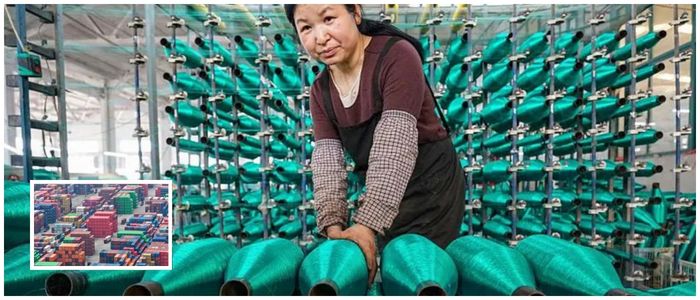
China's GDP in this year's first three months grew by 5% over last year after growing 4.5% in the previous quarter. This outpaced economists' expectations of approximately 4.8%. The previous quarter represented a reacceleration in GDP growth from the previous quarter's 4.5% growth.
The latest data on GDP expansion comes after the Bay City [Government of China lowered its annual economic growth target to a range] from 4.5% to 5% (the lowest target for China's economic growth since 1991). The latest data confirms that the recent acceleration in GDP was driven mostly by strong manufacturing growth (despite the economic weakness in the real estate and housing sectors due to declining investment in those sectors).
Export growth also played a large role in contributing to the recent acceleration in GDP in China, particularly in the auto sector and manufactured goods. However, analysts warn that the full impact of the Iran War on China's exports may not be captured by the most recent data and that slower export growth is likely to occur in the coming months.
Trade Statistics Indicate Mixed Signals
China's most recent trade data also reflects some challenges to China's global trade. Based on March data, China produced only 2.5% growth in March over last year, marking the lowest annual growth rate of combined exports since August 2020. This decline follows significant combined export growth of more than 20% in January and February due to high demand for electronics and manufactured goods.
Although the growth in China's exports has slowed significantly, the rate of increase in China's imports is on the rise (up almost 28% in March over the same month last year). Accordingly, China's trade surplus was approximately $50.0 billion in March (the lowest trade surplus for China in more than a year). Rising costs of imported goods have been attributed to higher global prices, particularly with regard to energy-related goods.
Shipping disruptions, which can be caused by geopolitical instability, have also increased the cost of oil and other materials (due to shipping costs). Oil prices have increased due to shipping disruptions between the Gulf Coast and Europe, resulting in rising inflation and decreased consumer consumption in China.
Future Outlook Uncertain
China is significantly less reliant on oil produced in the Gulf than Japan and South Korea, but has not been immune to the increase in petroleum costs associated with the Iran War. As a result of rising petroleum costs, gasoline prices are increasing in China, resulting in a reduction in the number of flights by some of China's airlines due to the high costs of jet fuel.
In order to stimulate sustainable growth, the Chinese government has proposed providing assistance to domestic industries by investing in innovation and high-technology industries and increasing domestic consumption to form the basis of a new economic strategy in the second half of 2021. Nevertheless, given the continuing uncertainty in the geopolitical environment, the success of China's economy in the next few quarters will depend on how the geopolitical landscape unfolds.