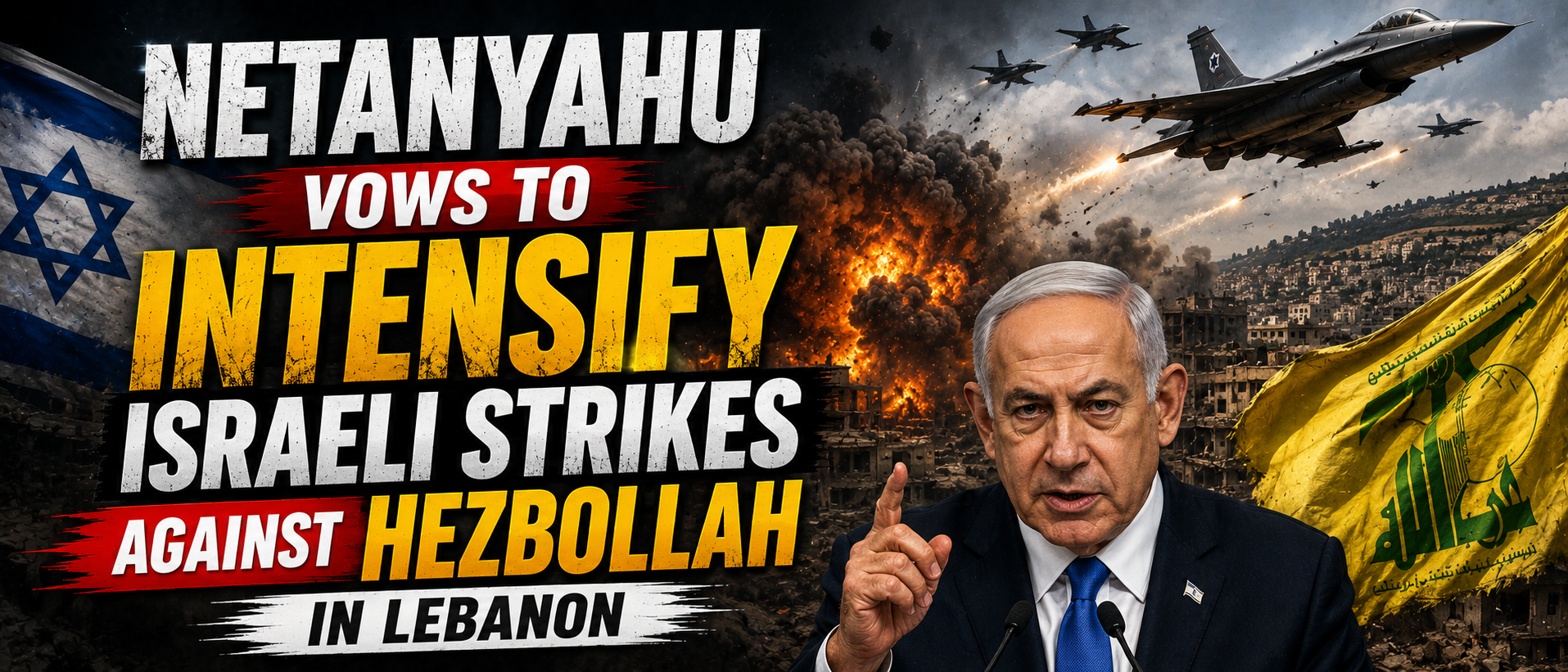
Hezbollah retaliated with 22 drone and rocket strikes on Israeli troops, tanks, barracks, and military bases, saying it was in response to an Israeli breach of the truce. Netanyahu Calls for Increased Intensity. In his video address, Netanyahu said Israel's military offensive against Hezbollah had already killed more than 600 fighters but said the present situation calls for an escalation, not a continuation of efforts to date. "The military has been ordered to increase the strikes and the intensity of the campaign significantly," he said.
Two members of the Israeli government on the far-right have gone further in their demands, calling for the military campaign to be expanded to include strikes on the Lebanese capital, Beirut. But the Israeli government has always refused any deal that would force it to end its war with Hezbollah. A Fragile Ceasefire Is Under Severe Strain. The heightened Israeli strikes come despite a ceasefire deal signed on April 16 and later extended for another 45 days earlier this month. There has been fighting throughout the ceasefire period, even though the truce has been nominal. Available figures suggest that since the signing of the agreement, Israeli attacks have killed more than 400 people in Lebanon, including many paramedics and emergency service workers.
Ten Israeli soldiers have also been killed in the same period. Israeli strikes since the ceasefire had been mostly in southern Lebanon, where Israeli troops still are on the ground and from where Israel says drones and rockets have continued to be launched against its territory. Monday's strikes targeted the Bekaa Valley, in eastern Lebanon near the Syrian border, broadening the geographical reach of the military campaign. Humanitarian Impact and Large-Scale Displacement.
The war is still underway and has resulted in a severe humanitarian crisis in Lebanon. Israel has been issuing evacuation orders to Lebanese citizens to leave their homes in new areas across the south of the country almost daily, adding to a displacement crisis already affecting more than a million people.
The Lebanese Health Ministry said that more than 3,000 Lebanese have been killed in Israeli strikes since the war between the United States, Israel, and Iran began on Feb. 28 and pulled Lebanon into the wider regional conflict. Hezbollah joined the war as Iran's ally, firing rockets into Israel after Israel killed Iranian Supreme Leader Ayatollah Ali Khamenei, prompting Israel's aerial bombardment and ground invasion of Lebanon. Lebanon: The Government is Cornered. Lebanon's government has sought to disarm Hezbollah as part of broader efforts to stabilize the country and meet international expectations, but argues that a full and lasting ceasefire is a necessary precondition to completing what it calls a deeply complex undertaking.
Lebanese President Joseph Aoun has called for a complete Israeli pullback from southern Lebanon as part of any lasting arrangement. Lebanon and Israel, which do not have formal diplomatic relations, will meet next week for another round of talks in Washington, but the latest flare-up in Israeli military activity is likely to cast a shadow over those talks before they even begin, officials said. Iran Connection and Regional Ramifications: Israel's escalation of its campaign against Hezbollah is occurring at a particularly sensitive point in the larger regional picture.
"Tehran has insisted that any future peace deal between Tehran and Washington must include a full ceasefire on all fronts of the regional conflict, including the fighting in Lebanon." That condition is at odds with Israel's refusal to cease its campaign against Hezbollah and could complicate the peace negotiations between the United States and Iran that have been described in recent days as making cautious progress. The interconnectedness of the conflicts across the region means that any escalation in Lebanon has implications far beyond its borders, with the fragile diplomatic momentum around a broader settlement now facing a significant new test.