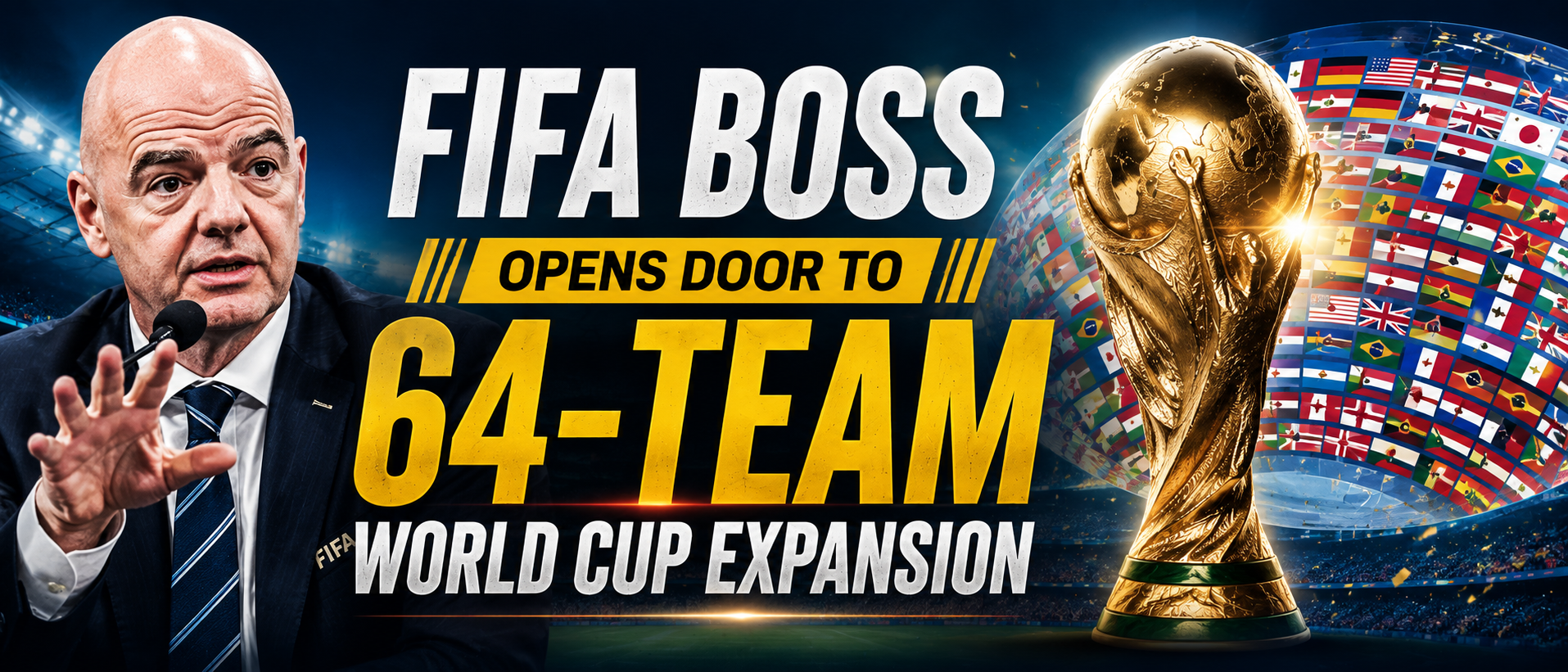
Infantino pointed to the performance of African nations at the 2026 tournament as evidence of why inclusion matters. Nine out of ten African teams advanced to the knockout stages, a stark contrast to the five African sides that participated at the previous World Cup. He argued that giving smaller nations access to the World Cup provides the incentive needed for football to continue growing at the grassroots level across regions that have historically been underrepresented. Without that opportunity, he suggested, those countries would have little reason to keep investing in the development of the game.
Who Supports It and Who Does Not
The idea has divided football's governing hierarchy. Infantino's enthusiasm is shared by Andrew Giuliani, executive director of the White House's World Cup task force, who said the United States could consider bidding to host the 2038 edition and would be capable of handling a 64-team tournament. But elsewhere, the reception has been considerably cooler. UEFA president Aleksander Ceferin has described the proposal as a bad idea for both the tournament and the qualifying process. Asian Football Confederation president Sheikh Salman bin Ibrahim Al Khalifa warned that further expansion would create chaos. Victor Montagliani, who leads the governing body for football across North and Central America and the Caribbean, said the suggestion does not feel right and expressed concern about the damage it could cause to the broader football ecosystem.
FIFA's official position is that any proposals submitted by council members must be considered and that discussions with relevant stakeholders will take place. The FIFA council would make any final decision, but there are no indications that a resolution is close. The expansion from 32 to 48 teams was approved by the FIFA council back in 2017 and took effect at this year's tournament. A similar step to 64 would represent a far more significant logistical undertaking.
The Challenges That Come With Going Bigger
Hosting a 64-team World Cup, featuring 128 matches, is not a straightforward proposition for any nation. The 2026 edition is already spread across three countries covering a vast geographical area. The 2030 World Cup will involve six host nations, with matches taking place across Spain, Portugal and Morocco, plus centenary celebration games in Argentina, Uruguay and Paraguay to mark the 100th anniversary of the competition's first edition, which Uruguay hosted in 1930. Whether Saudi Arabia, confirmed as the host for 2034, could accommodate 128 games is a question that remains entirely unanswered.
There is a clear political dimension to Infantino's enthusiasm for expansion as well. A 64-team World Cup would allow close to a third of all 211 FIFA-affiliated nations to participate, making it a powerful tool for building goodwill and support across the organisation's global membership. A larger tournament also means more games, more broadcasting rights, more commercial deals and ultimately more revenue flowing back to member associations. For Infantino, who has made expanding access to the game a central part of his presidency since taking office in 2016, the case for growth is both ideological and financial. Whether the rest of football's leadership can be brought around to that view in the years ahead remains the central question.