The arrest has gained the attention of legislators, regulators, and the President; this has been viewed as a watershed moment in the discussion regarding how prediction markets should be regulated and who can participate in prediction markets.
The accused in this matter is Master Sergeant Gannon Ken Van Dyke, a 38-year-old active-duty soldier assigned to Fort Bragg and a senior non-commissioned officer in the U.S. Army. A master sergeant is a senior enlisted member of the Army and serves as a vital tactical leader and technical expert at the battalion level. As such, the master sergeant is responsible for establishing and enforcing standards for lower-ranking soldiers. According to the indictment that has just been unsealed, Van Dyke opened a Polymarket account in December 2021.
From December 27 through January 2, 13 separate bets totaling approximately $32,000 were allegedly placed by him as President Nicolás Maduro's potential ouster by January. While many observers on the exchange viewed these bets as highly speculative, prosecutors contend that he was much more than a speculative bettor; he had direct access to classified information by virtue of being involved in the planning and execution of Operation Absolute Resolve, the covert military operation resulting in Maduro's capture.
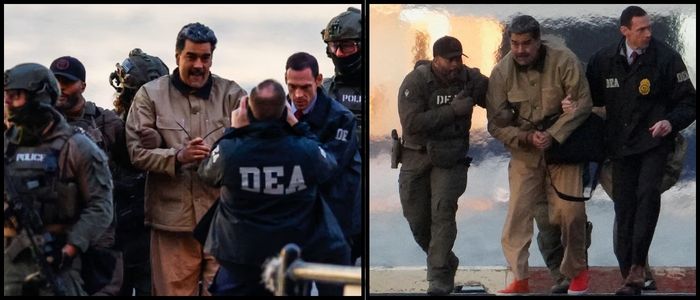
His involvement in the covert operation provided him with access to classified intelligence prior to placing his bets, thus allegedly providing him with a much more reliable basis on which to make wagers than what was publicly available. His last wager was placed within hours of the overnight capture. Photographic evidence from shortly after the operation, and significantly close to the last wager that he made, shows Van Dyke at daybreak on the deck of a ship dressed in military clothing with a rifle in hand, standing with three other similarly dressed individuals.
The photographic evidence was cited in court documents as verification that Van Dyke was present during the events of the operation.
Van Dyke's wagers were successful and, according to prosecutors, generated in excess of $400,000. The sheer volume of his winnings was sufficient to attract law enforcement's attention to the activity. Following his receipt of profits, Van Dyke is alleged to have transferred funds to an overseas cryptocurrency vault and subsequently to an online brokerage account; prosecutors claim this was a calculated effort to hide where the money originated.
He is now facing five criminal charges related to the theft and improper use of classified government information, as well as theft and fraud. His initial appearance in court in North Carolina will occur with no legal representation listed for him on the court docket at the time of his arrest. On the same day as his arrest, the Commodity Futures Trading Commission filed a civil complaint against Van Dyke requesting compensation and reimbursement of profits made from alleged wrongdoing, as well as fines.
How the Case Came About
The previously reported investigation into the unusual betting activity was ongoing prior to the public announcement of the arrest of Van Dyke. Prosecutors from the Securities/Commodities Fraud Unit of the Southern District of New York had met with Polymarket personnel prior to the announcement of Mr. Van Dyke's arrest. Polymarket has confirmed that they have identified a user allegedly trading based on private/secret government information and have referred the matter to the DOJ and worked in full cooperation with the investigation.
They further stated that insider trading does not belong on their platform and that the arrest is a testament to the effectiveness of their mechanisms for detecting and reporting suspicious behavior. Despite the use of an anonymous account, due to the rapid identification of the anomalous winnings, the ability to attract scrutiny in the manner described reflects the degree to which any large, improbable amount of winnings on prediction markets will be scrutinized, regardless of what a user may think about the extent to which his/her identity is protected.
The underlying military operation allegedly bet upon by Van Dyke was significant and represented one of the greatest military and law enforcement operations in recent memory. The United States executed a covert operation to clandestinely result in the extradition of Nicolás Maduro from the Presidential Palace in Caracas while under fire during the night. Maduro was subsequently flown to New York to answer federal drug trafficking charges. He has pleaded not guilty.
The operation significantly escalated the United States' effort to remove Maduro from power; it was one of the most audacious military and law enforcement operations taken by this administration in the last several years. Prosecutors have characterized the act of taking a financial gain from information about a military operation in which one was a participant, rather than simply executing one's official duties, as a flagrant violation of the trust afforded to participants who have access to sensitive government information.
The arrest has generated reactions from across the political spectrum and from the top of the federal government. According to Jay Clayton, United States Attorney for the Southern District of New York, those who are entrusted to safeguard our nation's secrets have an absolute responsibility not to use the information received as a result of their positions or duties for personal financial enrichment; i.e., they cannot sell secrets that they acquire through their work.
He described the actions of the individual in this case as an egregious violation of the trust that is inherent in the obligations of those in the military and intelligence communities. President Trump did not know much about this particular case but drew a parallel between it and former Major League Baseball player Pete Rose, who was banned from playing professional baseball for betting on his own team.
Trump lamented the overall trend of the world becoming increasingly like a casino, pointing out that the increasing number of political events being bet on by users of these types of betting platforms is impacting numerous other countries at the present time.
Prediction Market Regulation
The fact that this case represents an enormous momentum boost to the ongoing legislative movement to regulate prediction markets places significant emphasis on the need for more stringent regulation of prediction markets. There has also been substantial growth in the volume of trades executed on prediction market platforms, with some users trading several billion dollars' worth of predictions daily over the past 12 months.
There are currently over a dozen new bills before Congress to increase oversight of prediction markets, and many of them have gained bipartisan support. Several of these new bills will target government employees specifically and add harsher penalties for government insider trading in prediction markets. The Trump administration approved Polymarket's offer of services to Americans; however, when the Maduro-related trades happened, Polymarket's domestic platform was not yet available for use by Americans.
All the Maduro-related trades took place on Polymarket's international website and are not regulated by United States law, so they can offer markets on subjects, such as military conflict, that are prohibited by United States law domestically. In March, Polymarket updated its rules to place limitations on insider trading.
The March 2023 updates to the rules of Polymarket specifically define and ban three types of insider trading conduct from taking place on the platform, which include traders who are legally required to keep their information confidential from placing trades on the platform, and traders with the ability to make decisions about whether a specific event occurs or doesn't occur from placing trades in the corresponding market on the platform.
A Dispute the Industry Cannot Ignore
The Van Dyke case is the most recent event to highlight an ongoing debate within the prediction market industry. Supporters of prediction markets have advanced the theory that the ability for insiders to trade on the prediction market serves a purpose, as it helps to spread insider information (which would remain private) to the general public and therefore creates a more accurate prediction for an event that will happen in the real world as opposed to an event that is about to happen in the real world.
There are also many people who disagree with this position, as it is unethical for an insider to profit from trading on information that is secret, classified, or privileged, especially when the events used for making trades in the prediction market involve military operations or issues of national security. Most notably, the arrest of an active duty member of the armed forces for allegedly using his knowledge of a classified operational plan to make an additional 400,000 dollars has given these critics new and powerful arguments to strengthen their case that the prediction market industry needs to have far more stringent regulations than it has now in order to protect the integrity of prediction markets.