A Break from Tradition
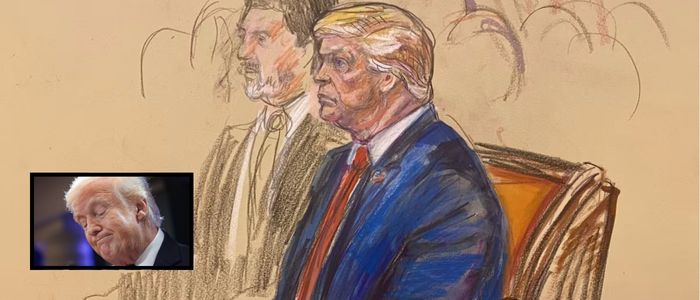
Normally, the president does not attend oral arguments before the US Supreme Court because presidents do not want to appear as if they are attempting to influence the judiciary. However, President Trump has repeatedly challenged the status quo by attacking judges, many of whom were appointed by President Trump himself, publicly criticizing judges whenever they make a ruling against him.
The visit by President Trump to the Supreme Court happened just after President Trump made multiple statements over the last two years that suggested he was willing to break away from the long-standing tradition of not attending oral arguments. This visit also came after President Trump had lost a case in federal court concerning tariffs and after President Trump had made the decision to visit the Supreme Court at the same time he was being confronted by Iran and preparing for a national address that same evening. As a result, the timing of this visit by President Trump clearly indicates that he was attempting to send a message to the courts to ensure that they understood that he was in charge.
Unfortunately, instead of strengthening President Trump's power, this visit may have acted as reinforcement for the independence of the courts, especially in light of recent rulings from the courts that had ruled against the president.
Difficult Questions Asked by the Courts
The basis for President Trump's visit to the US Supreme Court for oral argument was the administration's executive order regarding birthright citizenship under the Constitution. President Trump is attempting to redefine the interpretation of the 14th Amendment and whether or not the interpretation should be based on the fact of whether the individual was born in the United States, but whether or not the individual's parents were citizens.
Many experts in the field of law have asserted that this order of President donald trump is unlikely to survive court challenge; the arguments he has put forward in his defense were challenged when questioned by the justices from both sides of the political divide as well as trump's own appointees to the Court. The Chief Justice raised comments about how the concept of "birth tourism" has been different now than when it was first conceived by our forefathers, nevertheless, the Constitution will remain. President Trump exited the courtroom shortly thereafter.
It will be several months before any final order is made, but the initial impressions of the Supreme Court suggest that they will likely find against donald trump, even going so far as to rule more definitively against him than in the tariff ruling where the court ruled 6-3 against him.
Recent Judicial Setbacks
The ongoing hearings at the Supreme Court for donald trump are just a small part of the overall large amount of legal setbacks he has experienced over the past year. In particular, many of the lower courts have blocked or overturned his key policy initiatives including Voice of America shutdown efforts, limitations imposed by the Department of Defense on media access, and those sanctions imposed on AI company Anthropic.
Several other cases have found a method to prevent donald trump from stopping funding for National Public Radio (NPR) and Public Broadcasting System (PBS), as well as his plans to build an additional ballroom in the White House. Even though all of these matters will continue through the courts, they continue to demonstrate the same trend of his having continued legal resistance to his authority.
It is widely known that President Trump is frustrated with judges who he appointed himself, including Justice Kavanaugh, Justice Barrett, and Justice Gorsuch, who have ruled against him as a result of Donald's actions. He publicly claims that these judges, along with others, use their independence as a means of demonstrating that they are not bound by his orders.
The Limits of Leadership
As opposed to politicians who have elected positions or shorter terms in office, judges have been appointed for life with a higher degree of emphasis on having and maintaining their independence. Because of this difference between judges compared to politicians, judges are not subject to the same political influence as politicians.
The presence of President Trump at the Supreme Court may not have provided him with the ability to manipulate their ruling in his favor, however, he may have given judges an additional incentive to continue asserting their individuality.
As the numerous legal challenges continue for him, the results of the birthright citizenship case will be closely scrutinized by those interested in observing the outcome, but it will likely not be considered to have been affected by the participation of President Trump. His appearance at the Supreme Court may serve as an indicator to the American people of how independent and separate the judicial branch is from the executive branch of government.