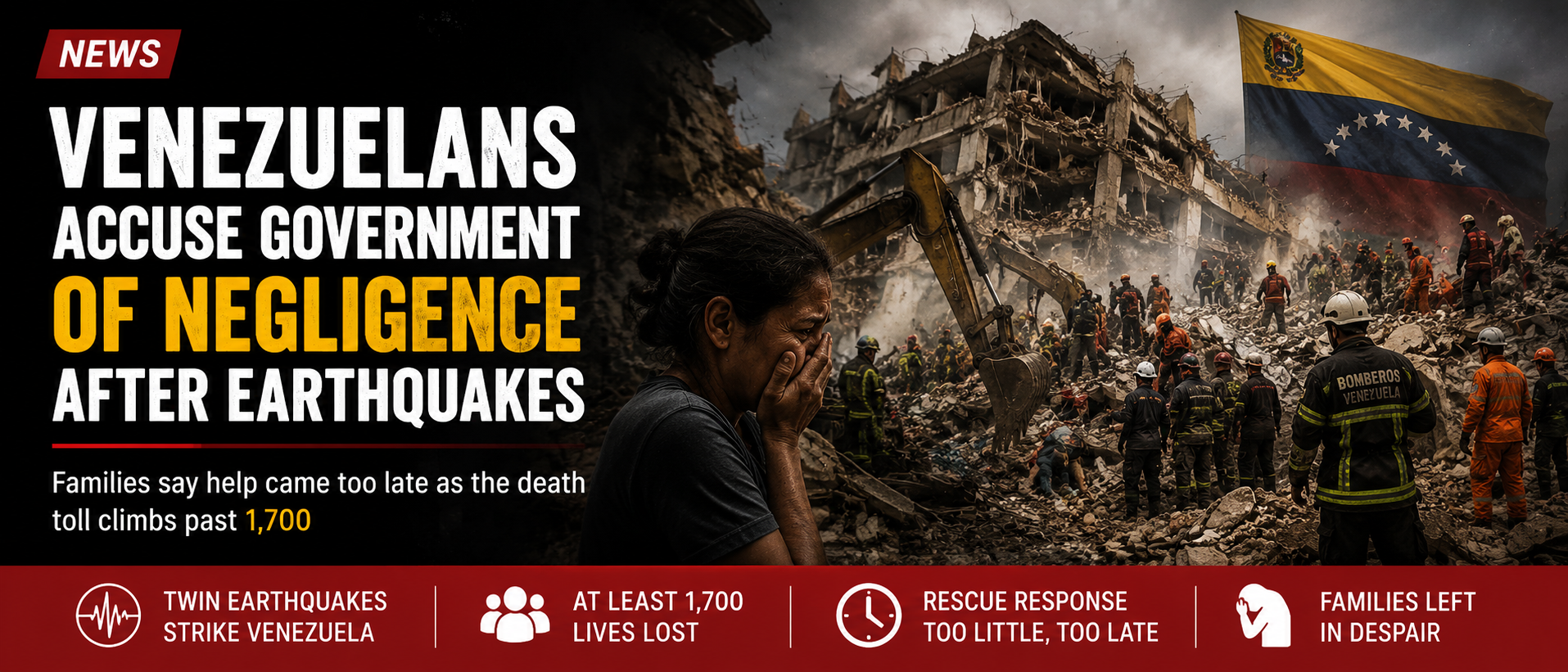
It is one of the communities hit hardest by the twin earthquakes that struck Venezuela last Wednesday, a disaster that has now claimed at least 1,700 lives. Interim President Delcy Rodríguez has called it the most brutal natural catastrophe in the country's history. But for many families still waiting beside the rubble, the disaster has been compounded by something else entirely — a rescue response they describe as painfully slow, disorganised, and at times simply absent.
Families Say Help Came Too Late, If at All
Standing near the collapsed building, Miguel Oscar Nunez holds his breath alongside other families with loved ones still trapped inside. His only child, 34-year-old Angel, lived there. Moments pass in tense silence as rescuers listen for any sound. Nothing comes. Work resumes. Miguel's frustration is visible. He says his son is likely still alive under the debris, but that authorities have failed to provide the urgent support needed to dig him out in time. He fears that if his son dies, it will not be because of the earthquake itself, but because of government negligence.
Kevin Montilla shares a similarly painful story. His wife, Luzmary, and 16-year-old daughter Jhoerliyzmar were home when the earthquake hit. He says the rescue operation began far too late and moved far too slowly, with only community members initially showing up to help. Police, he says, came only to observe, offering no real assistance. He describes the government's response as frustrating and powerless. By the time we visited the site, rescue teams from Venezuela and Colombia had arrived, working with diggers and a crane to lift concrete slabs. But families say precious days had already been lost before that effort even began. Miguel reflects on the unnatural cruelty of a parent possibly outliving a child, saying he has not given up hope, but feels devastated nonetheless.
A Search With No End in Sight
The building belonged to a government-owned housing complex, and its prominent roadside location may explain why it drew rescue attention faster than other sites. In parts of La Guaira state, search teams have reportedly not arrived at all. At a local hospital, Deilisbeth Herreira combs through lists of the injured and dead, searching for her daughters, twelve-year-old Greydelys and thirteen-year-old Graybelys. A single mother who was at work when the quake struck, she believes her daughters were likely home, though she is checking everywhere in case they were outside and survived. She says no machines or rescue teams have come to help her search, describing the feeling of being entirely abandoned to find her own children, her voice breaking as she says she simply wants her daughters back, whatever it takes.
William Rodrigues, searching for his uncle amid an overwhelming stench in the area, says help arrived far too late in most places and has still not reached some at all. Despite police presence near the complex, he says officers were not actively assisting with rescue efforts. Sixty-year-old Juan Avendo, whose own home across from Bello Horizonte was destroyed, recalls hearing the screams of trapped people and resorting to digging through rubble with his bare hands alongside his nephew Enyer Musics. Working through the night and into the morning, the pair managed to pull one woman out alive, passing her water before freeing her from the debris.
The first official rescue team, made up of Venezuelan firefighters, did not arrive until Friday, nearly two full days after the earthquake struck. Teams from El Salvador and the United States later joined the effort, and a small number of additional survivors were found before the operation was formally called off on Sunday. Juan believes hundreds more remain buried beneath the rubble, with little realistic chance their bodies will ever be recovered, leaving the true scale of the disaster likely impossible to ever fully know.