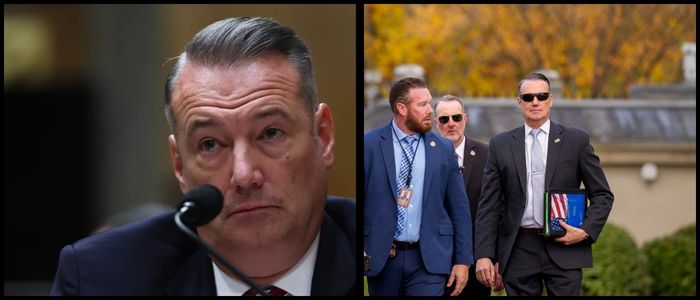
In Mullin's official statement, he indicated that Lyons had been a great leader for two key reasons: his leadership impacted the effectiveness of ICE during an unprecedented time in immigration enforcement history, and he helped to make American communities safer. Lyon's departure signifies the end of a long tenure at the agency characterized by significant growth in terms of funding, staffing, and enforcement, and resulting in one of the most debated federal agencies in the U.S. Whoever succeeds Lyon will, therefore, inherit a well-funded and staffed agency with a very polarizing public perception.
Todd Lyons was appointed to serve as the acting director for ICE in March 2025, during an extremely aggressive push by the Trump administration to reform the U.S. immigration system. In 2007, Lyons began his career as an immigration enforcement officer with ICE, where he has developed an excellent working knowledge of how ICE operates on the ground because he worked in the field and advanced through the ranks of the agency. As soon as Lyons took over as acting director of ICE, Congress provided a significant amount of funding ($283 million) for new hires and resources that would help expand the agency's detention infrastructure. As a result of the new funding, the agency drastically increased its arrest numbers to meet the demands of the administration's overall immigration plan.
As the principal architect of the administration's immigration policy, Stephen Miller (the President's Deputy Chief of Staff) expressed his admiration for Lyons by stating he was a committed leader who had saved thousands of lives and provided millions of Americans with a safer and more secure environment. White House Press Secretary Abigail Jackson joined Miller in singing Lyons's praises publicly and called him an "American patriot" for keeping our country free from harm.
Tom Homan, the Trump Administration's border czar, added his voice to those praising Lyons by calling him a highly respected, effective acting director who had committed to selflessly serving ICE during his entire tenure as acting director.
One of the most significant acts signed by Lyons was an internal ICE policy memorandum that authorized federal immigration agents to forcibly enter homes and arrest individuals without obtaining a warrant. The directive became one of the most hotly debated directives issued by the administration; it generated considerable amounts of legal and public scrutiny.
Controversy, public perception, and the future of the agency.
Although many in the administration praised Lyons, his tenure at ICE was not without controversy. During his time at ICE, the agency conducted a number of prominent enforcement actions in several large metropolitan areas, including multiple enforcement operations in Chicago and Minneapolis, which drew considerable public outcry after the two U.S. citizens, Renee Good and Alex Pretti, were shot and killed during federal immigration enforcement operations.
Lyons was invited to testify in front of Congress about the deaths of both individuals. Congress questioned Lyons about the two incidents and asked him directly about his willingness to apologize to Renee Good's family, especially given the publicly expressed sentiments of some administration officials about Ms. Good. Lyons declined to apologize; however, although he indicated he would gladly speak with the family privately, he declined to issue any statements publicly while the investigation was ongoing. Additionally, Lyons confirmed that he had viewed the video footage pertaining to the shooting of Alex Pretti; however, he also stated he was unable to offer a comment because the investigation was ongoing.
Public perceptions of the agency were largely negative while Lyons served as the Director of ICE. According to an AP-NORC poll conducted in February of this year, a majority of American adults who were politically independent evaluated ICE negatively. This would seem to imply that the agency's image was not improving among the general public as a result of the above-mentioned internal accomplishments and law enforcement activities that took place during this period of time.
The resignation of Director Lyons coincides with an overall transition within the Department of Homeland Security. The previous Secretary Kristi Noem, who managed DHS during the initial major changes to U.S. immigration policy, was dismissed from her position by President Trump. The new Secretary Markwayne Mullin was appointed last month and is expected to continue implementing the president's immigration objectives; however, he has stated he will be taking a more moderate (i.e., less confrontational) approach to certain of the administration's more controversial policies than previous administrations did.
We do not yet know who will take over for Director Lyons. It is clear that whoever does will have the responsibility of leading the agency in a very complex environment. There is an ongoing legislative impasse between Democratic lawmakers and the agency around what they perceive to be appropriate restrictions on the conduct of immigration enforcement officers before they agree to return to their traditional funding level under the DHS budget. While ICE has a large operational capacity relative to the resources it has available (e.g., expanded budget, increased hiring levels, increased detention space available) to perform its functions, that operational capacity is also the core of an extremely heated political and public debate.
The legacy that will be left behind by the outgoing Director Lyons cannot simply be characterized in one or two sentences. According to the metrics established by the previous administration, Director Lyons presided over the highest levels of law enforcement activity, the growth of the agency, and, with respect to operational reach, during the existence of the agency. For those who have a critical view of the agency's actions and conduct as it relates to providing legal accountability and building public confidence through trustworthy and appropriately accountable law enforcement along with the numerous instances where American citizens died as a result of ICE enforcement actions taken against them, there are significant and often debated and unresolved issues that have raised many questions about his leadership.
As Todd Lyons prepares to depart from federal government service on May 31st, 2016 at which time the agency that he helped develop through and during its most important time in history will continue to function under new and different infrastructure and continue to possess the resources he helped create (and the controversies that surrounded them), the process to identify a new leader for the organization will be scrutinized as ICE plays an important role in shaping the administration's continued immigration policy efforts.